Screenshot
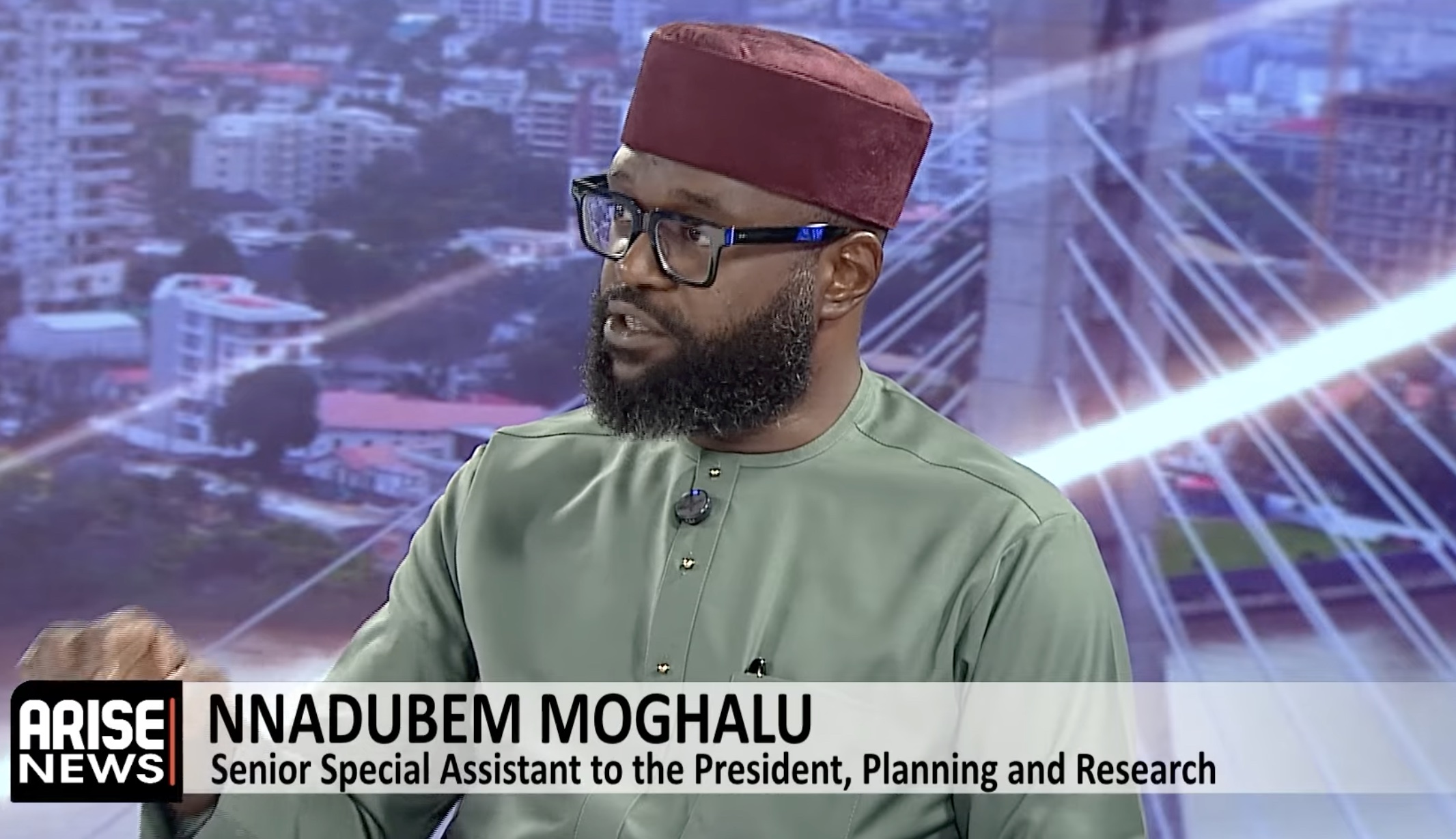
Senior Special Assistant to the President on Planning and Research, Nnadubem Moghalu, has dismissed concerns that the federal government’s ongoing work on the National Policing Bill is being rushed, insisting that the process is deliberate, transparent and designed to ensure broad public participation before the legislation is transmitted to the National Assembly.
Speaking in an interview with ARISE NEWS on Wednesday, Moghalu clarified that the constitutional amendment creating the legal basis for state police is separate from the National Policing Bill, which will provide the framework for implementing state policing across the country.
Responding to concerns over the timeline for public consultation and claims that the process was being hurried, Moghalu said:
“Let us clarify two things first about the documents that we’re working with. First of all, you have the constitutional amendment that creates the pathway for state policing. That is what has passed in the Senate and in the House of Representatives, and it’s on its way to the states for review and possible concurrence and approval. If a majority of the State Houses of Assembly approve the proposals that have come from the National Assembly and return them, then it goes to Mr President’s desk for signature.
“The constitutional amendment side of the state police project will be concluded at that point because the constitutional amendment is a pathway document. It opens the door to state police, but it does not operationalise state police.

“If you look at the draft of the bill on the nationalpolicingbill.com website, you will see that what the constitutional amendment does is to say we can have state police services, but only subject to a minimum standards framework law to be enacted by the National Assembly.
“The Presidential Working Group on the National Policing Bill, chaired by the Chief of Staff to the President, has been constituted to work on the second part of the state policing project, which is the National Policing Bill that enables the operationalisation of state police.
“The constitutional amendment merely sets out the pathway to state policing, but the operationalisation of state policing requires secondary legislation, and that is what we are doing with the National Policing Bill.”
On allegations that government was rushing the reforms, Moghalu argued that major policy changes are rarely free from criticism.
“There is never a good time to do hard and difficult reforms. Three years into the administration of President Bola Tinubu, there is still a conversation about whether it was right to remove fuel subsidy when he did. There are people who will tell you today that perhaps he should have waited a little longer.
“There is never an ideal time to undertake difficult policy reforms. What matters is whether the government is prepared, committed and whether there is political will and political consensus that makes those reforms possible.
“Mr President cannot accomplish this project alone. The National Assembly has an important role to play, and the State Houses of Assembly also have an important role regarding the constitutional amendment.
“After we produce the National Policing Bill and consequential amendments, there will be consultations before the bill is transmitted to the National Assembly to undergo the full legislative process.
“I don’t subscribe to the idea that anything is being rushed. When something is rushed, it presumes things are being done carelessly. That is not the case here. This is a deliberate process articulated by government, and we want to carry Nigerians along. That is why we have called for memoranda.”
He stressed that policing reforms affect every Nigerian and therefore require public participation.
“There are very few areas of public policy that are more important or more consequential than policing. If you are a Nigerian living in Nigeria, or even visiting Nigeria, at some point you will interact with the police.
“It doesn’t matter whether you are rich or poor, influential or not. The police are the most recognisable representatives of the Nigerian state for the vast majority of our citizens.
“This is a consequential reform and it is important that Nigerians have a voice in it. That is the purpose of the call for memoranda and the national consultation that will follow after the draft bill is ready.”
Addressing concerns that less than a month was insufficient for meaningful consultation, Moghalu outlined the structures established to ensure the work is completed within schedule.
“Let me explain the structure we have put in place. You have the Presidential Working Group chaired by the Chief of Staff, which includes the Attorney General and other key government officials because this is a government-led process.
“That working group is advised by a Policy Advisory Committee chaired by Honourable Justice Mohammed Abdullahi-Lawan. The committee comprises professionals, experts, former police officers, judicial experts, community advocates and others with experience on the subject.
“We also have a capable secretariat conducting policy research and data analysis, while a drafting team led by the Director of Legal Drafting in the Federal Ministry of Justice is preparing the legislation.
“All these teams are working simultaneously. As materials come in, they are reviewed and incorporated into the process. Government is committed to ensuring that we meet the timeline.”
He added that awareness campaigns had already begun nationwide.
“We have given two weeks for the call for memoranda. Since Monday, we have had advertisements on television, publications in newspapers and community engagement teams working to ensure the message reaches the grassroots.
“The engagement is as important as the final work product. If Nigerians do not feel a sense of ownership of this process, then it would be incomplete.”
Moghalu also disclosed that another round of consultations would take place after the draft legislation is completed.
“After we have produced the draft bill, there will still be a national consultation where we present the bill to Nigerians and say, ‘This is what we have produced. What do you think?’
“The call for memoranda makes this a collaborative effort. Having produced the draft from that collaboration, we must return to the people and show them what their contributions have produced and ask whether they are satisfied.”
Responding to suggestions that the consultation period should run for several months, he maintained that government must work within defined timelines.
“A lot of the criticisms so far have been criticisms of process, not criticisms of substance. For the most part, nobody has challenged the substance of these reforms.
“We recognised concerns arising from the constitutional amendment process. This is a different process relating to the National Policing Bill, and we have deliberately designed it to be more inclusive.
“If you visit the nationalpolicingbill.com website, everything you need to know about the bill and the issues under consideration is already there.
“This is the most open process that has ever been used for any piece of legislation that I can remember in my lifetime.”
He argued that while the process is open, government cannot leave consultations without a deadline.
“Submission of memoranda and articulating workable ideas on a substantial policy issue like policing cannot be an all-comers affair.
“If we do not receive the level of response we expect, then perhaps we can have a conversation about an extension. But government cannot have an open-ended process. There must be a beginning and an end, and then we respond as circumstances require.”
Moghalu further clarified that the constitutional amendment and the National Policing Bill are two separate legislative instruments.
“There are two very different bills. The first is the constitutional amendment bill, which has passed the National Assembly and will shortly be transmitted to the State Houses of Assembly.
“What the constitutional amendment does is create a pathway for state police services. It says states may establish police services subject to a framework law passed by the National Assembly.
“The constitutional amendment opens the door. The National Policing Bill defines what the room will look like.
“Issues such as the relationship between federal and state police services, minimum recruitment standards, minimum training standards, firearms control, geographical jurisdiction and subject-matter jurisdiction all have to be negotiated and resolved in the National Policing Bill.
“What the executive is doing now is preparing for the eventuality that the State Houses of Assembly approve the constitutional amendment, at which point the framework legislation will already be ready.”
He also rejected suggestions that the executive should be blamed for criticisms surrounding the handling of the constitutional amendment in the National Assembly.
“You cannot hold the executive responsible for the administrative approach adopted by the legislature. They are two different processes. The concerns you have raised relate to the constitutional amendment, not to the National Policing Bill.”
Moghalu concluded by urging Nigerians to familiarise themselves with the proposed legislation and participate in the consultation process.
“I ask everyone to visit the nationalpolicingbill.com website. We have made a deliberate effort to make this an open process and to provide all the information anyone needs to understand it.
“This is a complex matter. It requires careful attention and serious intellectual engagement, but it is not beyond our capacity as a government.
“The objective is consensus. We need to do much more to secure lives and property.”
Boluwatife Enome