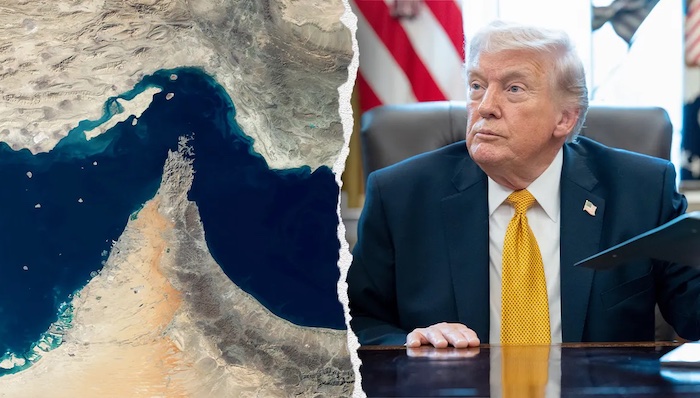
US President Donald Trump has expressed optimism that a deal to reopen the strategic Strait of Hormuz could be reached within days, as negotiations involving Iran and Oman continue in a bid to restore maritime traffic through one of the world’s most critical oil shipping routes.
Speaking to reporters while travelling in California on Tuesday evening, Trump said an announcement on the proposed agreement could come as early as Wednesday or Thursday.
“It could happen. Tomorrow or the next day,” Trump said in response to reports that an announcement on the Strait of Hormuz was imminent. “A lot of progress has been made.”
The comments came as Iran and Oman moved closer to an agreement that could pave the way for reopening the waterway, potentially easing tensions in the region and helping bring an end to the ongoing conflict.
The prospect of a breakthrough boosted confidence in global energy markets, with oil prices falling on expectations that crude exports from the Persian Gulf could resume more freely. Brent crude, the international benchmark, declined 1.2 per cent to $78.43 per barrel in early Wednesday trading.
According to two regional officials familiar with the negotiations, the emerging framework would allow vessels entering the Persian Gulf to use a route controlled by Iran, while outbound traffic would pass through a corridor managed by Oman.
The officials, who spoke on condition of anonymity because of the sensitivity of the talks, said ships would be required to pay service fees for maritime security and environmental protection along the designated routes.
However, the proposed arrangement could prove contentious, as the Trump administration has previously rejected any agreement that would grant Iran control over the strategically important waterway.
Before the conflict escalated following U.S. and Israeli attacks on Iran on February 28, the Strait of Hormuz functioned as an international waterway through which roughly one-fifth of the world’s oil and natural gas supplies were transported. Shipping has since been severely disrupted by Iranian attacks, reducing commercial traffic through the strait to minimal levels.
Earlier this week, Trump also reiterated his opposition to Iran imposing transit charges on vessels using the waterway.
“I’m not going to let them charge,” he said. “Anybody’s going to charge, we’ll charge.”
Despite signs of progress, regional officials cautioned that negotiations remain ongoing and that the final agreement could differ from the current proposal. They added that any deal is expected to be linked to the lifting of the U.S. blockade on Iran’s ports.
Boluwatife Enome