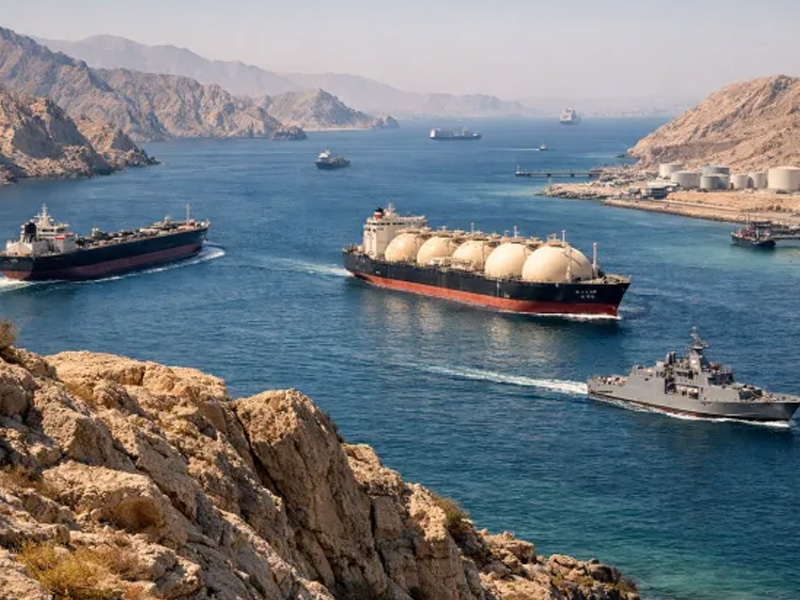
Shipping traffic through the strategic Strait of Hormuz and Bab el-Mandeb remained stable at reduced levels on Tuesday despite continued uncertainty over diplomatic efforts to end the conflict between the United States and Iran.
Shipping data showed that eight vessels transited the Strait of Hormuz, unchanged from the previous day. The vessels comprised five tankers and three bulk carriers, with six entering the waterway and two exiting.
Before the conflict began on February 28, between 130 and 140 ships typically transited the Strait of Hormuz each day before Iran shut the route in response to the war.
An Abu Dhabi National Oil Company (ADNOC)-controlled liquefied natural gas tanker also reappeared outside the Strait of Hormuz after loading cargo from Das Island in the United Arab Emirates.
The Mubaraz LNG tanker departed Das Island on July 14 and was last tracked inside the strait on July 16 before emerging off India’s western coast.
The vessel is expected to arrive at the Dahej terminal in Gujarat on August 5.
This marks the third time the Mubaraz has successfully exited the Strait of Hormuz carrying cargo from Das Island since the conflict began. Previous shipments were delivered to China and India.
ADNOC declined to comment on the movements or routing of its vessels.
Traffic through the Bab el-Mandeb Strait also held steady, with 20 vessels crossing the waterway on Tuesday, comprising 10 inbound and 10 outbound vessels.
The vessels included tankers, dry bulk carriers and a gas carrier.
Shipping analysts noted that the actual number of vessels could be higher, as some ships continue to sail with their tracking transponders switched off.
Meanwhile, diplomatic efforts to end the US-Iran conflict continued, with Qatar saying mediators were making progress, although Iran denied US President Donald Trump’s claim that formal negotiations were already underway.
Ojo Triumph