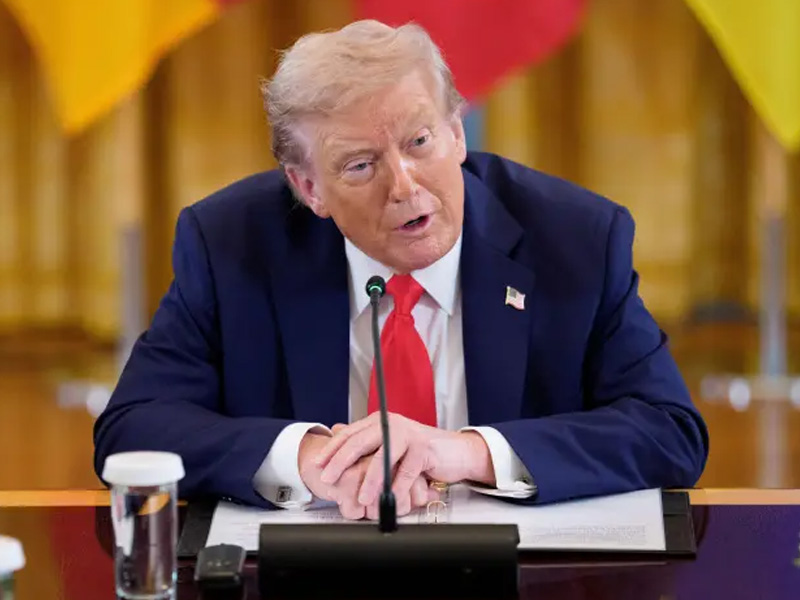
US President Donald Trump said his administration held “very good discussions” with Iran during day-long negotiations on Tuesday, raising hopes that the five-month conflict could move closer to a diplomatic resolution.
Speaking in a television interview, Trump said the talks had made significant progress and expressed confidence that the Strait of Hormuz would soon reopen to commercial shipping.
“They had an all-day negotiation,” Trump said. “The Strait of Hormuz is going to be open very soon. If they back out again, they are going to get hit really hard.”
His remarks lifted market sentiment, with oil prices falling and global stocks rising on expectations that shipping through the strategically important waterway could soon resume.
Trump has repeatedly warned Iran of further military action if negotiations fail while maintaining that diplomacy remains the preferred path to ending the conflict.
However, Iranian state media, citing an informed source, said any agreement involving Oman over the Strait of Hormuz would remain on hold as long as the United States continued to threaten Iran.
The Strait of Hormuz, one of the world’s most critical energy chokepoints, normally carries about one-fifth of global oil and liquefied natural gas shipments.
Despite the renewed diplomatic efforts, Trump has yet to achieve the objectives he outlined at the start of the conflict, including dismantling Iran’s nuclear programme, limiting its military capabilities and weakening its leadership.
Commercial shipping through the Strait of Hormuz has been severely disrupted since the conflict escalated, while the United States has continued to enforce restrictions on Iran-related shipping and ports.
Qatar said mediation efforts were making progress despite earlier Iranian denials that formal negotiations were taking place.
Qatar’s Emir, Sheikh Tamim bin Hamad Al Thani, discussed efforts to bridge differences between Washington and Tehran during a telephone conversation with Trump on Tuesday.
Iran’s Foreign Ministry said discussions with Oman on safe transit through the Strait of Hormuz were continuing, with both sides seeking to establish secure shipping routes while safeguarding their respective interests.
Iran has long argued that it should jointly manage the Strait of Hormuz with Oman but recently rejected an Omani proposal that would have introduced shared oversight and voluntary navigation fees.
Meanwhile, Yemen’s Iran-aligned Houthi movement has maintained its naval blockade targeting Saudi Arabia in the Red Sea, further disrupting regional oil export routes.
The United Nations’ International Maritime Organization said at least 17 seafarers have been killed in 64 incidents in the Strait of Hormuz since the conflict began on February 28.
Iran has reported more than 3,400 deaths since the war began, while the United States says 18 of its military personnel have been killed.
Ojo Triumph