Screenshot

On any given day, a young entrepreneur in Kampala is searching for capital to expand a small business.
In Cairo, a university student is preparing for a career in diplomacy. In Rabat, a software developer is building the next digital solution, while in Lagos a graduate is wondering where the next opportunity will come from.
Their languages, cultures and political systems may differ, but their ambitions are remarkably alike. That simple reality lies at the heart of this year’s United Nations International Youth Day theme: “Different Contexts, Common Aspirations.”
This is a reminder that despite the diversity of our backgrounds, young people across the world are united by a common desire – to live in peaceful societies, access quality education, find meaningful work, innovate, and contribute to something greater than themselves.
Few regions illustrate this shared destiny more clearly than Africa and the Arab world. Having worked with young people across both regions through the Afro-Arab Youth Council, I have come to appreciate that diplomacy is often strongest during conversations between young people determined to solve common problems, and not in conference halls.
For centuries, the two regions have been connected by trade, culture, scholarship and diplomacy. Today, they are connected by young people whose future will largely determine the direction of both regions.
Africa is home to one of the world’s youngest populations. The Arab world continues to invest in education, technology, infrastructure and innovation. Together, these strengths present a compelling case for partnership.
This is where the Afro-Arab Youth Council (AAYC) finds its relevance. Founded on the principles of peace, unity and development, the Council recognises that diplomacy should not begin and end with governments.

Lasting international relations are built when people understand one another; when young leaders exchange ideas, when entrepreneurs collaborate across borders, and when cultures meet not in conflict but in conversation.
That is the quiet but transformative work the Council continues to champion. The timing could hardly be more important. Around the world, young people are growing up amid uncertainty. Wars continue to uproot families. Climate change is disrupting livelihoods.
Artificial intelligence is reshaping labour markets faster than education systems can adapt. Social media has connected humanity in unprecedented ways, yet it has also amplified misinformation, intolerance and division.
At the same time, millions of talented young people still struggle to find decent jobs or opportunities that match their potential. These challenges wear different faces depending on where one lives.
Yet beneath those differences lies a common aspiration: the desire for peace, dignity and opportunity. That is why the conversation about youth cannot be reduced to statistics or annual commemorations.
International Youth Day should challenge policymakers to ask a more fundamental question: Are we creating conditions in which young people can build the future they envision? Governments must invest more deliberately in education, vocational training and innovation.
The private sector should see young people as partners in economic transformation. Universities should expand opportunities for research, student exchanges and international collaboration.
Development partners should place greater trust in youth-led initiatives instead of just designing programmes for them. Equally important is the responsibility that rests with young people themselves.
Every generation inherits challenges and choices. Today’s generation can choose dialogue over division, cooperation over suspicion and innovation over despair. It can reject extremism, tribalism, sectarianism and hate speech in favour of mutual respect and shared purpose.
Peace is sustained by citizens who refuse to allow differences to become divisions. This is perhaps the greatest lesson behind the work of the Afro-Arab Youth Council. Peace, unity and development are not separate ambitions.
They depend on one another. Development cannot flourish where conflict persists. Unity cannot grow without mutual understanding. Peace cannot endure if young people are excluded from opportunity.
As we commemorate International Youth Day 2026, we should, therefore, resist the temptation to see this occasion as another date on the global calendar. Instead, it should serve as a renewed commitment to investing in the generation that will define the future of Africa and the Arab world.
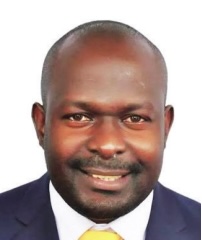
The author is the Secretary General of AAYC