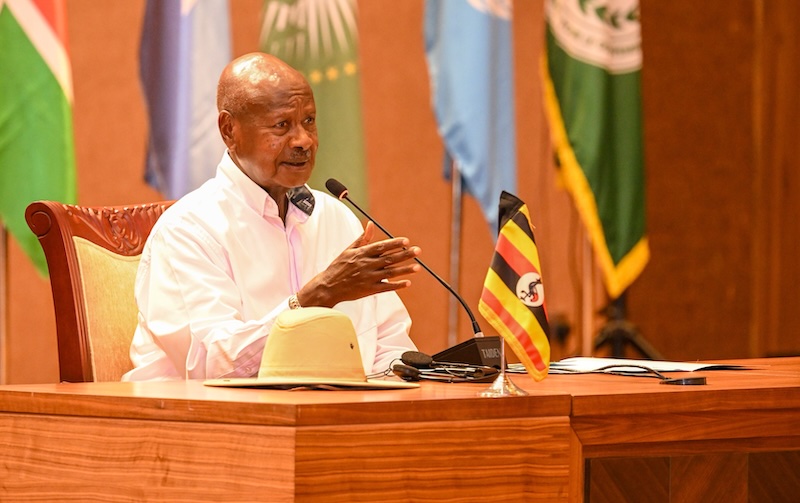
President Yoweri Museveni has said something many Ugandans have waited years to hear.
Torture, he wrote, is “immoral,” “self-defeating,” and contrary to the ideals for which the National Resistance Movement fought.
“The terrible thing is that these alleged torturers and maimers belonged to our security forces. Is this what we and the People of Uganda fought for?” It is a powerful statement.
It is also one that raises an uncomfortable question. If torture is so fundamentally at odds with Uganda’s values, why has it continued for so long, often in full public view? That question matters far more than the political dispute surrounding Stephen Nuwagaba.
Whether his allegations are ultimately proven in court is important and deserves a thorough investigation. But the larger issue is that his account fits into a pattern that has been documented repeatedly by Ugandan and international human rights institutions.
Only last week, the United Nations High Commissioner for Human Rights warned of what it described as the erosion of the rule of law, the growing role of the military in civilian affairs and a shrinking civic space.
Since the January 2026 elections, the UN says dozens of opposition supporters, journalists and human rights defenders have been subjected to violations including enforced disappearances, torture and arbitrary arrest.
Earlier this year, the Uganda Human Rights Commission reached a similarly troubling conclusion. According to its annual report, 52 per cent of the complaints filed before its tribunal concerned violations of the right to personal liberty, including 133 complaints alleging detention beyond the constitutional 48-hour limit.
These are not isolated allegations. They are warning signs. Museveni himself appears to recognise this. His statement goes beyond defending Nuwagaba. It acknowledges something even more consequential: that there may be “criminals, including some in the Security Forces and other organs,” who are allegedly blocking information from reaching the country’s leadership and covering up wrongdoing.
If that assessment is accurate, it points to a profound institutional failure. A government cannot credibly argue that torture is unacceptable while allowing allegations to accumulate year after year without convincing accountability.
Nor can it rely on informal channels to expose abuses if formal oversight institutions are functioning as intended. Police professional standards units, military justice systems, Parliament, the Uganda Human Rights Commission, the Inspector General of Government and the courts all exist precisely because the rule of law should not depend on who manages to reach the President.
The contradiction is difficult to ignore. For nearly four decades, the NRM has anchored much of its legitimacy in the promise that it ended the arbitrary violence, disappearances and abuse that characterized earlier periods of Uganda’s history. Museveni himself invoked that history, recalling comrades who died fighting a state that tortured and killed its opponents.
“All these People did not suffer so that Ugandans are tortured, maimed or traumatized, again,” he wrote.
That moral argument carries weight. But history cannot substitute for accountability in the present. Torture is not an abstract constitutional debate for Ugandans. It erodes confidence in public institutions. Families fear reporting abuses.
Witnesses hesitate to testify. Citizens begin to doubt whether the law protects everyone equally or only those with influence. Torture damages not only its victims but also the legitimacy of the state itself. The President is right to condemn torture. The challenge is turning condemnation into lasting institutional reform.
That begins with transparent investigations into every credible allegation. It requires prosecutions where evidence supports criminal charges, protection for victims and witnesses, and public reporting on the outcomes of investigations.
Oversight institutions must be allowed to operate independently, and security agencies must demonstrate that no officer is beyond accountability. Equally important, the constitutional guarantee against torture must become more than words on paper.
Every Ugandan taken into custody should have prompt access to legal representation, medical examination and judicial oversight. These are not privileges. They are safeguards against abuse.
Museveni has posed the right question: “Is this what we and the People of Uganda fought for?” Uganda now needs an answer measured not by speeches or historical reflections, but by whether torture finally becomes the exception rather than a recurring feature of public life.