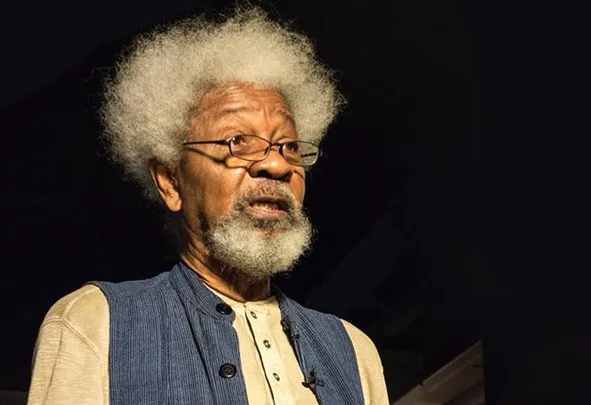
Nobel Laureate, Professor Wole Soyinka, has raised concerns over what he described as a growing culture of silence in the face of extrajudicial killings, abuse of power and other violations of citizens’ rights, warning that public indifference allows impunity to persist.
Soyinka spoke in Port Harcourt at the 28th Wole Soyinka Lectures, themed “Reclaiming the Nigerian State through Accountability, Justice and Civic Courage”.
The literary icon dedicated his 2026 lecture to victims of alleged state abuses and mob violence, saying the crisis facing Nigeria is not only about the loss of lives but also the failure of institutions and citizens to demand justice.
He argued that whenever Nigerians remain silent after unlawful killings or abuse, the value placed on human life continues to decline.
“The crime is the silence of the rest of us, that such a thing is possible and that the killers of that girl can actually go on television, hold up a match and say, ‘This is the match with which I set her on fire”.
Soyinka said accountability must remain central to any attempt to rebuild the country, insisting that those accused of violating human rights must face justice regardless of their position or affiliation.
He also rejected suggestions that speaking out against injustice could worsen religious or ethnic tensions, stressing that defending human dignity should be a shared responsibility.
“The human being remains the most fundamental unit of society”, he said, adding that citizens must continue to demand justice whenever lives are lost unlawfully.
The Nobel laureate called for greater vigilance from Nigerians, particularly in cases involving alleged unlawful killings, saying silence from society weakens the fight against injustice.
In his keynote address, former Minister of Aviation, Chief Osita Chidoka, said the foundation of justice begins before matters reach the courtroom, particularly in the decisions made by law enforcement agencies.
Chidoka said the justice system must ensure that citizens receive fair treatment regardless of their social status, political affiliation or personal connections.
He raised concerns over prolonged pre-trial detention in Nigeria, describing it as a major challenge affecting thousands of citizens. According to him, a significant number of inmates in correctional facilities are awaiting trial, leaving many people in prolonged uncertainty.
“Each of these is a life in suspension, a job lost, a family destabilised, someone’s health failing. When the state causes that delay, and the citizens pay for it in lost liberty, the delay is not inefficiency. It is a form of violence carried out by the state itself”.
Chidoka stressed that justice must apply equally to everyone, including unpopular individuals and those with opposing views.
“Where justice is negotiable, citizenship becomes hierarchical”, he said.
Earlier, chairman of the occasion and former Managing Director of the Niger Delta Development Commission, Chief Timi Alaibe, said sustainable national development cannot thrive where accountability remains weak.
Alaibe, drawing from his experience in public service, said strong institutions are essential to restoring public confidence and ensuring that resources are effectively used. He urged participants from government, business, academia and civil society to view the lecture as a call to action rather than a ceremonial event.
“Nations are not reclaimed by rhetoric alone; they are reclaimed when conscience triumphs over confidence; when institutions are stronger than individuals; when citizens summon the courage to do what is right, even when it is difficult”, Alaibe said.
The speakers agreed that rebuilding Nigeria requires stronger institutions, active citizenship and a justice system capable of protecting the rights of every citizen.