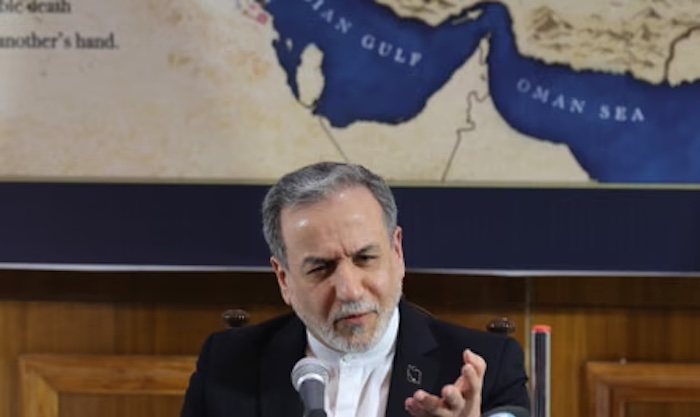
Iran has rejected Oman’s proposal for regional joint management of the Strait of Hormuz, dealing a blow to efforts to end a months-long dispute that has disrupted Gulf trade.
A senior Iranian official told Reuters on Wednesday that the proposal had “no chance of success”, despite Oman’s efforts to broker a regional agreement over the strategic waterway.
The plan sought to establish joint management of the Strait of Hormuz, through which about a fifth of global oil and liquefied natural gas passed before the US and Israel attacked Iran in February.
The Iranian official said the US and Saudi Arabia were pressuring Oman to advance “unrealistic plans” for the strait.
The official added that Iran insists the entire inbound shipping route and part of the outbound route through the Strait of Hormuz must remain under Iranian control.
A proposed 50-50 joint control arrangement with Oman would not serve Iran’s interests, although Tehran continues to regard Oman as a valuable neighbour, the official said.
Iran’s Revolutionary Guards (IRGC) said on Wednesday that its naval forces intercepted three oil tankers in the Strait of Hormuz after they ignored warnings and used what it described as an “unsafe and illegal route”.
The IRGC said it continued to maintain full control of the strategic waterway and warned that “unlawful U.S. military interference” and instructions to vessels operating in the region would not go unanswered.
Reuters could not independently verify the IRGC’s account.
Oil prices rose by more than $3 a barrel on Wednesday as hostilities intensified.
The US and Saudi Arabia carried out strikes on Iran-backed groups in Iraq, saying they were responsible for drone attacks on Saudi oil facilities. Iran rejected the accusation.
An Iranian defence official told state television that linking Iran to attacks on US interests in the region was a “major miscalculation”.
Earlier on Wednesday, the US military said its air defences had intercepted an Iranian attack targeting US troops in the region.
The IRGC said it had fired several ballistic missiles at US military installations in Jordan.
Jordan’s military said its air defences intercepted and destroyed five Iranian missiles aimed at the country.
Saudi Arabia said its air defences had also intercepted several drones targeting oil facilities in the kingdom’s Eastern Province. Saudi officials said Iran-backed militias launched the attacks from Iraqi territory.
Later, US Central Command and Saudi Arabia’s Defence Ministry said they struck multiple sites in eastern Iraq that they said had been used to direct the drone attacks.
Iraq’s Popular Mobilisation Forces said several of its headquarters were hit in the strikes. It said preliminary reports showed several people were killed and others injured, while multiple buildings and facilities were damaged.
On Tuesday, Reuters reported that Oman had presented Iran with a Gulf-backed proposal to jointly manage the Strait of Hormuz, including a system of voluntary fees paid by ships using the waterway.
The proposal was modelled on the Strait of Malacca, where Indonesia, Malaysia and Singapore collect voluntary contributions to fund navigation, environmental protection and search-and-rescue operations.
Iran effectively closed the Strait of Hormuz after the US and Israel attacked the country on February 28.
Although a deal reached last month between Washington and Tehran partially reopened the route, the agreement collapsed in early July after Iran fired on vessels using a shipping channel it does not recognise.
Faridah Abdulkadiri