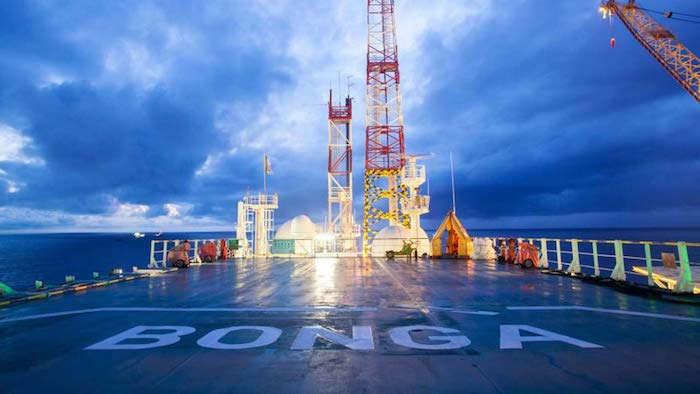
A former Managing Director of Nigeria LNG (NLNG), Babs Omotowa and Energy Analyst, Kelvin Emmanuel have disagreed sharply over the federal government’s decision to grant Shell Plc an enhanced $11.50 per barrel production-linked tax incentive for the Bonga South West Aparo deepwater project.
Omotowa, a non-executive director at the Nigerian National Petroleum Company (NNPC), former independent non-director at Seplat and ex-Shell executive defended the fiscal concession as a necessary catalyst for a $20 billion investment.
But Emmanuel described it as an overly generous package that favours operators at the expense of government revenues.
The exchange, which unfolded on social media, specifically on LinkedIn, attracted widespread attention within Nigeria’s oil and gas industry, highlighting the growing divide over the use of fiscal incentives to revive investment in the country’s upstream sector.
The controversy followed President Bola Tinubu’s approval of an investment-linked fiscal package for the long-delayed Bonga South West Aparo development, including a production tax credit of $11.50 per barrel, which experts say is more than double the standard incentive provided under the Petroleum Industry Act (PIA).
The package is expected to unlock the project’s Final Investment Decision (FID) after almost two decades of delays.
In an article titled: “100% of Zero is Zero: What NLNG Teaches Us About the Bonga SW Tax Incentive,” Omotowa argued that the value of the incentive should be judged by its ability to unlock investments that would otherwise remain stranded.
Drawing parallels with the NLNG project, he noted that the NLNG Act of 1989 was also criticised for offering generous tax incentives but eventually unlocked billions of dollars in investment and substantial long-term returns for Nigeria.
According to him, undeveloped projects generate no revenue, employment or economic value.
“The Bonga South West field has sat stranded since 2010. This is nearly two decades of idle oil that has paid no dividends, created no jobs and funded no roads simply because it has never been allowed to flow,” Omotowa wrote.
He argued that NLNG has since generated about $130 billion in sales revenue, more than $36 billion in direct fiscal revenues to the government, alongside thousands of jobs and significant domestic economic activity, demonstrating that carefully designed incentives can produce lasting national benefits.
Omotowa further maintained that petroleum-producing countries routinely deploy competitive fiscal terms to attract investment capital and that Nigeria must compete with jurisdictions such as Guyana, Brazil, Angola and Mozambique.
Responding, however, Emmanuel dismissed the comparison with NLNG, insisting that the terms approved for the Bonga project amounted to an unnecessary windfall for the operators.
“The terms for both Bonga SW and North are a bonanza for the operators, considering they got quid pro quo for decommissioning and abandonment liabilities for their pre and post divestment liabilities on nearly 2,000 wells onshore,” he wrote.
While acknowledging the need to stimulate activity in the sector, Emmanuel argued that the package would adversely affect the federal government’s cash flow over the next decade.
“It is expedient for activity in the sector, but it’s hasty and not beneficial for the cash flow of the FGN over the next decade. If these terms are modelled and compared with other jurisdictions, it will look like Nigeria just started its oil and gas sector.
“ Nothing ingenious or remarkable about the terms that got them to FID because no sensible IOC will turn it down. Let us call a spade a spade,” he emphasised.
He also questioned whether similar fiscal concessions would be extended to indigenous investors, asking if the same treatment would be accorded to the Dangote Group should it develop a large-scale LNG project.
Emmanuel challenged Omotowa’s assertion that Dangote Refinery had benefited from preferential foreign exchange allocations, while also raising questions about NLNG’s reported value creation and the accounting for equity LNG volumes allocated to shareholders.
In response, Omotowa insisted that his central argument was the need to create an investment environment capable of attracting large-scale capital into Nigeria’s energy sector.
He argued that Dangote Refinery had also benefited from various government incentives, including Free Trade Zone (FTZ) advantages, stressing that Nigeria should not hesitate to extend similar support to future strategic investments.
However, asked whether he would support granting Dangote comparable fiscal terms for an LNG project, Omotowa replied: “The answer is a resounding yes. The NLNG incentive works and has unlocked $68bn in value for Nigeria.”
He also rejected Emmanuel’s position on decommissioning liabilities, noting that the PIA and the Nigerian Upstream Petroleum Regulatory Commission’s (NURPC) divestment framework already provide clear mechanisms for funding abandonment and decommissioning obligations.
In his intervention, a former Technical Adviser to the Minister of State for Petroleum Resources, Justice Derefaka, supported Omotowa’s position, arguing that fiscal incentives should be viewed as investment enablers rather than giveaways, maintaining that a smaller share of a productive project was preferable to the entirety of an unrealised opportunity.
The debate comes as Nigeria intensifies efforts to revive upstream investment after years of declining capital inflows and production challenges.
The Bonga South West Aparo project is expected to attract about $20 billion in foreign direct investment, produce about 150,000 barrels of crude oil per day and 140 million standard cubic feet of gas daily, while creating more than 5,000 direct and indirect jobs once development begins.
Emmanuel Addeh