Screenshot
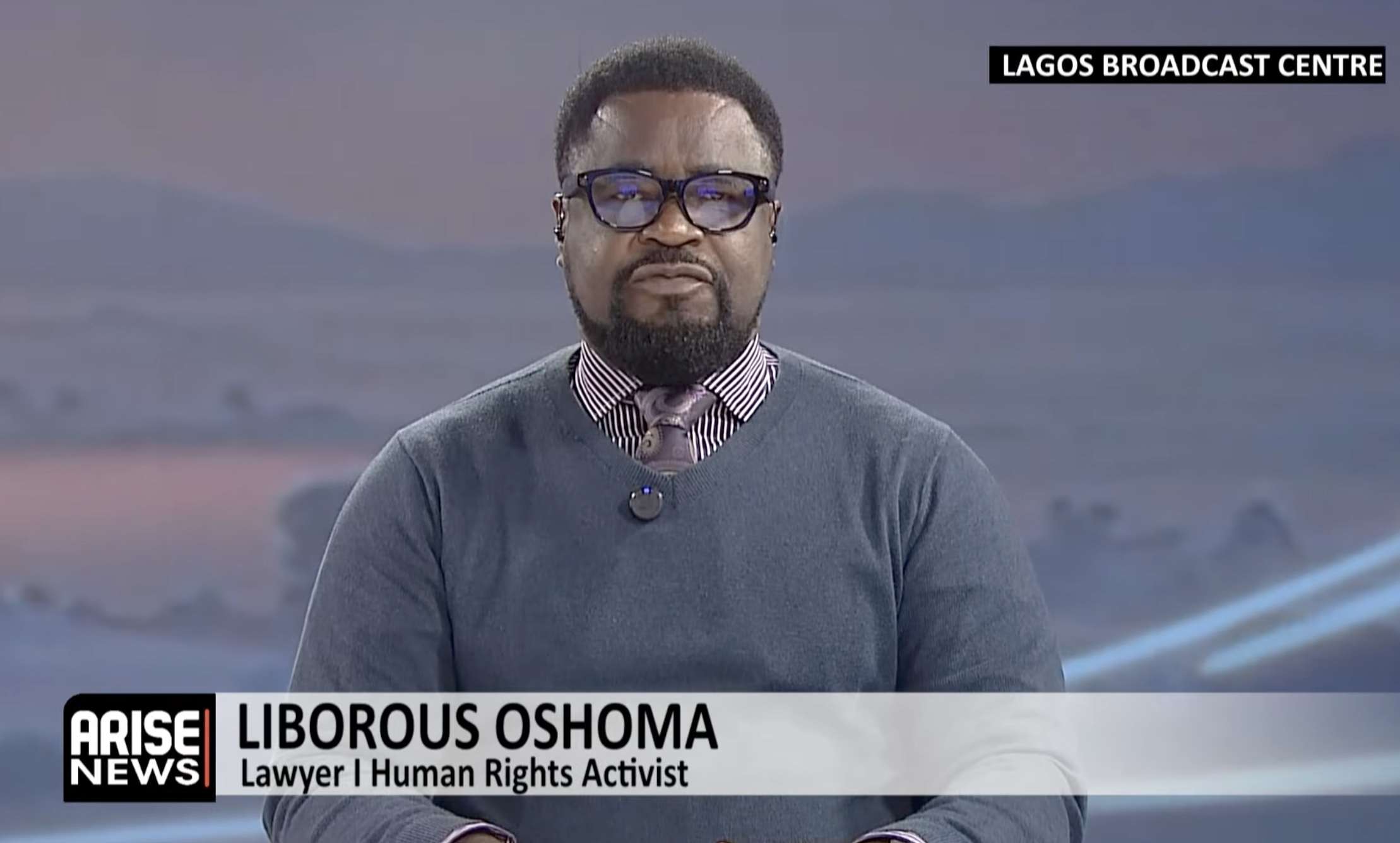
A lawyer and Human Rights activist, Liborous Oshoma, has said the African Democratic Congress (ADC) must convince the Supreme Court that its suspended caretaker committee did not conduct the party’s congresses, warning that the party’s legal standing ahead of the 2027 general elections depends on the evidence it presents before the Supreme Court.
Recall that the Court of Appeal in Abuja, in a split two-to-one judgment, set aside an earlier restraining order against the Senator David Mark-led caretaker leadership of the African Democratic Congress (ADC), effectively barring the Independent National Electoral Commission, (INEC), from recognising congresses conducted by the caretaker committee.
The decision followed a suit challenging the legality of the caretaker arrangement, with the court holding that the dispute raised constitutional issues warranting judicial intervention.
Speaking during an interview on ARISE NEWS on Wednesday, Oshoma maintained that the party’s case before the Supreme Court would largely depend on whether it can demonstrate that the suspended caretaker committee played no role in conducting the disputed congresses, insisting that such evidence would be crucial to determining the validity of the process.
“Certainly, it will create a legal crisis for the ADC ahead of the elections coming up in 2027. The ADC has argued that the tenure of these state executives expired in May, and because of that, they suspended the caretaker committee. It is now up to them to put all of these material facts before the Supreme Court, as I understand an appeal has been lodged.

“They must present the facts showing that the caretaker committee was subsequently suspended and did not conduct the congresses or primaries.
“If the caretaker committee was indeed suspended and did not participate in the congresses, and it was the state executives who conducted them, they must present those documents to the Supreme Court,” he stressed.
According to him, while politicians may exploit internal crises to weaken their opponents, the law does not permit a party to replace duly elected executives with a caretaker committee while their constitutionally recognised tenure is still subsisting.
“That is why people see politics playing out here. Politicians will always look for opportunities to throw a spanner in the works of their opponent’s camp. That is why it is always better to put your house in order and not allow issues like this to crop up. This is a valid legal position: when the tenure of the executive members is still subsisting, you have no right or power to subvert it by appointing caretaker committees.”
Responding to claims that the Court of Appeal lacked jurisdiction to entertain the matter because it concerned the internal affairs of a political party, Oshoma argued that the law must be interpreted in line with judicial precedents.
“Your interpretation is a half-measure interpretation. The law is what the court says it is, not just what is written on paper. That is why, as lawyers, when we cite a section, we go further by looking at how the Supreme Court has interpreted it.”
He maintained that the Supreme Court has consistently held that while courts generally refrain from interfering in party affairs, they are empowered to intervene where a party’s constitution or the Nigerian Constitution has been breached, warning that any contrary interpretation would encourage impunity and undermine the rule of law.
“Justice Malik also noted that while courts will restrain themselves, they must intervene when constitutional provisions have been breached. If you give that section a blanket interpretation, you are inviting anarchy. It would mean a political party could violate its own constitution with impunity, and the courts could do nothing. That is not the intention of the lawmaker. If everyone decided to interpret the law purely on their own terms, that would be an invitation to chaos,” he warned.
On the implications of the judgment, the lawyer said the ruling poses a threat to the tickets of candidates produced through congresses or primaries conducted by the disputed caretaker committee, including the party’s presidential ticket.
He, however, noted that the final outcome now rests with the Supreme Court, which he said would resolve the conflicting court decisions surrounding the David Mark-led leadership of the ADC.
“Yes, the presidential ticket is threatened by this court judgment. If the court asks INEC not to recognize candidates elected on the platform of congresses or primaries conducted by an illegal caretaker committee, those tickets are in jeopardy.
“As I said, it is now up to them to present the material facts to the Supreme Court. As we speak, INEC has uploaded the names because another court had previously recognized the David Mark faction as the authentic faction. What that means is we have conflicting interpretations, and it is the Supreme Court that will eventually decide the way forward.
“At the end of the day, just like what happened in Atiku’s case in 2007, the truth will be laid bare, but time might not be on their side,” he said.
Favour Odima