Iran’s Islamic Revolutionary Guard Corps (IRGC) said Tuesday it launched ballistic missiles at a US military base in Jordan, as Washington concluded a five-hour assault on Iranian targets and the conflict between the two countries intensified.
In a statement carried by Iran’s Fars News Agency, the IRGC said it harboured no hostility toward the Jordanian people, describing them as strong supporters of the Palestinian cause while urging them to oppose the continued presence of American military bases in the kingdom.
Jordan’s armed forces, however, said its air defence systems intercepted and destroyed four missiles that entered the country’s airspace from Iran, according to the state news agency. Authorities said there were no immediate reports of casualties or damage.
The exchange came after the United States completed a five-hour military operation against Iranian targets, marking the third consecutive night of strikes ordered by President Donald Trump. The latest operation also saw Washington reinstate a naval blockade on Iranian shipping while proposing a 20% security fee on cargo transiting the Strait of Hormuz.
Iranian state media reported that several cities were struck during the US offensive, with at least four people wounded as emergency crews carried out rescue operations.
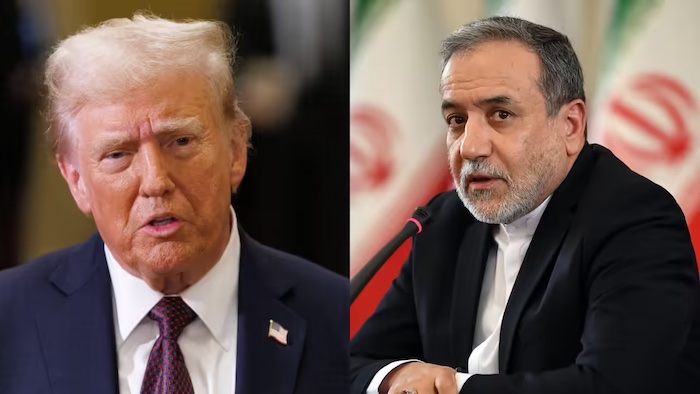
Speaking on The Hugh Hewitt Show on Monday, Trump vowed to intensify military action against Iran, saying US forces would continue striking Iranian targets with overwhelming force.
The latest exchange followed Tehran’s announcement over the weekend that it was closing the Strait of Hormuz, raising fresh concerns over global energy supplies and casting doubt on efforts to preserve an interim agreement aimed at easing hostilities.
Trump later declared on Truth Social that the strategic waterway would remain open regardless of Iran’s actions, announcing the reinstatement of what he described as an Iranian shipping blockade. He also proposed imposing a 20% charge on cargo passing through the strait, arguing that the United States should be compensated for protecting one of the world’s busiest maritime trade routes.
Iran swiftly rejected the proposal, with its senior military leadership insisting that Washington had no authority over the future of the waterway. Foreign Minister Abbas Araqchi said Tehran would remain the permanent guardian of the Strait of Hormuz and dismissed Trump’s proposed transit fee as excessive.
Before the conflict escalated earlier this year, nearly one-fifth of the world’s oil and gas shipments passed through the Strait of Hormuz each day, making it one of the most strategically important energy corridors. Analysts warn that any prolonged disruption or additional shipping costs could have significant consequences for global energy markets.
The United Nations’ maritime agency also criticised Washington’s proposed transit charges, saying international law provides no legal basis for imposing mandatory tolls on vessels navigating international straits.
Oil prices climbed nearly 3% on Tuesday to their highest level in four weeks as investors reacted to the renewed military escalation and growing uncertainty over shipping through the Strait of Hormuz.
Meanwhile, the United Arab Emirates Ministry of Defence said two Emirati oil tankers were struck by Iranian cruise missiles while transiting Omani territorial waters near the southern approach to the strait.
Separately, the United Kingdom Maritime Trade Operations (UKMTO) said a commercial tanker was hit by an unidentified projectile northeast of Oman’s Qalhat. Reuters could not immediately verify whether the incident was the same as the one reported by the UAE Ministry of Defence.
Iranian media later quoted the IRGC as saying two “offending” supertankers had been disabled after allegedly ignoring repeated warnings and switching off their navigation systems. The force accused the United States of encouraging vessels to use what it described as an illegal route and warned that cooperation with Washington could further disrupt maritime traffic and deepen the global energy crisis.
The US Navy-led Joint Maritime Information Center said the renewed blockade would take effect at 2000 GMT on Tuesday and apply to all vessel traffic along Iran’s coastline, including its ports and oil terminals. It added that humanitarian shipments would be allowed following inspection, while neutral vessels travelling to and from non-Iranian destinations would retain transit rights through the Strait of Hormuz.
The latest escalation underscores the widening regional conflict, with military operations extending beyond Iran and Israel, heightening fears of further instability across the Middle East and increasing risks to global energy supplies and maritime security.
Goodness Anunobi