Screenshot
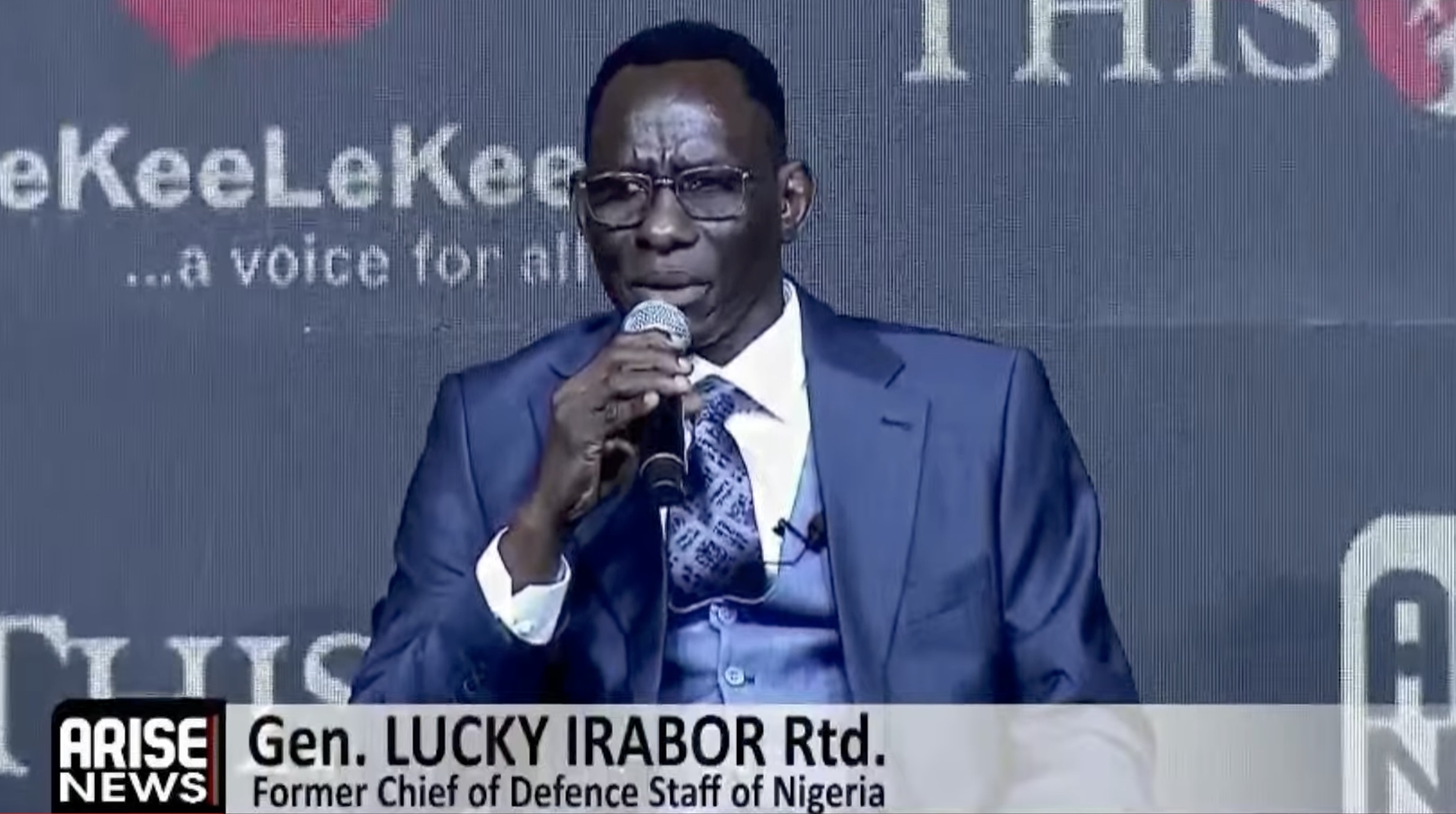
Former Chief of Defence Staff, General Lucky Irabor (Rtd), has urged Nigeria to address the structural deficiencies affecting the Nigeria Police Force before fully implementing state police, warning that failure to tackle existing weaknesses could simply replicate the same problems at the sub-national level.
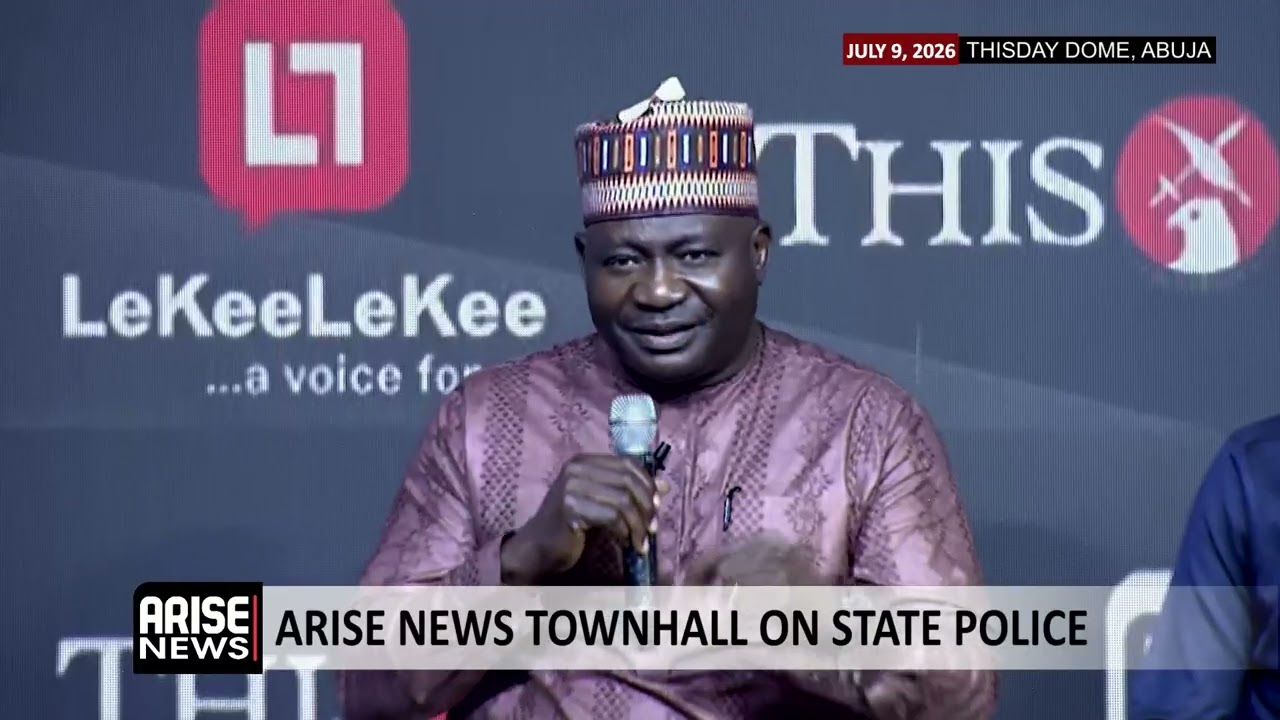
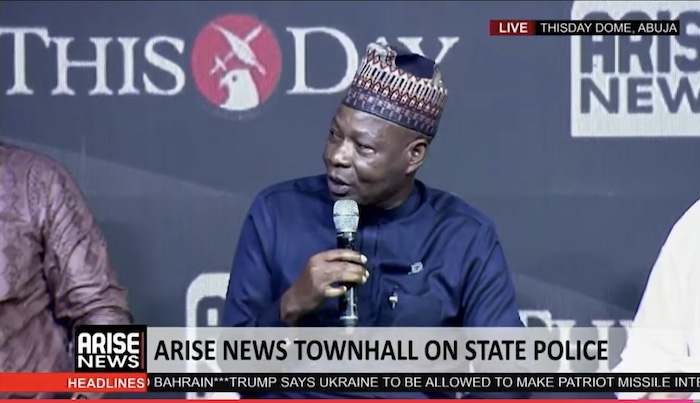
Speaking at the ARISE News Town Hall on State Police, Irabor said the debate should focus less on the presence of police officers at the grassroots and more on devolving command and control to improve operational effectiveness.
Responding to concerns about state policing, the retired defence chief argued that many Nigerians misunderstand what state police actually entails.
“Before I address your question, let me bring greater clarity to what I consider to be a misconception regarding state police,” he said.
“Sometimes we fail to realise that currently we have police stations across the country, down to the local government and even village levels. That is what we have today.”
According to him, the argument that state police would simply bring policing closer to the grassroots overlooks the real issue.
“When people say policing needs to get to the grassroots and state police will help achieve that, I think they miss the point. State police versus federal police is really about command and control. Which level exercises command? Which level has the authority to respond more quickly and improve law enforcement? That is where state police comes in.”
Irabor stressed that the proposed reform is not about recruiting more officers from local communities, noting that local representation already exists within the Nigeria Police Force and the Armed Forces.
“It is not about whether officers will be recruited from the communities because currently there is no local government without representation in the federal police, just as there is representation in the Armed Forces. What we are looking at is a structure where command and control are sufficiently devolved to ensure quicker responses to security challenges.”
The former Chief of Defence Staff said he does not foresee duplication of responsibilities between federal and state police, insisting that multiple policing layers could strengthen national security if properly coordinated.
“I do not think there will be duplication of responsibilities because, in my view, the more, the merrier. But there is a caveat.”
He explained that before establishing state police, Nigeria must first understand why the current federal policing system has struggled to deliver effective security.
“We have not taken sufficient time to interrogate why the federal policing system is not effective. Our failure to do so is something we must correct now while discussing state police.”
Irabor expressed confidence that state police would eventually become a reality following legislative approval.
“I believe state police is already coming into existence. I believe the State Houses of Assembly will give concurrence to what the National Assembly has done.”
However, he warned that unless the root causes of the federal police’s shortcomings are addressed, the same problems would inevitably affect state police.
“When state police fully come on stream, the disease that has infected the federal police must be addressed at its roots so that it does not infect the state police as well.”
Irabor identified logistics, equipment, training and organisational structure as critical issues requiring urgent attention.
“It is necessary for us to examine how the federal police are currently structured, including logistics, equipment, training and several other indicators.”
He called for a nationally coordinated framework for training state police officers to ensure professionalism and consistency across all states.
“For state police, the same standards must apply. Training establishments need to be created. Training protocols, equipment standards and operational guidelines must all be clearly specified.”
“Otherwise, we will end up with different approaches to policing from one state to another. To ensure a uniform structure, uniform training and policing doctrine, designated training institutions should be established where recruits, regardless of their state of origin, receive the same professional training before returning to serve in their respective states.”
The retired general also stressed the need for balanced recruitment across local government areas while ensuring only suitable candidates are enlisted.
“We must determine how to ensure adequate representation from every local government. We also need to ask who exactly we are recruiting and how we prevent criminals from finding their way into the state police.”
According to Irabor, resolving these implementation issues is essential if state police are to achieve their intended purpose.
“These are the bigger issues we must resolve if we are to achieve the objectives behind establishing state police.”
Although he believes the reform is long overdue, Irabor maintained that careful planning is essential to building an effective policing system.
“State police, in my view, ought to have happened yesterday, but thank God we are having it today.”
“What we must now ensure is that we build a potent police force, not one where people see officers on the road and begin to question whether we are truly serious about law enforcement. Those are the issues we must address if we are to make meaningful progress.”
Boluwatife Enome