Screenshot
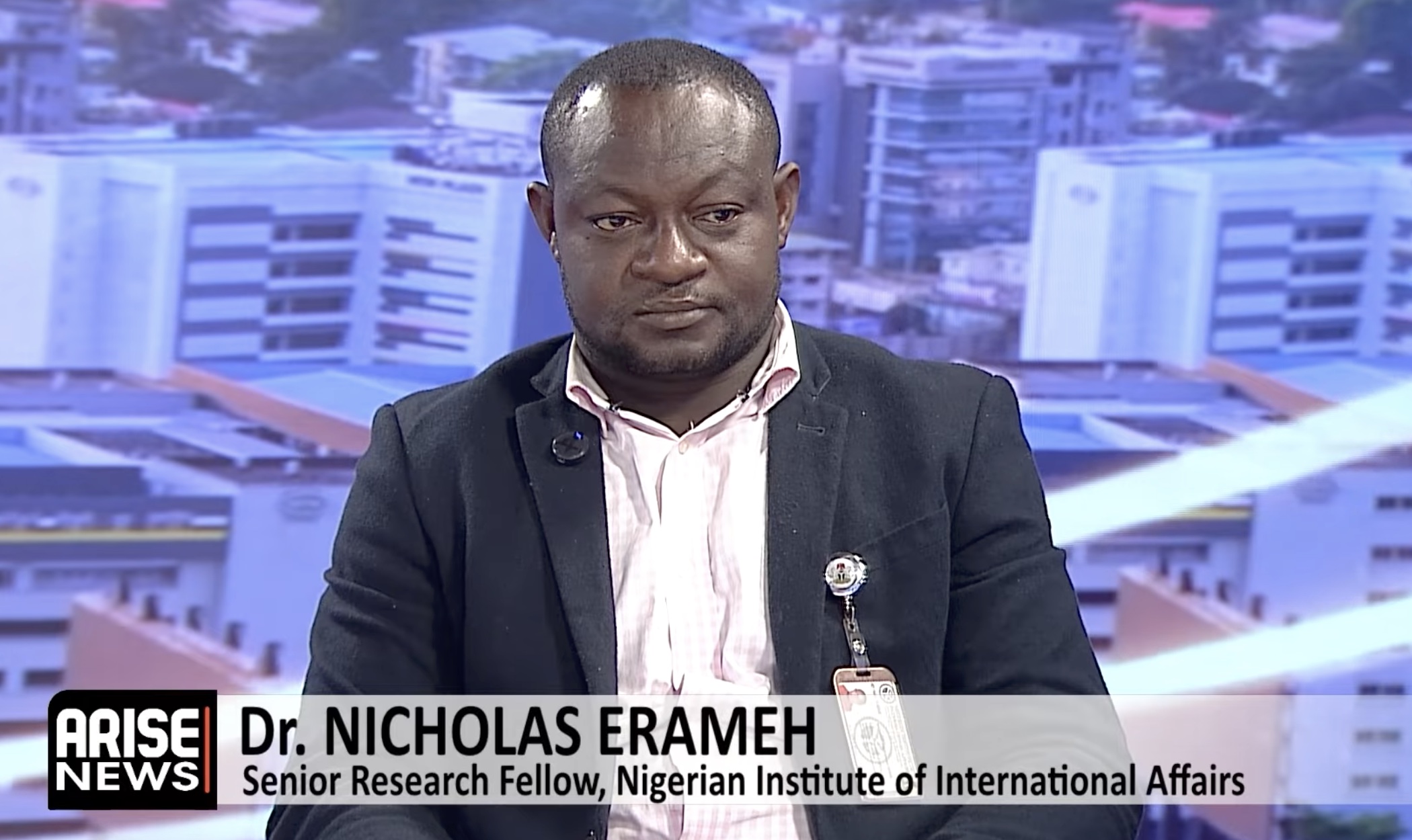
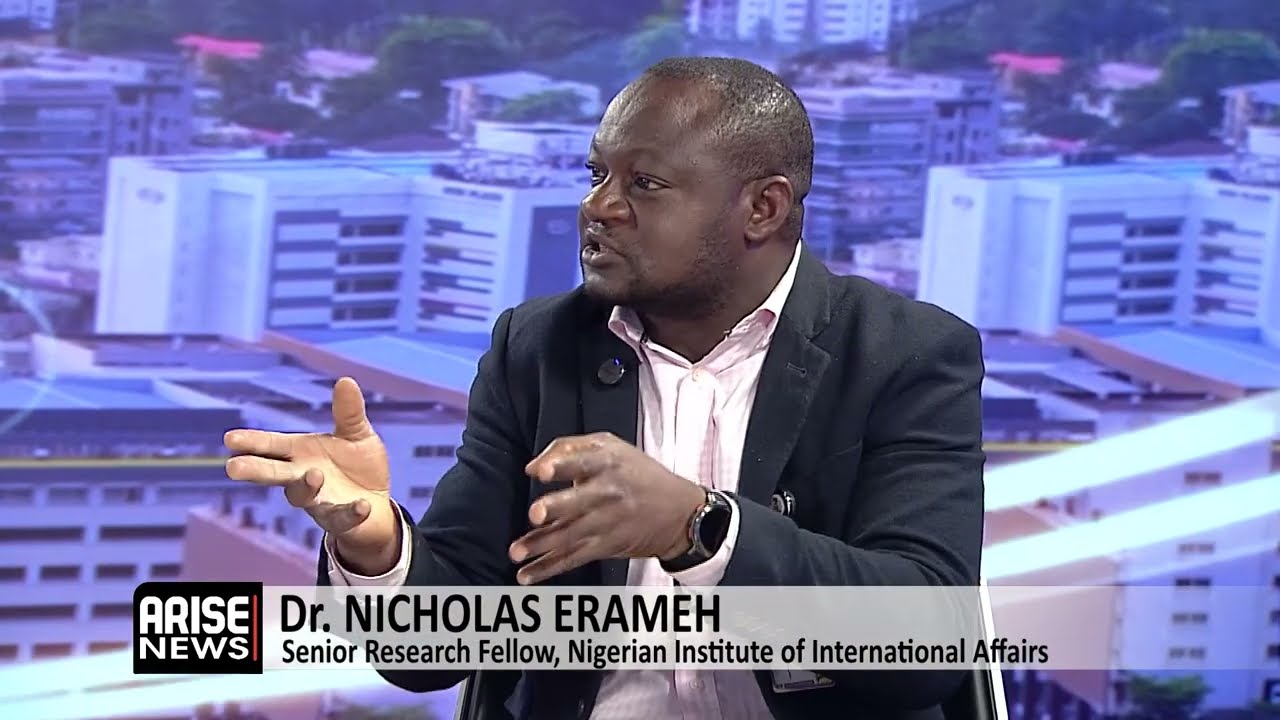
Senior Research Fellow at the Nigerian Institute of International Affairs, Dr Nicholas Erameh, has urged Nigeria and the African Union to exhaust regional diplomatic and legal mechanisms before considering international litigation against South Africa over the recurring xenophobic attacks on Nigerians.
Speaking during an interview on ARISE NEWS on Tuesday, Erameh described the Nigerian government’s response as “a step in the right direction,” while expressing disappointment over what he called South Africa’s failure to decisively address the repeated attacks and killings of foreign nationals.
His comments come amid renewed diplomatic tensions following Nigeria’s evacuation of several batches of citizens from South Africa after recent xenophobic attacks, the deaths of at least three Nigerians, and Abuja’s demand for accountability and compensation.
Erameh said the violence reflects a longstanding pattern in South Africa.
“If you understand the dynamics of South African society very well, you will see that every time issues like this come up, there is always a conspiracy of silence on the part of successive governments, and that itself has become a problem.”
While acknowledging that criminals exist in every society, he argued that the South African government’s handling of the crisis has been deeply disappointing.
“It is not to say that there are no criminals among Nigerians or even among South Africans, but the kinds of responses that have come from the South African government are very disappointing.”
He stressed that the crisis carries broader implications because Nigeria and South Africa occupy leadership positions on the continent.
“Nigeria and South Africa are expected to play regional leadership roles in Africa. They owe the continent what I call the burden of history in continuing to carry Africa’s aspirations.”
According to him, the continued attacks undermine ongoing conversations about greater African integration and free movement across the continent.
“At this moment, there are arguments that Africa does not even need borders. If we are discussing a borderless Africa, then Nigerians living in South Africa should not have their lives threatened every day.”
Erameh maintained that Nigeria was justified in issuing a strongly worded diplomatic protest.
“For me, I think it is a step in the right direction because these deaths have become one too many. The inability of the South African government to hold people accountable has made it necessary for Nigeria to remain proactive.”
He, however, argued that the dispute had not yet reached the stage of litigation before the International Court of Justice (ICJ).
“Personally, I do not think it has got to the point of going to the International Court of Justice. There are still African frameworks that can be used to address these issues.”
He warned against immediately internationalising the dispute.
“We need to examine these issues within the African context first. We should ask how Africa perceives these challenges and how African institutions should respond before seeking external intervention.”
Addressing calls for economic sanctions or restrictions on South African businesses operating in Nigeria, Erameh urged caution, saying any retaliatory measures should be carefully considered.
“The question is what kind of sanctions are we talking about? Economic sanctions, political sanctions or regional measures? Nigeria should clearly state the conditions under which it may sever ties or impose restrictions if South Africa fails to address these concerns.”
Drawing from personal experience after spending nearly three years in South Africa during his postdoctoral fellowship, Erameh criticised the stereotyping of Nigerians.
“I have lived in South Africa for about two to three years. Experiences differ, but there is a general perception about Nigerians.”
He condemned allegations linking all Nigerians to criminality.
“There are Nigerian doctors, specialists and professionals contributing significantly to South Africa’s economy. To suggest that every Nigerian should be associated with drug trafficking is demeaning and completely unwarranted.”
On undocumented migrants, Erameh insisted that immigration status does not remove a person’s fundamental rights.
“Regardless of their immigration status, people have human rights. Even war criminals have legal protections under international law. There is absolutely no justification for extrajudicial killings.”
He added that governments have an obligation to protect everyone within their territory.
“There is a dignity attached to every human life that must never be compromised, regardless of a person’s status.”
While acknowledging that irregular migration presents challenges worldwide, Erameh argued that governments must adopt humane and inclusive approaches.
“Migration can place pressure on any country, but what matters most is how governments respond. Countries that fail to adopt inclusive migration policies often create even bigger problems for themselves.”
He also criticised delays in processing immigration documents, saying many Africans become trapped in difficult situations.
“Some people become stranded because of migration and documentation issues. They cannot move forward and they cannot return home. It is a real problem that Africa must begin to address.”
Commenting on suggestions that domestic politics may be fuelling anti-immigrant rhetoric in South Africa ahead of elections, Erameh said politics often shapes public discourse in the country.
“Everything in South Africa is political. I experienced this even during the COVID-19 period when I lived there. So it is not surprising that migration issues are being intertwined with domestic politics.”
Nevertheless, he insisted that internal political considerations cannot justify attacks on foreigners.
“Regardless of South Africa’s local political dynamics, Nigerians and other Africans living there deserve protection. South Africans in Nigeria enjoy similar protections.”
Although he acknowledged calls for Nigeria to immediately institute proceedings at the ICJ, Erameh reiterated that African mechanisms should first be exhausted.
“Issues involving genocidal attacks should never be trivialised. Genocide develops in stages. If we ignore the early warning signs, the situation could escalate.”
He also questioned the continued use of the term “Afrophobia.”
“We should stop calling this Afrophobia and call it what it is. People are being killed day after day.”
In his closing remarks, Erameh admitted that the African Union has struggled to enforce its own legal instruments because member states are often both signatories and violators.
“The African Union’s Constitutive Act, particularly Articles 4(g) and 4(h), has not been effectively deployed because those expected to enforce it are sometimes the same actors violating it.”
He concluded by urging Nigeria to continue pursuing African diplomatic and legal channels before escalating the matter internationally.
“If Nigeria exhausts those African mechanisms and they fail, then we can move to the global stage. But issues like this must never be swept under the carpet.”
Boluwatife Enome