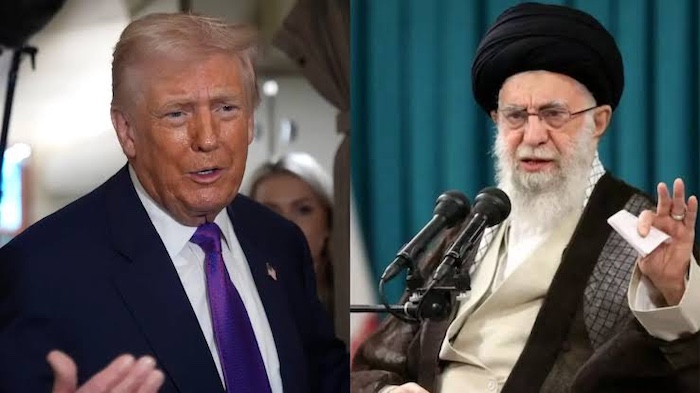
Iran in Saturday officially began several days of public funeral ceremonies for her slain Supreme Leader, Ayatollah Ali Khamenei, and as thousands gathered to pay their respects, mourners at the Grand Mosalla prayer complex in the Iranian capital beat their chests and chanted for revenge.
However, indirect negotiations between the United States and Tehran have gathered fresh momentum, despite a temporary suspension for Khamenei’s funeral, with both sides indicating cautious optimism.
Meanwhile, military tensions, diplomatic disagreements and disruptions to global shipping continued to threaten the fragile peace process.
This is just as Tehran on Saturday warned the United Kingdom and France against deploying military assets to the Strait of Hormuz after both governments announced they were prepared to support a multinational mission to safeguard freedom of navigation.
US President Donald Trump and Israeli Prime Minister Benjamin Netanyahu have also agreed to meet soon in Washington DC to discuss regional security and other bilateral issues, despite their differences on ways to resolve the Iranian issue.
Iran remained on high security alert as it yesterday officially began several days of public funeral ceremonies for Khamenei.
As thousands gathered to pay their respects, mourners at the Grand Mosalla prayer complex in the Iranian capital beat their chests and chanted for revenge.
An estimated 15 to 20 million people, alongside foreign dignitaries and religious leaders, were expected to take part in the ceremonies which will last for several days. Delegations from Hamas and Hezbollah joined the mourning on Friday, while others arrived yesterday.
Thousands of mourners, largely dressed in black, gathered at Tehran’s Imam Khomeini Grand Mosque as the multi-day funeral entered its first public phase on Saturday .
Senior Iranian officials, including President Masoud Pezeshkian, Foreign Minister Abbas Araghchi and parliamentary speaker Mohammad Bagher Ghalibaf, attended the ceremonies alongside foreign dignitaries from across the Middle East, Asia, Africa and Eastern Europe.
The heightened security reflects concerns over possible attacks against senior Iranian officials gathering publicly during the ceremonies, particularly after Israeli Defence Minister Israel Katz recently suggested that Khamenei’s successor remained “marked for death.”
Meanwhile, Trump and Netanyahu have agreed to meet soon in the US to discuss regional security and other bilateral issues, despite their differences on ways to resolve the Iranian issue.
Netanyahu could visit the White House as early as next week, Trump told Axios yesterday, adding that the prime minister “knows who the boss is” in their relationship.
The latest diplomatic developments came just days after representatives from Washington and Tehran concluded another round of indirect talks in Doha, Qatar, where mediators described the discussions as constructive, despite deep disagreements over Iran’s nuclear program and regional security.
The negotiations were briefly halted after Iran announced a pause to observe national mourning following the death of Khamenei, who was killed when the United States and Israel launched coordinated attacks on Iran on February 28, dramatically reshaping the political landscape of the Islamic Republic and triggering fears of wider regional conflict.
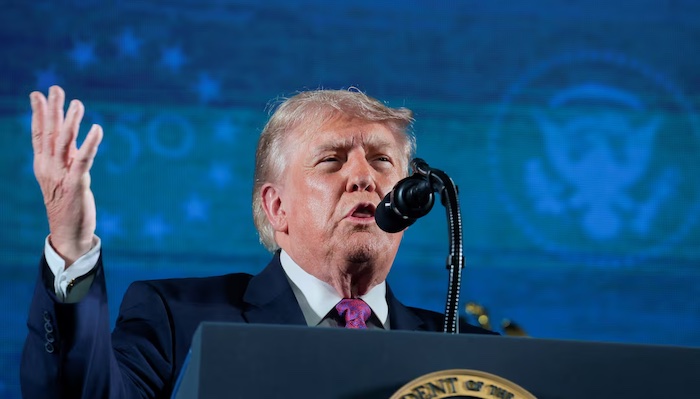
Speaking at Mount Rushmore on Friday, US President Donald Trump suggested the negotiations remained firmly on course despite the interruption, insisting Tehran was eager to reach an agreement.
“Iran is dying to settle,” Trump declared during his address. “We gave them a week off for a funeral, because we’re nice,” he added, referring to the temporary suspension of negotiations.
The latest round of talks in Doha was conducted indirectly, with Qatari mediators shuttling between separate American and Iranian delegations, reflecting the absence of formal diplomatic relations between Washington and Tehran.
Qatar’s Foreign Ministry spokesperson, Majed Al-Ansari, described the meetings as productive, saying negotiators had made “positive progress” on several outstanding issues.
According to Al-Ansari, preparations are already underway for another round of discussions, which will resume “at the earliest possible time” once Iran concludes the funeral ceremonies for its late supreme leader.
Although neither side disclosed details of the discussions, officials indicated that negotiations focused on sustaining the recently announced 60-day ceasefire while laying the groundwork for broader agreements on security and Iran’s nuclear activities.
According to senior US officials, Washington privately warned Iranian authorities earlier this year that Israel could attempt to assassinate key members of Tehran’s negotiating team.
The warnings, reportedly conveyed through intermediaries, centred on concerns that Israel might target Iran’s parliamentary speaker and chief negotiator, Mohammad Bagher Ghalibaf, as well as Foreign Minister Abbas Araghchi, one of Tehran’s most prominent diplomatic figures and a leading voice in negotiations with Washington.
However, Israel swiftly rejected reports suggesting it intended to assassinate Iranian negotiators.
In a statement posted on social media platform X, the Israeli Prime Minister’s Office dismissed the reports as “fake news” and “a complete fabrication of reality.” The Israeli Embassy in Washington also declined public comment on the matter.
Behind the scenes, however, differences between Trump and Israeli Prime Minister Benjamin Netanyahu over Iran appear to have widened.
According to US officials familiar with discussions between the two leaders, Netanyahu has grown increasingly frustrated with Washington’s emphasis on diplomacy, believing that sustained military pressure offers the best opportunity to weaken Iran permanently.
Trump, on the other hand, has reportedly become more convinced that negotiations present the best chance of preventing another prolonged regional war.
Reports indicate the two leaders engaged in a particularly tense telephone conversation in June after Israel proposed expanding military operations in Lebanon. Trump was said to have strongly objected to the plan, fearing it could derail the already fragile diplomatic process with Iran. Despite those disagreements, both leaders spoke again on Friday.
According to Netanyahu’s office, the Israeli prime minister congratulated Trump on the United States’ 250th anniversary celebrations during the call. The statement added that both leaders agreed to meet soon in the United States to discuss regional security and other bilateral issues.
While diplomatic efforts continue, implementation of the recently signed memorandum of understanding between Washington and Tehran remains uncertain.
Although both governments agreed to observe a 60-day ceasefire, the agreement deliberately postponed discussion of some of the most contentious issues, particularly the future of Iran’s nuclear stockpile and long-term monitoring arrangements.
Security concerns in the Gulf intensified further yesterday after commercial shipping experienced renewed disruption in the Strait of Hormuz, one of the world’s most strategically important maritime corridors.
Tracking data from ‘MarineTraffic’ indicated that at least eight commercial vessels attempting to transit the waterway either abandoned their journeys or made abrupt U-turns after approaching the narrow passage.
The affected vessels included vehicle carriers, chemical tankers, oil products tankers and a bulk carrier.
The latest maritime uncertainty coincided with renewed diplomatic tensions involving European powers.
Iran yesterday warned the United Kingdom and France against deploying military assets to the Strait of Hormuz after both governments announced they were prepared to support a multinational mission to safeguard freedom of navigation.
In a statement posted on X, Iran’s Deputy Foreign Minister Kazem Gharibabadi warned that any foreign military movement in the strategic waterway would be unacceptable.
“As a responsible power and guarantor of the Strait’s security, Iran warns against any military movement in this waterway. The security of Hormuz lies with the coastal states,” he said.
His remarks came a day after French President Emmanuel Macron and British Prime Minister Keir Starmer announced their readiness to contribute military resources to ensure safe passage for commercial shipping through the strait.
According to a joint statement by the two leaders, the Strait of Hormuz remains “a vital artery for the global economy,” making secure navigation an international priority.
The statement also disclosed that Oman had agreed to work with both countries to enhance maritime security in the region, although Omani authorities had yet to confirm the arrangement publicly.
Festus Akanbi and Sunday Ehigiator