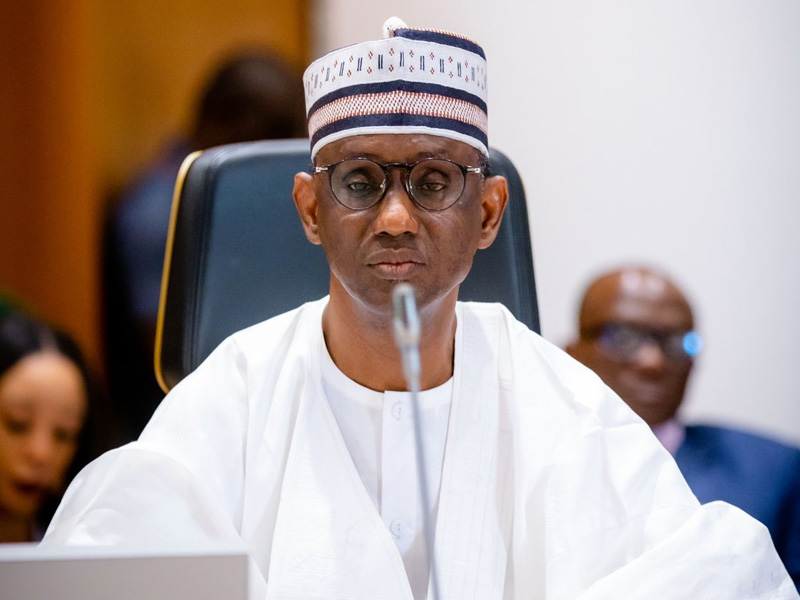
The National Security Adviser (NSA), Mallam Nuhu Ribadu, has warned that violent extremism, unconstitutional changes of government, transnational organised crime, arms trafficking and humanitarian pressures continue to pose serious threats to regional stability.
Speaking at the 4th UK-Nigeria Security and Defence Partnership Dialogue in Abuja on Tuesday, Ribadu said the evolving security landscape in West Africa and the wider Sahel region requires sustained attention from national authorities, bilateral and multilateral institutions, as well as international partners.
According to him, the interconnected nature of these threats means that insecurity within the region increasingly carries global consequences.
Reaffirming Nigeria’s commitment to regional peace and security, Ribadu said the country would continue to play its role as a leading security actor on the continent by working with partners to strengthen stability, promote democratic governance and build collective resilience against common threats.
He noted that terrorism, violent extremism, cybercrime, organised criminal networks, illicit financial flows, foreign information manipulation and interference, as well as the growing sophistication of transnational criminal organisations, demand unprecedented levels of cooperation among trusted partners.
“Both our countries are responding to a threat environment where challenges are increasingly interconnected and cross-border in nature. No nation can address these threats alone. Effective responses require coordinated action across defence, intelligence, law enforcement, diplomacy, cyber capabilities, and financial tools. This whole-of-government approach remains central to the future of our partnership.
“It is therefore fitting that SDP4 focuses on themes relating to national and regional leadership in an increasingly complex security environment. It is an opportunity to reflect on the challenges arising from cross-border insecurity, technological change, and the evolving threat landscape.
“These themes reflect our shared determination not only to respond to immediate threats but also to build resilient institutions capable of addressing future and more complex challenges.
“Nigeria remains firmly committed to confronting these challenges through a whole-of-government and whole-of-society approach. Significant progress has been made in degrading terrorist and criminal networks operating within our borders. Nevertheless, we remain mindful that these threats are dynamic, adaptive, and increasingly technology-driven”.
Nigeria’s security agencies, he said, must continue to strengthen their collective ability not only to respond to crises but also to anticipate and prevent them.
The NSA further described counterterrorism as a key pillar of the UK-Nigeria partnership, expressing appreciation for the United Kingdom’s support in strengthening crisis response capabilities, disrupting terrorist financing networks, enhancing investigations and supporting strategic communications.
In his remarks, the United Kingdom National Security Adviser, Jonathan Powell, commended the professionalism and dedication of Nigeria’s security services, describing the country as central to regional stability and collective security.
He said there was no substitute for Nigeria’s role in advancing peace and stability across West Africa and beyond.
“We are operating in an increasingly complex and interconnected security environment. Having recently returned to government after many years away, I have been struck by the extent to which modern threats have evolved and become intertwined,” he said.
Powell added: “Our partnership with Nigeria is not abstract. It is grounded in practical and sustained cooperation across the full spectrum of security engagement—from frontline operational support and institutional strengthening to crisis preparedness and future threat mitigation.
“The United Kingdom currently has military personnel in Maiduguri supporting Nigerian forces in their efforts to confront terrorism and insecurity. We have counterterrorism specialists working with Nigerian law enforcement agencies, and we continue to support the National Counter Terrorism Centre in strengthening its capabilities, including the development of forensic and investigative capacities that enhance the ability to respond to terrorist incidents with greater precision and effectiveness.”
Linus Aleke