Organised labour unions have warned that migrants aren’t to blame for South Africa’s crisis, condemning rising xenophobia while calling out state failure for fuelling unemployment and public anger.
“Migrants are not the cause of South Africa’s economic crisis. Exploitation, unemployment, corruption, economic failure, and state incapacity are,” the National Economic Development and Labour Council (Nedlac) said.
Corruption, deindustrialisation, poor governance caused crisis, not migrants – Nedlac
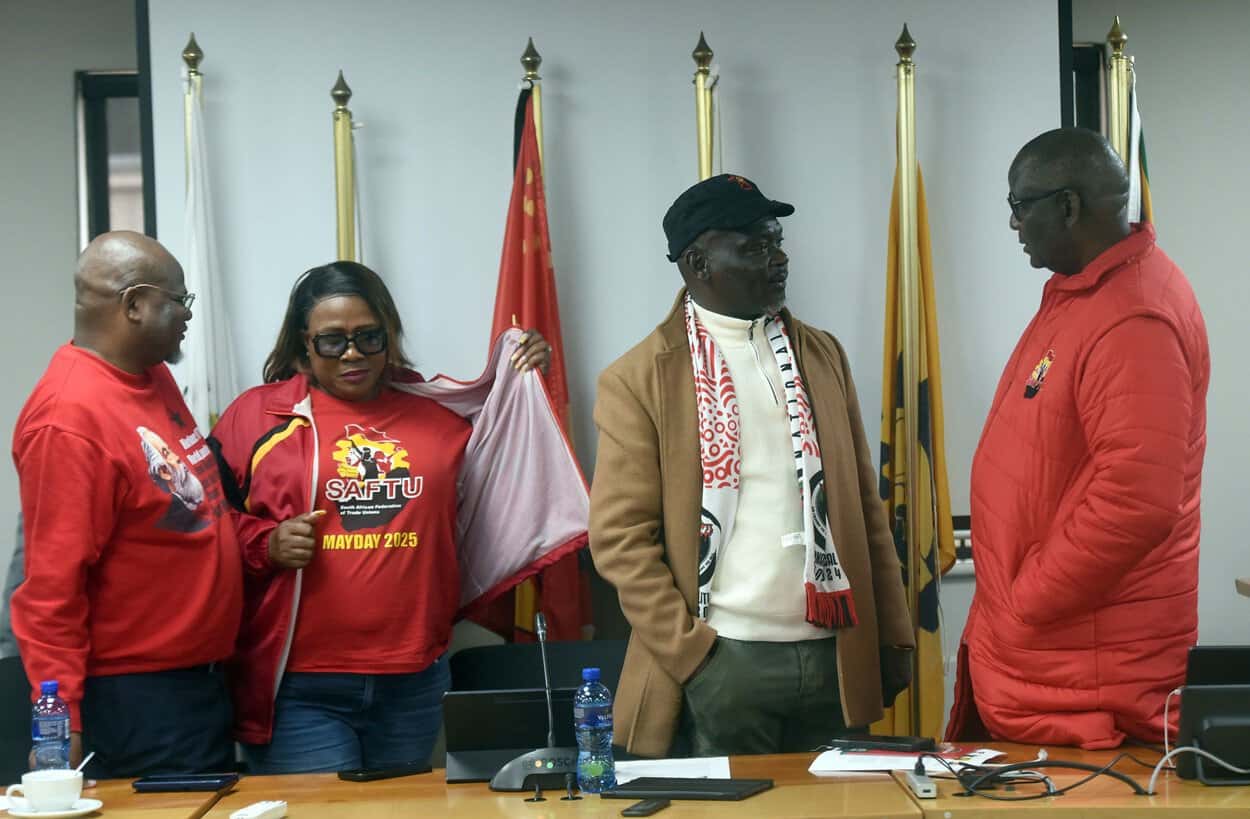
Nedlac, comprising Congress of South African Trade Unions (Cosatu), Federation of Unions of South Africa (Fedusa), South African Federation of Trade Unions (Saftu), and National Council of Trade Unions (Nactu), briefed the media on Wednesday about the growing tensions around migration and illegal migration in South Africa.
The unions acknowledged that millions of South Africans are deeply frustrated by issues like unemployment, poverty, inequality, crime, and declining public services.
“These are real and legitimate grievances. However, South Africa’s economic crisis was not created by migrants,” Nedlac said.
The unions said that economic stagnation, deindustrialisation, widespread unemployment, poor governance, and the inability to create an economy that benefits the majority are the main causes.
Removing migrants won’t fix factories or jobs
Nedlac emphasised that migrants must not be scapegoats for failures they didn’t create.
“Removing foreign nationals from workplaces, communities, or public spaces will not reopen factories, repair municipalities, strengthen public health care, or create sustainable jobs,” the unions said.
The council said it is concerned about the surge in anti-migrant sentiment, and mobilisation is increasingly coordinated and politically orchestrated.
According to Nedlac, there seems to be a goal to divide workers and redirect anger from poverty, unemployment, inequality, and failing public services towards other vulnerable groups. The unions said the surge also seeks to portray South Africa as xenophobic, violent, and barbaric, damaging the country’s image before the international community.
Nedlac added that the sentiments and demonstrations dangerously foster tribalism and chauvinism among Africans, undermining worker unity.
The council also reflected on the deadly xenophobic violence of 2008 and the attacks on foreign nations.
“We will not allow legitimate public anger to be manipulated into hatred and lawlessness,” the unions said.
“History has shown the devastating consequences of redirecting socioeconomic grievances against people based on their nationality or origin.”
Chaos in Durban
Nedlac held the media briefing amid tension between the police and disgruntled Malawian nationals at the Sherwood Hall transit site in Durban.
Police used stun grenades and rubber bullets on Malawian men who reportedly refused to be transferred to the Lindela Repatriation Centre or move to the Durban beachfront.
Angry, armed protesters pelted police with stones, demanding buses to Malawi after women and children departed.
Durban mayor Cyril Xaba visited the scene and said the departments of justice and constitutional development, home affairs, and other entities have implemented political interventions to expedite the Malawians.
Xaba said the municipality deployed 10 buses for transport and increased security, including the South African Police Service, to ensure order and security.
Opposing unlawful hiring and exploitation of workers
At the same time, organised labour opposed the unlawful hiring of undocumented migrants, condemning employers who exploit vulnerable workers to cut wages and weaken collective bargaining.
Nedlac said these employers exploit both South African and migrant workers and deepen working-class divisions.
The unions called on the government to accept responsibility for allowing the crisis to grow.
They said weak borders, poor inspections, failing Home Affairs systems, corruption, and underfunding have fuelled public frustration.
Organised labour said austerity has weakened the Border Management Authority (BMA) and the departments of home affairs, employment, and labour, causing system failures, long queues, a collapse in law enforcement, and an erosion of state confidence.
“We call for a capable, properly resourced and accountable state,” Nedlac said.
Worker against worker
The unions also condemned the people who solicit or accept bribes, facilitate illegal entry, issue fraudulent documentation, or protect employers who violate the law.
The council said it rejects all attempts to pit worker against worker.
“Unless these structural disparities are tackled, migration from less developed countries to relatively more developed economies, such as South Africa, will continue,” they said.
Nedlac said African states’ failure to address underdevelopment drives migration, while employers exploit vulnerable labour to suppress wages and divide workers. The unions said this pits workers against each other.
“The solution is not to blame migrant workers, who are themselves victims of economic hardship, but to address the structural conditions that force people to migrate and to build unity among workers across national borders in the common struggle against exploitation,” the council said.
Accordingly, Nedlac has called on all organised labour across Africa, Asia, and beyond to hold their governments accountable for corruption, repression, unemployment, mismanagement, and human rights abuses.
Recognised federations urge workers to report for duty on 30 June
Meanwhile, in terms of the calls for national action on 30 June, the unions said recognised labour federations did not call it, and therefore, it is not protected.
Workers absent from work during this action won’t receive the legal protections given to participants in a protected strike action.
“We urge workers to report for duty and not place their employment at risk,” Nedlac said.