Screenshot
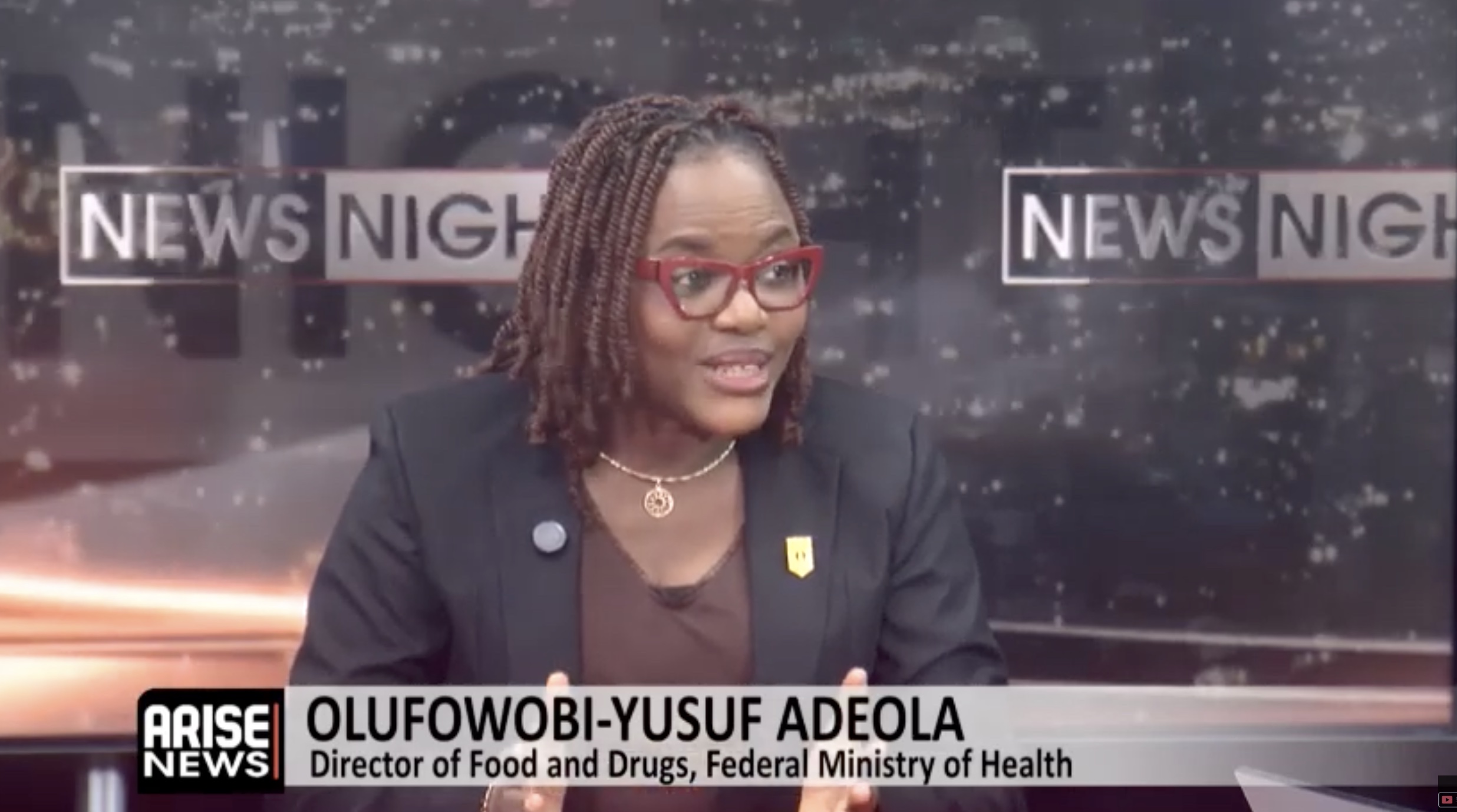
The Director of Food and Drugs, Federal Ministry of Health, Olufowobi-Yusuf Adeola, has highlighted improvements in Nigeria’s food safety system following the introduction of new surveillance guidelines.
Speaking during an interview with ARISE NEWS on Tuesday, she explained that the framework is strengthening the country’s ability to track foodborne illnesses more effectively.
“Initially, we were not having all this sort of data. If you look at the data released this year by WHO, it was a result of having adequate and correct tools to get these figures. We might not really have the actual figure, but at least we have statistics that give us… globally, 866 million foodborne illnesses that led to about 1.5 million deaths globally. But in Nigeria, we have about 50 million foodborne illnesses that led to 53,000 deaths. A lot of reasons might have caused it.
“Priority was not given to foodborne diseases. Priority was mainly given to cholera, typhoid, malaria. But recently, in 2024, a program in my department, Food Safety, developed a guideline—that is, the Food Surveillance Integrated Guidelines.

“Surveillance in the sense that they will be able to use this policy, this guideline, to track these foodborne diseases. That was why initially, because we don’t have anything to track the diseases as a result of foodborne illness, nobody was able to track it,” she explained.
According to Adeola, poor hygiene practices and weak control in traditional markets remain major drivers of unsafe food consumption in Nigeria. She noted that many markets still operate without proper standards or regulation, which increases the risk of contamination. However, she added that efforts are now underway to introduce and enforce standards in these traditional markets to ensure safer food for consumers.
“It could be poor hygiene. It could be the type of market we buy from. Numbers of us buy from these traditional markets, and they are not properly controlled. No standards. But now, there is a standard being put in place to check all these traditional markets, so that whatever our citizens are eating now, we are going to be sure what they are eating,” she assured.
On preventing foodborne contamination at home, Adeola emphasised proper washing of food items, correct refrigeration where necessary, and appropriate heating or cooling based on food type. She also stressed that maintaining hygiene is crucial.
“First, proper washing. Some food, you might need to refrigerate them. Some, you need to heat them. Some, you need to cool them at certain temperatures. But mostly, hygiene is number one. Then, the quality of water also matters. But like we said, we always say that not every clean water is potable,” she emphasised.
Highlighting how Nigerians can achieve “safe food everywhere,” Adeola said it requires collective responsibility, with government enforcing policies, producers complying with standards, and consumers refusing unsafe or rotten food even when it is cheaper.
“Safe food—and this year’s theme still takes us back to the statistics given this year by WHO. With those statistics, we all know that there is a problem now that everybody needs to be involved in.;The government has to bring out a policy to regulate. The manufacturers and producers now have to comply. And we, as citizens, must learn to say no to rotten food,” she urged.
Speaking on how to protect children from foodborne illnesses, the director explained that stronger laboratory systems, improved tracking, and early detection are essential, alongside vigilance from parents and caregivers to ensure quick response to symptoms like diarrhoea and vomiting.
“Proper laboratories have been put in place. Then, tracking and reporting, early detection. Then, the parents and caregivers must be vigilant, so that once we put all this in place, then our children will be safe,” she assured.
Favour Odima