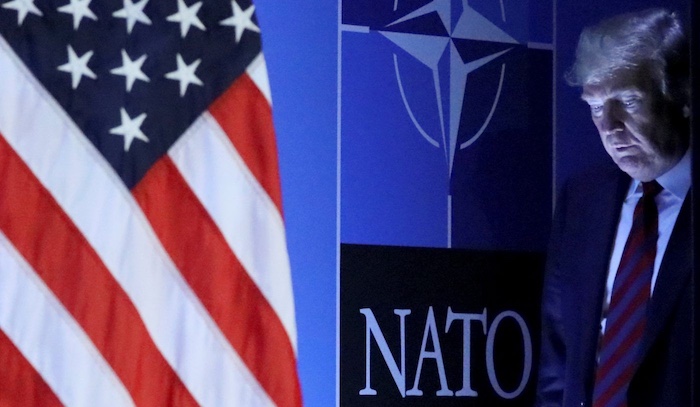
A senior US military commander has called on European NATO members and Canada to quickly expand their contributions of aircraft and naval assets to the alliance, as Washington begins reducing some of its own forces assigned to NATO defence planning
General Alexus Grynkewich, who serves as NATO’s top military commander and leads US forces in Europe, said allies must take on greater responsibility for both crewed and uncrewed air power as well as maritime capabilities. His remarks follow a shift in US defence posture under the Trump administration, which is cutting back parts of its military contribution to NATO operational structures.
President Donald Trump has long argued that European allies should carry a larger share of the burden for defending the continent, particularly in conventional warfare capabilities. That position has now translated into a formal reduction in US forces allocated to NATO’s planning framework, known as the NATO Force Model.
While Washington has not published full details of the drawdown, military sources indicate the changes affect several key assets, including refuelling aircraft, fighter jets, drones, and naval vessels. The timeline for when these reductions will fully take effect has not been made public.
Grynkewich said the adjustments reflect a broader strategic shift as the United States rebalances its global military commitments. He noted that allied dependence on American forces had become excessive and needed correction given the possibility of multiple simultaneous global crises.
“There has been an unhealthy reliance on US forces within NATO planning,” he said in a written statement after a recent meeting of alliance military officials. He added that the changes are intended to push allies toward building a more balanced force structure.
According to officials, manned and unmanned aircraft as well as naval units are among the areas where European allies and Canada are expected to fill gaps quickly, as the US scales back its assigned contributions in Europe.
A NATO military spokesperson sought to reassure allies, saying the identified capability areas are already within reach of European members and Canada. The official argued that no major operational gaps are expected, provided member states properly allocate existing resources to NATO command structures.
However, concerns remain within parts of the alliance about the long-term impact of reduced US presence. Some officials warn that a significant drawdown could weaken NATO’s deterrence posture, especially amid heightened tensions with Russia.
Under the proposed adjustments, the number of US fighter jets available to NATO missions is expected to drop substantially, alongside a reduction in drone assets used for surveillance and reconnaissance operations. Analysts say such cuts could limit intelligence-gathering capacity and reduce operational flexibility.
Former US defence officials have criticised the move, arguing it sends a troubling signal to allies while potentially emboldening adversaries. One former Pentagon adviser said the decision risks undermining confidence in NATO’s collective defence commitments at a sensitive geopolitical moment.
As implementation begins, NATO members are expected to review their force contributions in the coming months, with pressure mounting on European capitals to accelerate investment in air and naval capabilities to compensate for the US drawdown.
Goodness Anunobi