Investors appear to have big hopes for the future of private rail in SA and Africa judging by the amount of money being thrown at it.
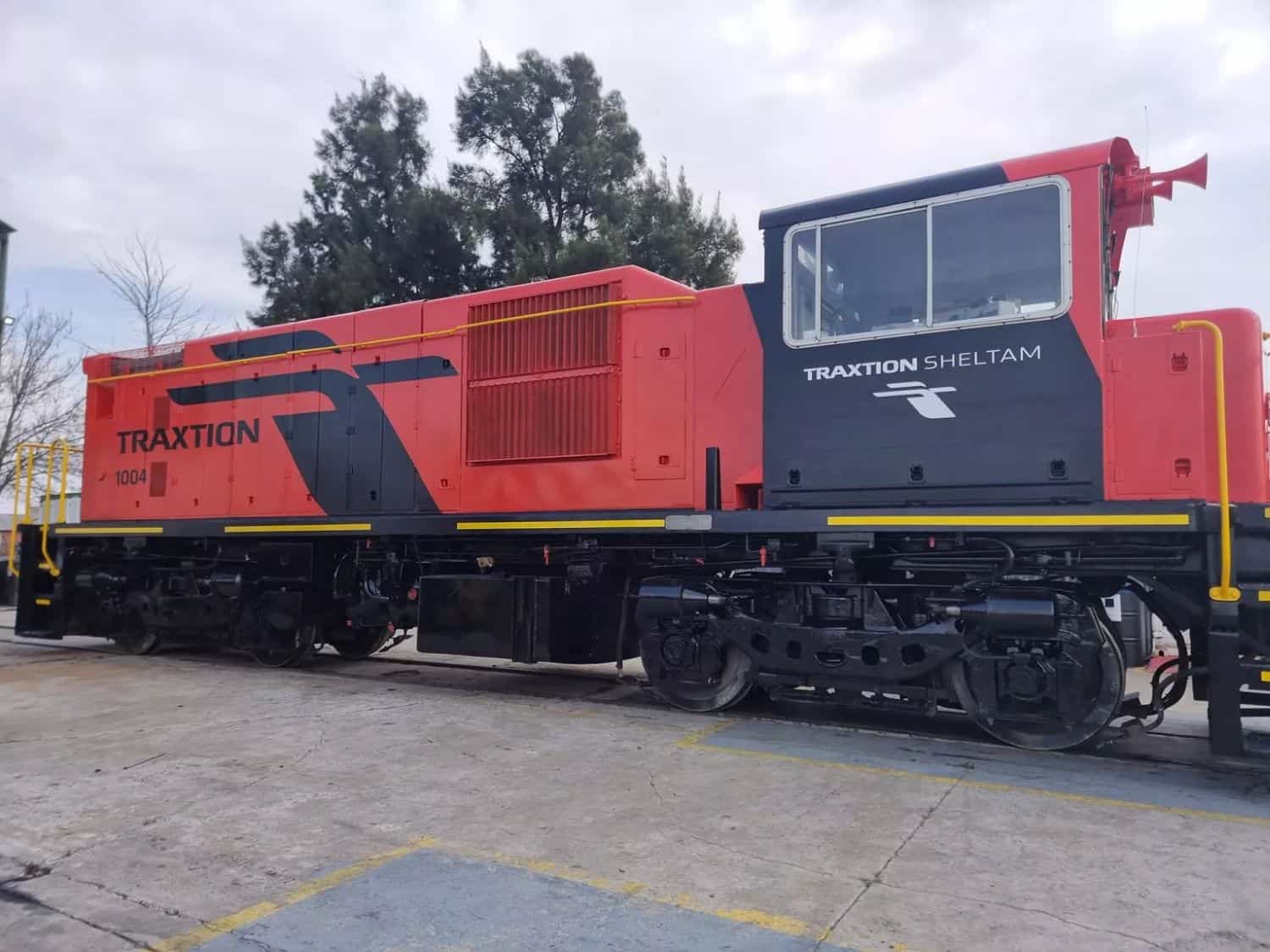
This week Africa’s largest private rail company Traxtion announced it had wrapped up its heavily over-subscribed $86 million (about R1.4 billion) equity raise, demonstrating appetite for what is widely touted as a huge growth market over the coming years.
The latest phase of the capital raise brings together Stanlib Infrastructure Investments, Standard Bank and two Harith funds – Harith InfraCo and Harith PAIDF2.
This closes the equity required for Traxtion’s previously announced R3.4 billion rolling stock investment programme, which includes the acquisition of 46 locomotives and 920 wagons and secures a further pool of capital for future planned investments.
Transnet monopoly comes to an end
Transnet’s state monopoly on rail services is coming to an end with the approval in May of 11 train operating companies (TOCs) being granted rail slots on 41 routes by Transport Minister Barbara Creecy.
Among those granted access to rail infrastructure are ARC South Africa, The Railway Corporation, MSC and Grindrod.
The market is awaiting the release of a revised Rail Network Statement that it expects to provide clarity on shortcomings identified in previous versions, such as service level commitments, reciprocal penalties, which are seen as weighted against TOCs, more balanced legal protections for train operators and the ability of cargo owners – such as mines, agricultural processors and auto manufacturers – to apply for rail slots of their own.
Many of these would likely sub-contract the operation of these slots to private rail companies like Traxtion.
Traxtion has not applied for a rail slot as yet, confining its role to the supply and maintenance of locomotives and rolling stock to others, though CEO James Holley says the company will likely bid for slots once it receives clarity on operator rights and obligations, which is expected when the Rail Network Statement version 4 comes out for comment.
Traxtion is already a rail operator and provides rolling stock and rail services in countries like Angola, Mozambique, Zambia and Tanzania.
Setting sights on expansion
In the meantime, the company is gearing up for growth and intends staking its claim to becoming Africa’s biggest private rail operator. While Transnet has been pulverised by decades of poor management and corruption – only recently turning the corner under CEO Michelle Philips – there are some stellar examples of hugely successful private rail operators elsewhere in the world, such as the Berkshire Hathaway-owned BNSF Railway, Union Pacific and Aurizon in Australia.
BNSF generated operating margins of 34.5% in 2025 on revenue of $23.4 billion, making it massively profitable – due in large part to the scale at which it operates, covering a network of about 51 000 kilometres.
US-based Union Pacific generated operating margins of 40.2% on $24.5 billion revenue by leveraging its vast economies of scale.
Space for growth
In SA’s newly competitive rail environment, companies like Traxtion have massive headspace for growth if rail reforms work out as planned and just a fraction of cargo currently shipped by road is diverted to rail.
“This additional investment clearly demonstrates the confidence we have long held in the future of rail and is yet another step toward unlocking rail’s full potential as a catalyst for growth. We previously said Traxtion was preparing to unlock significantly more investment into the sector, the backing of South Africa’s largest financial institutions sets us up perfectly to deliver that,” says Holley.
“There’s big enthusiasm for private rail in Africa. We have vast experience in Africa where we operate in 10 countries, making us the largest private operator on continent.
“There aren’t too many companies of our scale, our quality and safety standards, and our track record of running operations and supplying rolling stock across the continent.
“ISO certification and attention to safety standards, safety record – real capacity to deliver rail to SA. Harith, now Standard Bank – all subscribing for equity.
“The equity raise is on top of a $34 million (about R553 million) revolving credit facility from Absa which will be replaced in time with longer-term debt,” says Holley.
Refurbishment, maintenance a priority
Traxtion has built its business around extending the operational life of rail assets through refurbishment, maintenance and operational optimisation. The aim is to make it both cost-effective and efficient for customers to use rail and reduce pressure on the roads.
Holley says the new investment will support continued refurbishment programmes, fleet enhancement initiatives and operational expansion, while advancing localisation and supplier development objectives.
Muhammed Munshi, principal at Stanlib Infrastructure Investments, says: “Rail remains a key constraint to South Africa’s growth, and we see Traxtion as a proven operator positioned to support increased private-sector participation and expand freight rail capacity and network efficiency.”
Traxtion’s rolling stock programme remains on track, with the first locomotives expected to enter service in March 2027. The programme includes a minimum 60% local content target and is projected to support 662 direct jobs during build and deployment.
This article was republished from Moneyweb. Read the original here.