There might be many things you can accuse French carmaker Citroën of, but building mundane cars isn’t one of them.
The arrival of the newly-introduced Citroën Basalt at our offices this month offered a welcome break from the seemingly endless line of Chinese SUVs which is getting harder to differentiate due to their copy and paste styling similarities. Especially in the densely populated compact crossover/SUV segment the Basalt is competing in.
The Basalt has been introduced between the C3 and C3 Aircross, which have been the best-selling badges in the entire local Stellantis stable consisting of 11 brands. The Basalt rides on the same platform as its siblings and is built on the same assembly line in India, a major contributing factor in its competitive pricing. The flagship Max derivative The Citizen Motoring sampled is stickered at R369 900.
Anything but mundane
In typical Citroën style, the Basalt’s styling alone warrants a second look. An SUV it is most certainly not, with its coupe-styled sloping roofline creating more of a crossover sedan with a good splash of fastback thrown into the mix. But whichever description you settle on, the unique styling makes it stand out from the crowd.
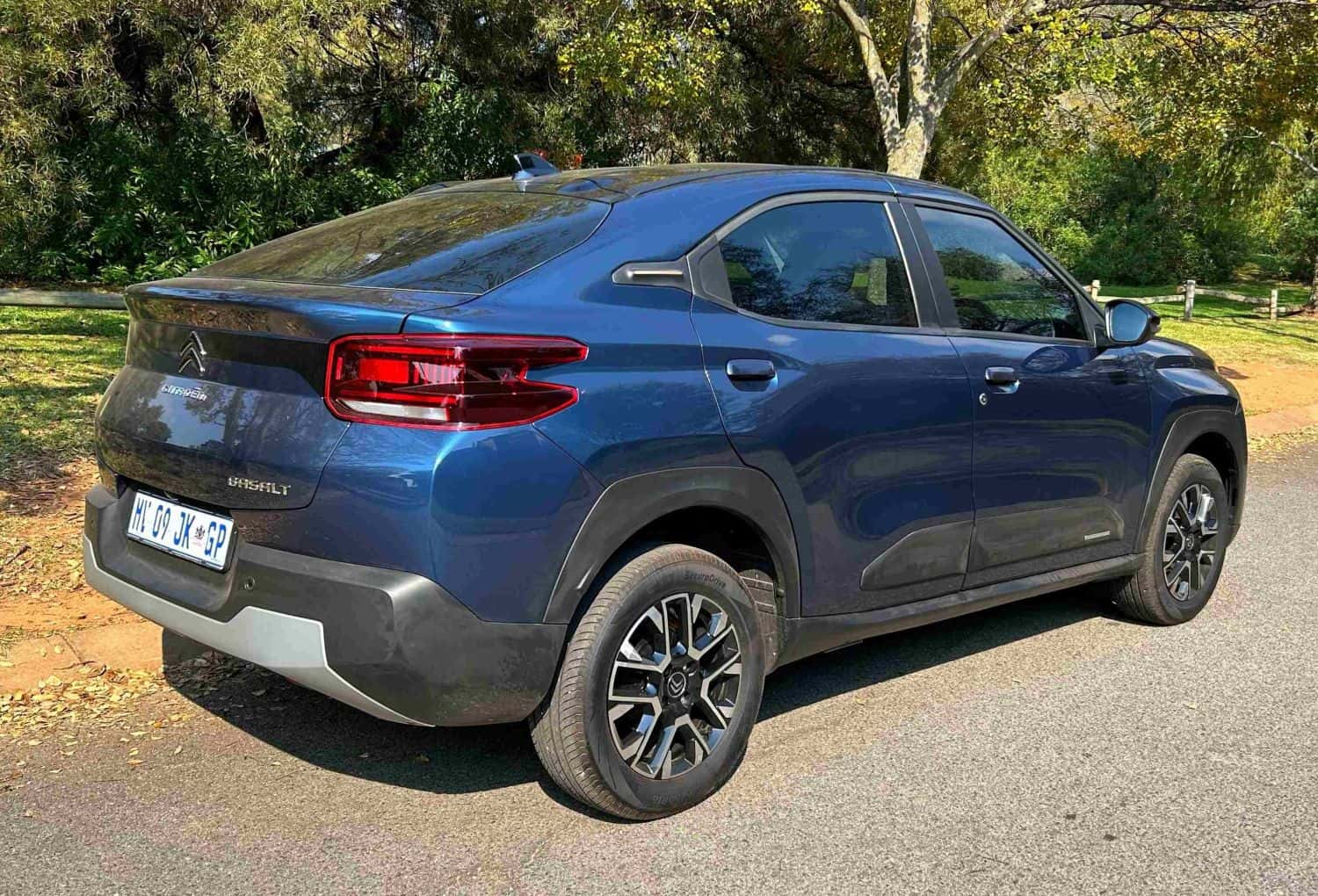
Up front, the Basalt’s grille design, LED daytime running light and LED foglamps are very similar to the Aircross. The sloping roofline is the highlight at the rear, while standard 16-inch alloys and wheel arch cladding features along the sides. Black door mouldings – in civilised proportions – also serves as a tiny reminder of the C4 Cactus of old with its familiar armour cladding.
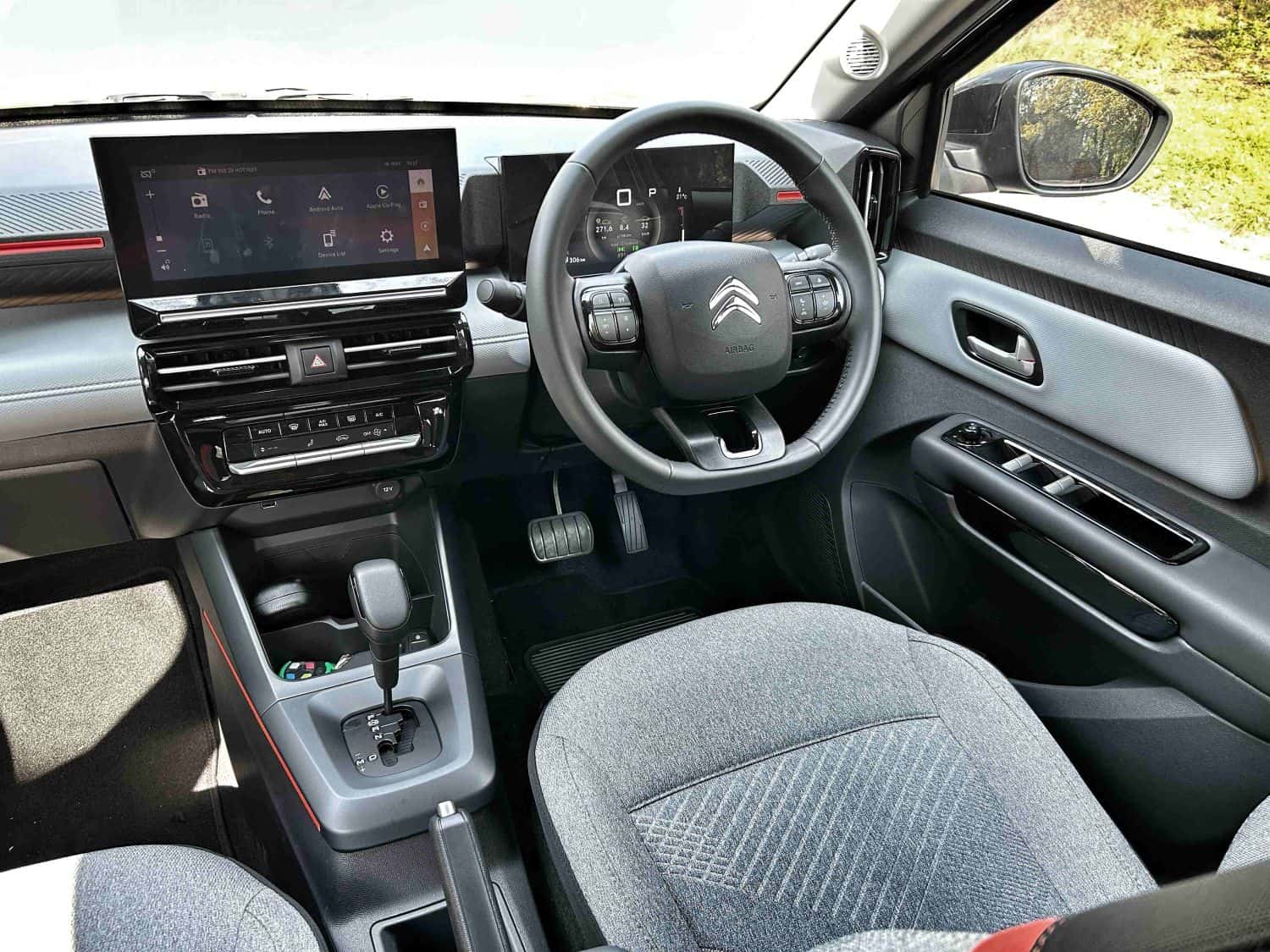
The quirkiness continues on the inside, where the two-tone black-and-grey fabric with a red strip and Citroën embroidery is a very nice touch. The red touches are extended to the sides of the centre console and dash. This along with the use of materials on the dashboard, patterns of diagonal lines everywhere and ambient lighting does a sterling job of disguising lots of hard plastics.
Citroën Basalt spacious inside
Standard is a 10-inch infotainment system with wireless Apple CarPlay and Android Auto, seven-inch digital instrument cluster and multi-function leather-wrapped steering wheel.
The Basalt does not have automatic lights and quite strangely, also not a warning chime when you forget the lights on after switching off the car.
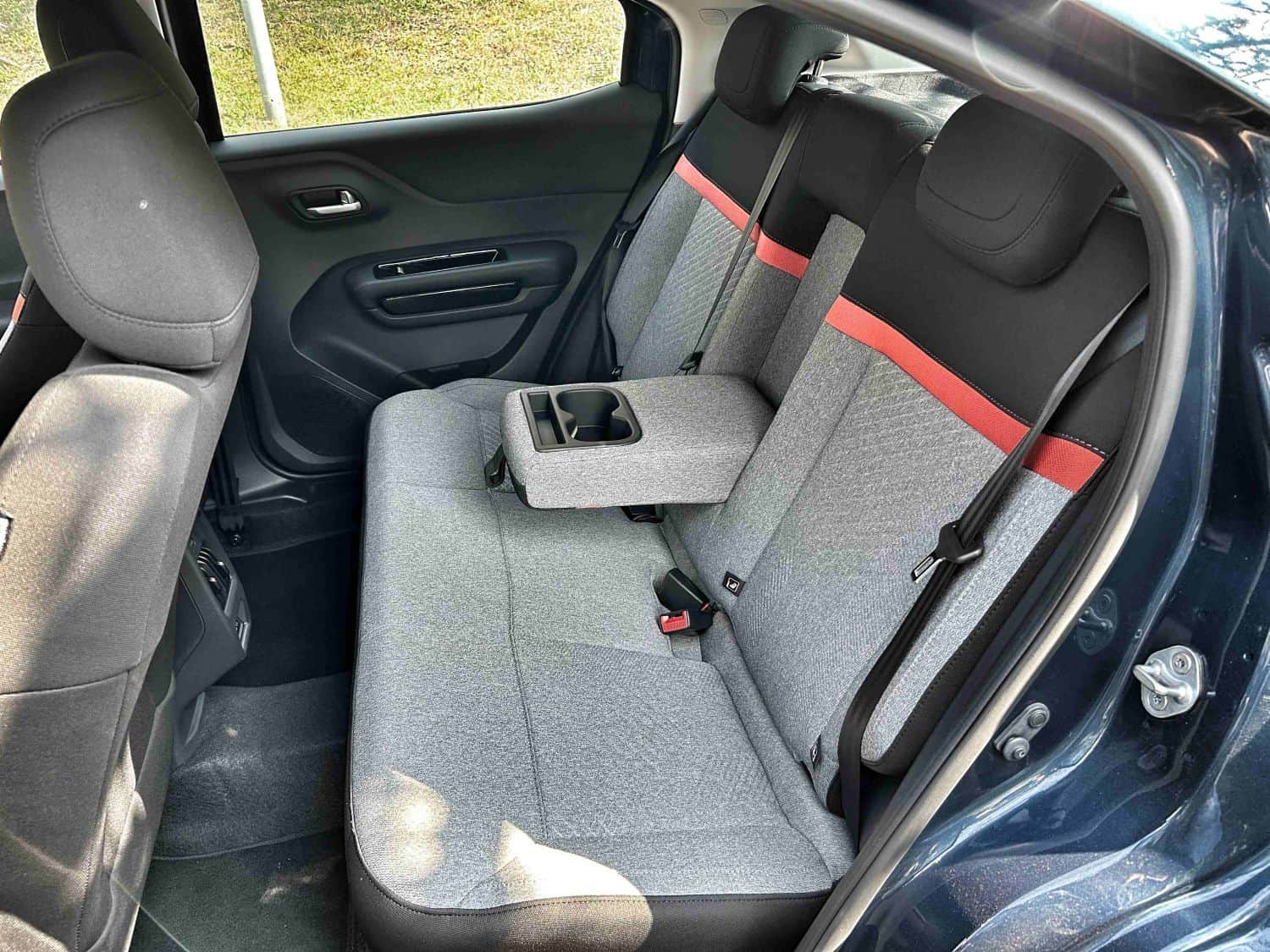
A length of 4 352mm ensures plenty of legroom in the rear, but head room also not impacted too much by the sloping roof. Boot space of 470 is also very generous for this segment.
Safety comes in the form of six airbags, electronic stability control and hill-start assist. A reverse camera, rear parking sensors and tyre pressure monitor are also standard on the Max derivative.
Impressive powertrain
The undisputed highlight of the Citroën Basalt is its drivetrain. The three-cylinder 1.2-litre PureTech turbo petrol engine is a stalwart in the Stellantis stable and again proves why it has scooped numerous awards over the years.
In the Basalt, the three-pot mill produces 81kW of power and 205Nm of torque. This goes to the front wheels via six-speed automatic transmission.
It is hard not to like this peppy engine. Largely devoid of low-down turbo lag, the mill sparks into life the moment you step on it, with the auto box ensuring buttery smooth gear changes. No doubt aiding the sprightly acceleration is the modest kerb weight of 1 214kg.
And it doesn’t stop there. Light and direct steering along with excellent suspension featuring progressive hydraulic cushions contribute to a very enjoyable ride.
Citroën Basalt a bit thirsty
The only downside to the ride is its fuel consumption that sadly teethers on the high side. We averaged 8.4 litres per 100km over a week, which is a full two litres over Citroën’s claim. We can’t deny that our spirited driving did this number no favours. But it is similar to what we recorded in the Opel Corsa with a 96kW/230Nm version of the PureTech mill.
We really liked the Basalt and what if has to offer. What it lacks in terms of technology, it makes up for in driveability. And that is a huge selling point in a segment that has become such a mad race for technological superiority that the intended purpose of a car is often overlooked.