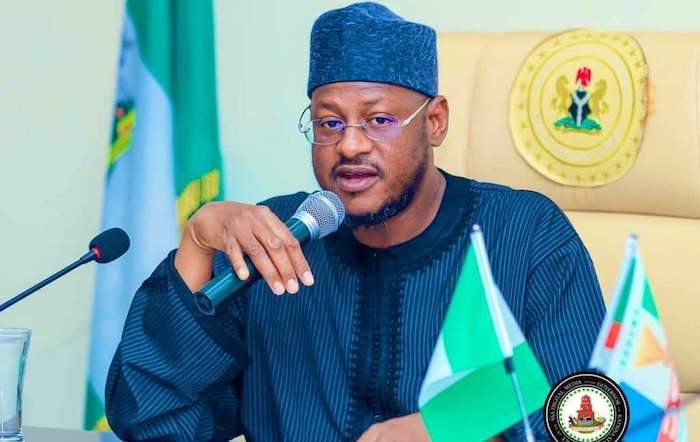
Bayo Onanuga accuses social media critic of spreading fake content as concerns grow over deepfake technology ahead of 2027 elections…..
The Presidency has threatened legal action against controversial social media commentator Martins Otse, popularly known as Very Dark Man (VDM), over the circulation of an alleged AI-generated audio falsely attributed to President Bola Tinubu.
The warning was issued on Wednesday by the President’s Special Adviser on Information and Strategy, Bayo Onanuga, following the emergence of a viral video in which VDM played the controversial audio to his followers while questioning the credibility of the current administration.
The audio, which appears to carry characteristics of AI voice cloning technology, featured a voice allegedly mimicking President Tinubu making a number of controversial remarks about insecurity in the South-East, the 2027 election and loans obtained from the World Bank.
Among the claims contained in the recording were allegations that insecurity in parts of the country was intentional, that Labour Party presidential candidate Peter Obi had been asked to step down during the 2023 election, and that World Bank loans were allegedly being used to finance future political campaigns.
Reacting to the video, Onanuga condemned the circulation of the audio and accused VDM of deliberately spreading false and misleading content capable of causing public confusion.
“This VDM needs to face the full weight of the law for disseminating a fake audio of President Tinubu,” Onanuga wrote on his verified X account. “This is a clear abuse of social media.”
The presidential aide made the comment while reposting a message from another X user who criticised the viral clip and questioned why some Nigerians appeared convinced that the voice in the recording belonged to Tinubu.
In the video shared online, VDM urged his followers to listen carefully to the recording and make their own conclusions.
Speaking partly in Pidgin English, the social media commentator suggested that Nigerians should reconsider supporting Tinubu ahead of the 2027 presidential election.
“This man does not have anything to offer anymore,” VDM said after playing the audio. “For me, Tinubu should go in 2027.”
However, further checks later showed that the controversial audio itself was not directly uploaded as a standalone post on VDM’s verified platforms, even though clips from the livestream continued circulating across social media.
The incident has once again raised fresh concerns about the growing use of artificial intelligence to create fake political content and manipulate public perception online.
In recent months, experts and advocacy groups have repeatedly warned about the dangers of deepfake technology, especially as Nigeria moves closer to another election cycle.
The Coalition for Ethical Technology and Democratic Integrity recently urged the Federal Government to criminalise AI-generated blackmail and misinformation, describing it as a serious threat to national security and democratic stability.
The group warned that unchecked deepfake content could undermine public trust and fuel political tension ahead of the 2027 general elections.
This is not the first time President Tinubu’s image has allegedly been used in misleading AI-generated material.
Earlier, the Federal Government cautioned Nigerians against a fake investment advertisement circulating online that used manipulated visuals of the president to promote a suspected Ponzi scheme.
Nigeria’s Cybercrime Act, which was amended in 2024, already contains provisions against the creation and distribution of false digital content intended to damage reputations or mislead the public, with offenders facing possible fines and imprisonment if convicted.
As debate continues online, the latest controversy highlights the growing challenge governments, tech platforms and citizens face in distinguishing authentic political communication from AI-generated misinformation in the digital age.