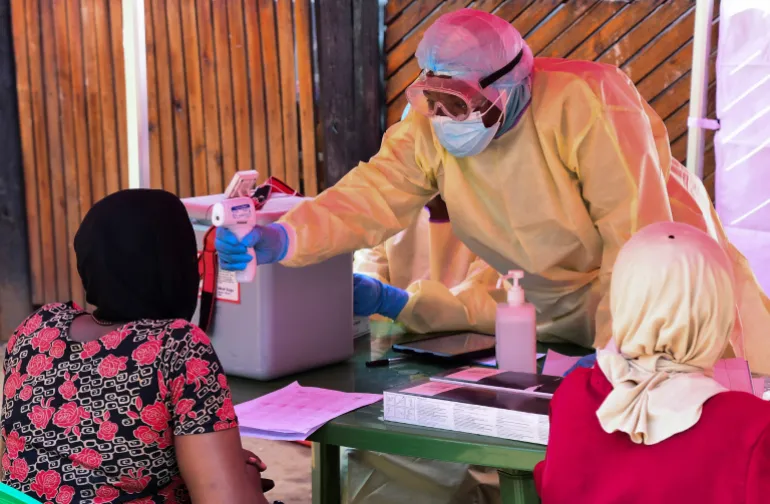
Agency says no home remedy exists for Ebola, urges public to ignore viral claims on bitter kola, salt water and herbs…..
The Nigeria Centre for Disease Control and Prevention (NCDC) has cautioned Nigerians against the use of unverified substances such as bitter kola, salt water, herbs and seasoning cubes as alleged cures or preventive measures for Ebola virus disease (EVD).
In a public health advisory, the agency warned that the spread of misinformation about supposed home remedies could fuel panic and undermine national preparedness efforts amid renewed Ebola outbreaks in parts of sub-Saharan Africa.
The advisory, titled “Ebola Virus Disease (EVD): Myths vs Facts,” was issued in response to growing false claims circulating on social media following confirmed cases in countries including the Democratic Republic of Congo and Uganda.
While stressing that Nigeria has not recorded any confirmed Ebola case, the NCDC said the country remains on high alert due to increased cross-border movement and international travel linked to affected regions.
The agency dismissed viral claims suggesting that common household items or herbal mixtures could prevent or cure the disease, describing them as scientifically unfounded.
“There is currently no approved home remedy for Ebola virus disease,” the NCDC stated. “Early reporting, supportive medical care and strict infection prevention measures remain the only effective response. Avoid self-medication and seek medical attention immediately if symptoms appear.”
The health agency also cautioned against the circulation of false health information, warning that misinformation during outbreaks can trigger unnecessary fear and weaken public confidence in health authorities.
“Sharing unverified information can create panic and confusion,” it added. “Members of the public are strongly advised to rely only on official public health updates.”
According to the NCDC, vigilance remains necessary despite Nigeria’s Ebola-free status, given the ongoing outbreaks in neighbouring regions and the risk of importation through travel routes.
“Although no case has been confirmed in Nigeria, outbreaks in the region require preparedness, vigilance and responsible behaviour to reduce the risk of importation and transmission,” the agency said.
The warning follows recent comments from NCDC Director-General, Jide Idris, who said Nigeria’s risk level remains high due to continued transmission in parts of Central and East Africa, as well as frequent population movement across borders.
Idris noted that early Ebola symptoms often resemble other common diseases such as malaria and Lassa fever, making rapid detection more difficult and increasing the importance of surveillance.
“This assessment estimated the risk of Ebola importation into Nigeria as high due to ongoing transmission in the DRC and Uganda, international travel and population movement, and the possibility of delayed detection because early symptoms overlap with other illnesses,” he said.
Health authorities have continued to urge Nigerians to remain calm but alert, emphasizing that timely reporting of symptoms and adherence to medical guidance remain the most effective ways to prevent outbreaks from spreading within the country.