New agreement targets technology transfer, reforms, and increased foreign investment as both countries deepen economic ties…..
The Federal Government has signed a Memorandum of Understanding (MoU) with the Republic of Türkiye to strengthen cooperation in the solid minerals sector, in a move aimed at expanding investment flows and accelerating reforms in Nigeria’s mining industry.
The agreement was concluded on the sidelines of the Istanbul Natural Resources Summit (INRES) in Türkiye, according to a statement issued by the Special Assistant on Media to the Minister of Solid Minerals Development, Lara Owoeye-Wise.
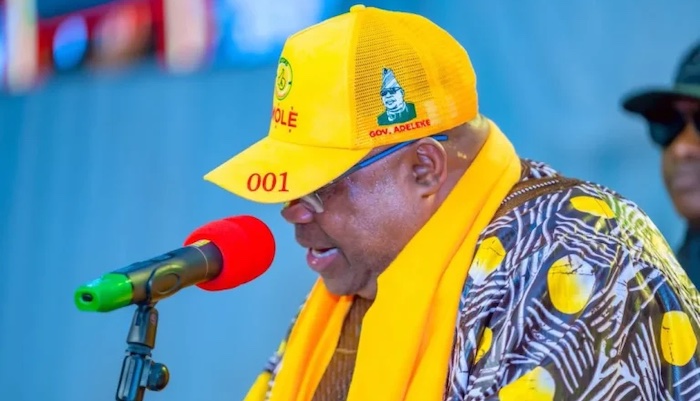
Nigeria’s Minister of Solid Minerals Development, Dele Alake, said the partnership would open the door for deeper collaboration in mining exploration, technical training, digitisation of mining operations, licensing reforms, and capacity development.
He noted that President Bola Ahmed Tinubu had fully endorsed efforts to strengthen bilateral cooperation with Türkiye in both the mining and broader energy sectors, describing the agreement as part of ongoing efforts to reposition Nigeria’s solid minerals industry for global competitiveness.
According to Alake, Nigeria is actively seeking partnerships that will bring in advanced technology and expertise to improve governance and efficiency in the sector.
“Türkiye is one of the countries we are confident of building strong bilateral cooperation with, particularly in the area of solid minerals development. Nigeria is open to working with the Turkish government to strengthen governance structures, improve technical capacity, and advance sustainable mining development,” he said.
The minister added that recent reforms in the sector had improved investor confidence, making Nigeria more attractive to foreign direct investment. He said measures introduced over the past three years have enhanced ease of doing business and strengthened institutional frameworks within the mining space.
He also highlighted that investors are now able to repatriate profits following due regulatory processes, describing it as part of broader incentives designed to encourage long-term participation in Nigeria’s extractive industry.
Alake further disclosed that enforcement against illegal mining had been intensified through the deployment of Mining Marshals, a special task force set up to clamp down on unauthorised operations across the country.
According to him, more than 300 illegal miners, including foreign nationals, have been arrested, while over 150 cases are currently being prosecuted. He also said more than 100 illegal mining sites have been reclaimed and handed back to legitimate licence holders.
Türkiye’s Minister of Energy and Natural Resources, Alparslan Bayraktar, welcomed the agreement, describing it as a strategic step that aligns with global shifts in energy security and resource cooperation.
He said Turkish companies were increasingly interested in expanding their footprint in Nigeria, not only in mining but also in energy and hydrocarbons.
“We are ready to invest in Nigeria because of the remarkable initiatives your government has put in place. We look forward to cooperation, support, and guidance that will enable both countries achieve meaningful results,” Bayraktar said.
He added that Nigeria remains a key partner in Türkiye’s broader engagement strategy across Africa, particularly given its size and influence in the continent’s energy and industrial landscape.
Bayraktar also expressed interest in strengthening existing energy cooperation between both countries and encouraged renewed collaboration in Nigeria’s hydrocarbon sector.
Meanwhile, speaking during a panel session at the summit, Alake stressed that global energy security cannot be achieved without addressing conflict and instability across the world.
He noted that sustained peace remains a critical foundation for economic development and international cooperation in the energy space, urging stronger global efforts to reduce conflict and promote stability.
“Without peace, discussions around energy security become difficult,” he said, adding that global cooperation is essential to ensuring long-term energy sustainability.