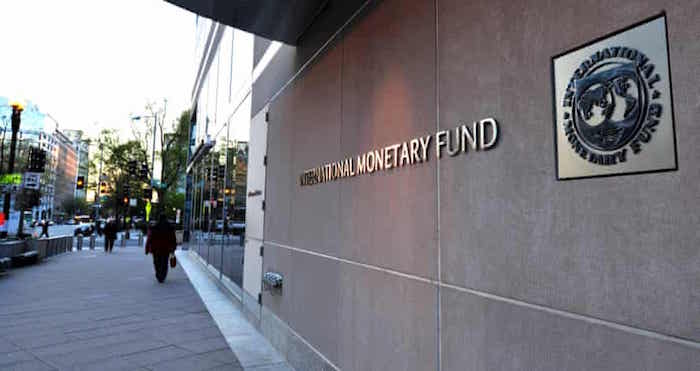
Nigeria and other Sub-Saharan Africa trail other developing regions of the world mostly in governance, business regulation, and market openness, a new blog post by the International Monetary Fund (IMF) has said.
These gaps are largest in fragile and conflict-affected states and oil exporters, although they are not immutable.
The report cited Rwanda and Benin Republic, for instance, as countries that have cut red tape and used digital tools to make it easier to do business.
According to the report, reforming state-owned enterprises, especially in energy and transport, is another key priority, adding that when tariffs stay below cost-recovery levels, cash flow weakens, maintenance is delayed, and investment stalled. “The result is a familiar tax on growth: unreliable and expensive services for firms and households. The better reform efforts use four ingredients: map stakeholders, align prices with costs, define social goals clearly, and explain how any savings will be used,” it said.
It stated that at current growth rates, per capita income in sub-Saharan Africa would take roughly half a century to double.
Citing the IMF’s latest Regional Economic Outlook for Sub-Saharan Africa, it affirmed that implementing well-designed structural reforms—especially in governance, business regulation, and market openness—could lift output by around 20 per cent within a decade.
“The point is not reform for reform’s sake. It is to shift the growth model from one led mainly by the state to one driven more by private investment, productivity, and jobs.
“Despite strong performance in a handful of countries—including Benin, Côte d’Ivoire, Ethiopia, Rwanda, and Uganda—growth across the region has been too weak to deliver meaningful income convergence. “Over the past three years, real GDP per capita grew by about 1.4 per cent a year, compared with about 3.4 per cent in emerging markets and developing economies overall.
“Past growth spurts—often fueled by commodity booms or inefficient public investment—faded fast. They did not trigger the sustained private investment needed to keep growth going, with labour productivity nearly flat for three decades.
“The public sector-led growth model is now spent. With debt high, borrowing costly, and aid falling, the state can no longer be the main engine of growth. The region needs more private investment, backed by broad, business-friendly reforms,” the IMF blog post said.
It stated that choosing and designing reforms is only half the job, adding that implementing them is usually harder.
“This is because benefits often arrive slowly, sometimes beyond an electoral cycle, while vested interests resist change. Political feasibility matters as much as technical design,” the post noted.
Ndubuisi Francis