The Minister of Education, Tunji Alausa has disclosed that nearly 80 per cent of donor funding allocated to education in Nigeria over the last decade was concentrated in the North-West and North-East regions, yet the areas continue to record the country’s weakest literacy and numeracy outcomes.
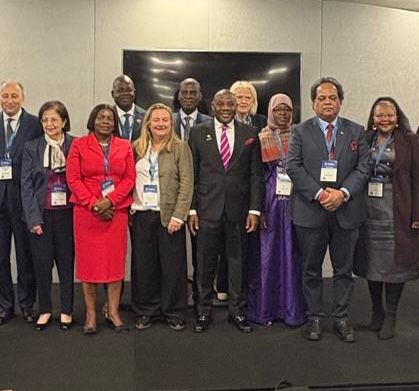
According to a statement issued by Ikharo Attah, Special Adviser on Media and Communications to the Minister of Education, Alausa made the revelation on Monday during a special roundtable session at the Education World Forum in London, where he met with education ministers and international stakeholders to discuss Nigeria’s foundational learning reforms.
According to the Minister, recent findings from the National Education Data Initiative (NEDI) exposed major inefficiencies in the deployment of donor resources across the education sector.
“NEDI data revealed a key issue: 80 per cent of donor funds in the last decade went to the North-West and North-East, yet those zones still have the lowest literacy and numeracy rates. We now have the data to redirect resources where they deliver results,” he said.
The minister said the Federal Government had now adopted a unified national standard for foundational literacy and numeracy covering both formal and non-formal education systems.
He explained that the government is expanding the RANA programme for Primary 1 to 3 pupils and the Teaching at the Right Level initiative for Primary 4 to 6 learners across 15 states through the Universal Basic Education Commission.
According to him, the approach combines structured lesson plans, weekly teacher coaching and regular assessments to improve learning outcomes nationwide.
Alausa also highlighted the role of the Accelerated Basic Education Programme (ABEP), developed by the Nigerian Educational Research and Development Council, in tackling Nigeria’s out-of-school children crisis.
He said the programme enables out-of-school children and adolescents to achieve foundational literacy and numeracy within three years before transitioning into junior secondary education.
“Both tracks now report into NEDI, so for the first time we can monitor formal and non-formal education coverage from one dashboard,” the minister stated.
The minister cited several state-led education reforms already yielding measurable improvements in learning outcomes, including EKOEXCEL in Lagos State, KwaraLEARN in Kwara State and BayelsaPRIME in Bayelsa State.
“The impact is measurable. KwaraLEARN halved foundational learning deficiencies in less than two years, while BayelsaPRIME improved literacy by 20 percentage points in just 19 weeks. The model is working, and we are now scaling it nationally,” he said.
Alausa further disclosed that foundational literacy and numeracy reforms now occupy a central place in President Bola Tinubu’s Renewed Hope Agenda.
He said the Federal Government is finalising a National Policy on Foundational Literacy and Numeracy to establish a long-term legal and institutional framework for education reforms across the country.
On funding reforms, the minister revealed plans to increase the share of the Consolidated Revenue Fund allocated to UBEC from two per cent to four per cent, effectively doubling federal support for basic education.
He also stated that under Nigeria’s Partnership Compact with the Global Partnership for Education, 70 per cent of funding is now tied to measurable outcomes in learning, teacher management and data utilisation.
Addressing concerns over accountability, Alausa said the deployment of NEDI has enabled the government to identify gaps in donor funding effectiveness and shift attention from educational inputs to measurable learning outcomes.
“With the National Policy on FLN nearly finalised and one standard across formal and non-formal systems, we are building a foundation that will outlast any single programme cycle. That is how we will end learning poverty at scale,” he added.