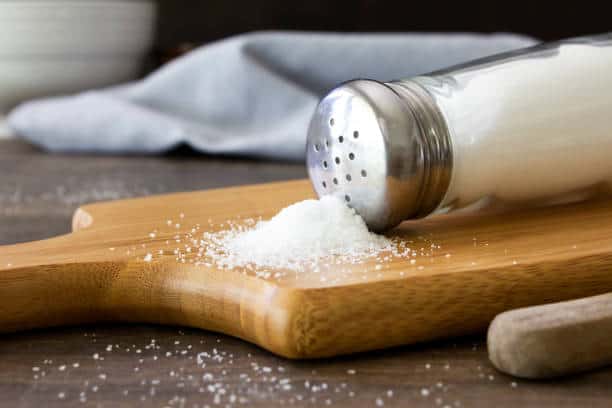
A close up shot of salt spilling out of a salt shaker on to a wooden chopping board. Shot on a rustic wooden kitchen table with kitchen utensils in the background.
Salt Awareness Week is observed from 15 to 18 May 2026 to raise awareness of health and salt consumption in South Africa.
According to the Physicians Association for Nutrition South Africa (Pan SA), around 215 people die every day from heart disease or stroke, which can be prevented by simply reducing one’s salt consumption.
The Pan SA organisation provides tips one can use to reduce salt intake, along with not-so-fun facts you should be aware of, to give you a reality check next time salty foods come your way.
The harsh reality
More salt equals higher blood pressure. Pan SA has noted that sodium consumption increases extracellular fluid, which places more strain on the walls of the blood vessels, resulting in higher blood pressure.
This means that the heart has to work harder to pump blood around the body, which, over time, can increase the risks of cardiovascular conditions.
Pan SA has emphasised the effects of high salt consumption, noting cardiovascular disease as one of the leading causes of mortality in the country.
“Accounting for approximately 17.5% of all deaths, which equates to an average of 215 deaths per day from heart disease or stroke.”
How to reduce salt intake
Here are some tips you can use every day to be more mindful of salt consumption and products that contain salt:
- Read the ‘Typical Nutritional Facts’ on food labels and avoid foods with more than 120mg per 100g of salt, or more than 600mg of sodium per 100g.
- It is also recommended to avoid foods that contain MSG (monosodium glutamate), baking soda or baking powder, which are listed in the ingredients list on the back or below products, as these items are more likely to be high in salt.
- Eat more home-cooked meals rather than store-bought ready meals or fast food.
- Select foods that are clearly labelled “no added salt” or “reduced salt” in foods like peanut butter, cereals, breads, a cup of soup, ready-made sauces and others.
- Consciously limit excess salt in foods prepared at home, and use fresh and dried herbs, salt-free spices, garlic, citrus and vinegar to enhance flavour.
- Avoid separately adding salt to rice and pasta.
- Rinse canned vegetables and beans to reduce excess salt from the brine.
- Always taste your food as you go before adding salt, especially if you have used salty ingredients like stock cubes, soy sauce or seasoning blends, as additional salt is usually unnecessary.
- Lemon juice, vinegar, herbs (parsley and rosemary), and spices (curry powder/paprika)
- Remove salt shakers from the dining table to prevent excessive use of sodium during meals
- Drink plenty of water to stay hydrated and help the kidneys flush out excess sodium.
Humans already consume double
According to the World Health Organisation (WHO), most populations across the globe are guilty of consuming too much sodium, as the global statistical intake of adults is nearly double the recommended limit.
Therefore, the recommended consumption limit should be reduced to less than 2g per day, which is equivalent to 5g of salt. This is recommended to lower blood pressure and reduce the risk of cardiovascular disease.
As excess sodium is directly linked to high blood pressure, a major risk factor for hypertension, cardiovascular disease, stroke, kidney disease, obesity, gastric cancer, osteoporosis, and Ménière’s disease arises.
The Dash Diet
However, according to Pan SA, the Dietary Approaches to Stop Hypertension (Dash) diet is designed to reduce the amount of sodium you consume.
“The Dash dietary pattern has been shown to reduce blood pressure within two weeks, independent of weight loss.”
This diet includes a predominant intake of plants like vegetables, fruits, grains, nuts, beans and legumes (lentils), along with smaller amounts of meat and significantly reduced salt consumption.
A cost-effective public health strategy
Pan SA said it is critical to reduce your sodium intake to about one teaspoon (5g) per day. This is seen as a cost-effective public health strategy to prevent non-communicable diseases and reduce premature mortality.
“Physicians and other healthcare professionals are uniquely positioned to help achieve this by empowering patients to make informed dietary choices.”
Pan SA launched a Food for the Heart international campaign in April, on World Health Day 2026, placing focus on the role of evidence-based nutrition in cardiovascular prevention, management, and care.
The campaign will run throughout the year and aims to support greater awareness, stronger implementation and a clearer understanding of nutrition as an essential part of healthcare.