Humanitarian group MSF reports growing malnutrition and recurring disease outbreaks across Nigeria.
Vulnerable communities in Nigeria are facing increased health risks due to rising malnutrition and disease outbreaks. Médecins Sans Frontières (MSF) has raised the alarm warning in Abuja during the launch of its 2025 Country Activity Report, covering its medical operations across several states, warning that weak healthcare access and ongoing humanitarian pressures are putting vulnerable …
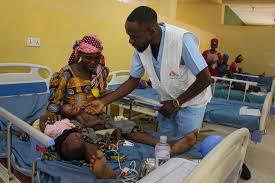
Vulnerable communities in Nigeria are facing increased health risks due to rising malnutrition and disease outbreaks.
Médecins Sans Frontières (MSF) has raised the alarm warning in Abuja during the launch of its 2025 Country Activity Report, covering its medical operations across several states, warning that weak healthcare access and ongoing humanitarian pressures are putting vulnerable populations at greater risk.
According to the report, MSF, working with health authorities, treated more than 440,000 children for malnutrition in 2025, the highest in recent years.
This includes 353,989 children in outpatient programmes and 90,723 admitted for severe acute malnutrition with complications. MSF said worsening conditions since 2022 are driven by displacement, flooding, inflation, food insecurity, and limited healthcare access in conflict-affected areas.
Country Representative, Ahmed Aldikhari, said malnutrition and disease are reinforcing each other, especially among children with delayed access to care. He stressed the need for stronger vaccination coverage, sanitation, disease surveillance, and timely treatment.
The report also highlighted outbreaks of malaria, measles, cholera, meningitis, and diphtheria, which continue to strain health systems. MSF said it treated 341,239 malaria cases, 38,753 measles cases, 6,123 diphtheria cases, and 985 meningitis cases across its facilities.
It also raised concern over maternal health, noting support for 33,590 deliveries and 119,469 antenatal consultations in 2025. MSF warned that many women still face delays in accessing care due to distance, cost, insecurity, and weak referral systems, and called for stronger investment in primary healthcare and emergency services.