Beyond petroleum: Case for oil and gas skills across the economy
Oil and gas stakeholders have been urged to deliberately transform skills developed in the petroleum sector into a foundation for broader national industrial growth and economic transformation. As Uganda’s oil and gas industry moves closer to the production phase, questions have continued to emerge over why the country is still investing heavily in skilling Ugandans […]

Oil and gas stakeholders have been urged to deliberately transform skills developed in the petroleum sector into a foundation for broader national industrial growth and economic transformation.
As Uganda’s oil and gas industry moves closer to the production phase, questions have continued to emerge over why the country is still investing heavily in skilling Ugandans in petroleum-related disciplines.
In 2014, international oil companies released the Industrial Baseline Survey report, which projected that the Lake Albert Basin Development project would create between 100,000 and 150,000 jobs through direct, indirect and induced employment.
The companies called on government to ensure the availability of skilled labour, goods and services capable of meeting both international oil industry standards and sector demands.
One survey at the time estimated that the sector would require 15 per cent engineers and managers, 60 per cent technicians and craftsmen, and 25 per cent unskilled workers.
The report further recommended that government work closely with oil companies to ensure the education system produces qualified graduates certified to work in the oil fields in line with international practice.
Over the years, Uganda has trained petroleum engineers, geoscientists, civil engineers, electrical engineers and mechanical engineers, among others. Hands-on training has also been conducted in welding, scaffolding, heavy goods vehicle driving and Health, Safety and Environment (HSE).
So far, about 14 institutions have attained international certifications, including OPITO, EICTB and City & Guilds accreditation, while more than 4,000 Ugandans are estimated to have acquired practical skills related to the oil and gas industry.
Under the Workforce Skills Development Strategy and Plan for Oil and Gas 2015–2025, the skilling component was estimated to cost £120 million (about Shs 606 million).
While some trainees have secured employment within the industry, concerns have emerged over whether Uganda should continue investing in certain specialised skills, particularly after some highly skilled welders reportedly failed to secure opportunities within ongoing oil and gas operations.
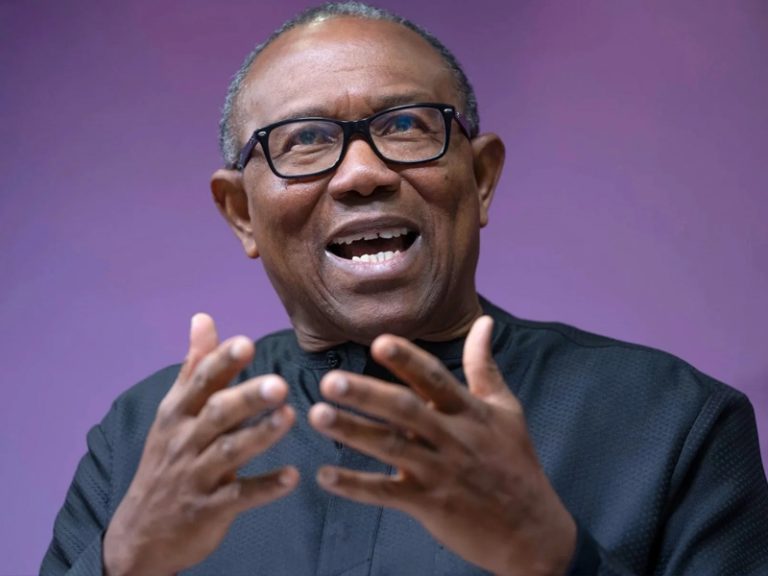
However, Prof Augustine Ifelebuegu, vice chancellor in charge of academic affairs, dismissed suggestions that Uganda may no longer need more skilled workers in oil and gas.
According to Ifelebuegu, oil and gas skills are transferable and can support multiple sectors of the economy beyond petroleum production.
“A welding technician trained in pipeline construction has expertise in precision fabrication, quality inspection, safety compliance and international standards,” he said.
“That person can work in manufacturing, automotive assembly, railway systems, construction, mining and renewable energy infrastructure.”
He warned against allowing the petroleum sector to develop as an isolated economic enclave disconnected from the wider economy.
Ifelebuegu was delivering the keynote address during the Third Oil and Gas Skills Expo 2026 held under the theme “From Oil and Gas to the Wider Economy.” The expo opened on Wednesday at Makerere University and was organised by the Petroleum Authority of Uganda alongside other sector players.
He called for what he termed “capability beyond petroleum,” arguing that Uganda must intentionally create pathways that allow expertise developed in oil and gas to strengthen other sectors of the economy.
“Capability beyond petroleum is about how we take what we are building in oil and gas and ensure that it does not remain locked within one sector,” Ifelebuegu said.
“We must ask ourselves: how does this capability serve the wider economy?”
He said Uganda’s oil and gas development phase presents a rare opportunity to build long-term national industrial capacity rather than focusing solely on extraction and production.
“We should not only be asking how much oil Uganda will produce,” he noted. “We must also ask what industrial capability Uganda will possess after oil.”
Ifelebuegu, a chemical engineer with more than 27 years of experience across oil and gas and process industries, said his own career demonstrates how petroleum-related skills can easily transition into other sectors.
“I started as an environmental officer in the oil and gas industry,” he said.
“Many years later, I have worked in water systems, construction and academia. Everything I learned in oil and gas helped me move across sectors.”
He explained that the oil and gas industry is built around discipline, precision, safety and systems thinking, qualities essential across modern industries.
“The oil and gas industry operates under extreme technical, financial, environmental and safety demands,” he said.
“A mistake in banking may result in financial loss, but a mistake in oil and gas can cost lives, destroy ecosystems, damage economies and harm national reputation.”
Because of the high-risk nature of the industry, he argued, the sector naturally produces professionals well suited for leadership roles in other sectors.
“Workers in this sector, regardless of what they do, are trained in risk management, quality assurance, environmental protection, emergency response, logistics coordination and project execution,” he said.
“These are not just petroleum skills. These are advanced industrial competencies.”
Ifelebuegu urged Uganda to learn from countries such as Norway, South Korea, Germany and Malaysia, which used their resource sectors as a platform for broader industrialisation.
“In Norway, oil was not treated as an end in itself,” he explained. “It was used as a foundation for building national engineering capacity, research institutions and supplier industries.”
He noted that Norway’s petroleum expertise later supported offshore wind, marine engineering, robotics and carbon capture technologies.
He also cited South Korea’s industrial growth, where early investments in shipbuilding, petrochemicals and heavy engineering eventually supported the rise of global automotive giants such as Hyundai.
Ifelebuegu warned that one of the biggest risks facing emerging petroleum economies is the development of isolated “enclave systems” where the oil sector grows independently with limited integration into the wider economy.
He pointed to Nigeria as an example of both progress and missed opportunities in linking petroleum expertise to broader economic diversification.
“Uganda has the opportunity to avoid such traps,” he said. “But localization alone is not enough. We must focus on capability multiplication.”
The professor further highlighted projects such as the East African Crude Oil Pipeline (EACOP) as important training grounds for national industrial skills development.
“These projects involve cross-border coordination, engineering integration, logistics systems, environmental monitoring and community engagement,” he said.
“The skills developed here must not end here.”
According to Ifelebuegu, such competencies can later support the development of smart cities, renewable energy systems, industrial parks, water infrastructure and transport networks.
“If you train someone to manage a pipeline across 1,443 kilometres, that person can manage a national water system or a railway network,” he said.
He added that environmental specialists trained within the oil and gas sector are equally valuable across agriculture, tourism, urban development and climate adaptation programmes.