The Department of Transport (DoT) is researching options for a hybrid funding model for the Road Accident Fund (RAF) that will include both private and public contributions to lessen the burden on the fiscus going forward.
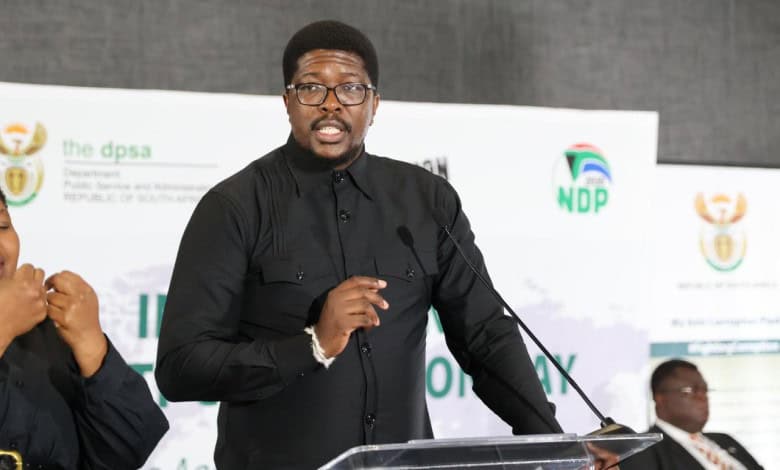
Deputy Minister of Transport Mkhuleko Hlengwa told parliament this on Tuesday during the DoT’s budget vote, stressing that the current RAF model is not financially sustainable.
Hlengwa said the department also intends to introduce the Road Accident Benefit Scheme Bill (Rabs) to parliament this year, with the proposed framework providing for defined structured benefits on a no-fault basis.
Minister of Transport Barbara Creecy said the RAF portion of the fuel levy has come under public scrutiny because of recent events that have demonstrated the vulnerability of South Africa’s road transport industry to international fuel price variations and availability.
This is a reference to the global disruption to oil supplies because of the US war with Iran, which has led to steep fuel prices increases worldwide and South Africa’s National Treasury providing short term mitigation measures.
Hlengwa added that the growing use of alternative energy vehicles, including electric, hybrid, and gas-powered vehicles, will inevitably reduce fuel levy revenue, which remains the primary funding source for the RAF.
To address this, Hlengwa said a gap analysis and business case are being finalised, focusing on:
- The policy and operational design of the Rabs benefits model;
- The interface between Rabs and third-party motor insurance products;
- The applicable legal and regulatory framework; and
- Financial, actuarial and funding considerations.
Hlengwa said the RAF has in recent years experienced governance challenges and institutional instability and the DoT has responded decisively through the appointment of an interim board and the strengthening of consequence management processes.
He said the process to appoint “a substantive RAF board” is underway, with the names of applicants now published for public comment.
Hlengwa said the RAF has approved comprehensive audit action plans to address all findings raised by the Auditor-General (AG).
“Disciplinary, recovery, and corrective measures are being implemented in line with legislative and governance requirements,” he said.
“Misconduct involving plaintiff attorneys has also been referred to the Legal Practice Council on a case-by-case basis.”
Hlengwa confirmed that the RAF board has decided to withdraw litigation relating to the accounting standard previously applied by the fund.
It has reverted to its previous accounting standard, GRAP 19, and discontinued the inappropriate use of IPSAS 42.
He said the RAF has also recorded notable improvements in claims settlement performance, maintaining payments of at least R4.6 billion a month since September 2025.
“This marks a significant improvement from previous averages of R2.1 billion per month, amounting to cumulative settlements of R43.2 billion during the financial year,” he said.
RAF’s unlawful form
The Supreme Court of Appeal (SCA) last week dismissed with costs an RAF appeal against a high court judgment that declared a board notice and its RAF 1 Form unconstitutional, unlawful and invalid.
This led to suggestions by some legal practitioners that it appears increasingly likely the RAF will require a significant government bailout.
Neither Creecy nor Hlengwa mentioned the possibility of a bailout for the RAF on Tuesday.
The RAF is estimated to have about R500 billion in unqualified contingencies, a portion of which is attributable to the fund rejecting claims that complied with the RAF Act but did not comply with the Board Notice and RAF 1 Form introduced in May 2021.
SCA judgment provides ‘welcome’ clarity
Acting RAF CEO Radikwena Phora on Tuesday responded to the SCA judgment, welcoming the clarity it provides on the claims form.
He said the fund is studying the judgment in detail together with its legal advisors to understand its full extent and its impact on operational, legal and claims administration.
Phora added that the RAF has also taken into consideration all concerns raised in this judgment and commits to its full implementation without prejudice to ensure accessible services to the victims of road accidents.
He said as part of the implementation of this judgment, the RAF’s immediate actions will include:
- A review of the operational processes and procedures regarding the RAF 1 Form in line with the guidance provided by the SCA;
- The continuous administration of claims in line with the RAF’s mandate and ensuring that all claimants are provided with quality service delivery and efficient claims processing;
- Engaging with the Minister of Transport to adopt and publish a revised RAF 1 Form within six months from the date of the SCA order, being 30 April 2026; and
- Implementing in the next few weeks a comprehensive communication campaign to educate and inform claimants whose claims were rejected due to outstanding documents to resubmit them by September 2026.
Gert Nel of Gert Nel Inc Attorneys said last week his only disappointment with the SCA ruling is that it does not provide a clear course of action to be taken on default judgments, stressing that RAF claims that already have a default judgment on them cannot be relodged.
Freight logistics
A number of other issues were raised during the DoT budget vote, including freight logistics reform and the South African National Roads Agency (Sanral).
Creecy said the Transnet Rail Infrastructure Manager (Trim) established in November 2024 will on Wednesday (13 May) announce the names of the first 11 private train operating companies that aim to move up to 24 million tons of freight a year starting from 1 April 2027.
Creecy said this will ensure that more South African minerals, vehicles and agricultural produce reach international markets, securing jobs and earning much-needed revenue for the fiscus.
Trim will allow Transnet to focus on the maintenance and revitalisation of the rail infrastructure while allowing third-party operators to increase the capacity and volumes of tradeable goods and commodities.
Creecy added that the Transport Economic Regulator will be formally established in this financial year to ensure port and rail fees are independently determined going forward, with a level playing field for all operators.
Roads
Sanral is expected to receive almost R31 billion this year, according to Creecy.
This will be used for capital expenditure on the non-toll network, the Gauteng Freeway Improvement Project operations, the N2 Wild Coast route for ongoing construction on major bridges, and new road sections on the country’s national highways and the development of the Moloto Road corridor.
“These large-scale projects will continue to improve safety and shorten travel distances while creating over 35 000 job opportunities and supporting more than 2 000 small enterprises.”
However, Creecy said serious challenges remain at provincial and municipal levels where finance and in-house capacity for road maintenance is often inadequate.
She said provincial governments have since 2013 transferred 13 000km of provincial roads to Sanral for management and maintenance.
“This is not a sustainable long-term strategy and will ultimately impact Sanral’s ability to maintain the national road network without introducing widespread tolling.”
Creecy said the DoT will next month host a joint MinMec (minister and MECs) with National Treasury to find a mechanism to frontload the provincial road maintenance grant so that provinces can upgrade more of their priority roads sooner.
MinMec is a consultative forum comprising a national cabinet minister and the nine provincial members of the executive council (MECs) responsible for the same portfolio.
This article was republished from Moneyweb. Read the original here.