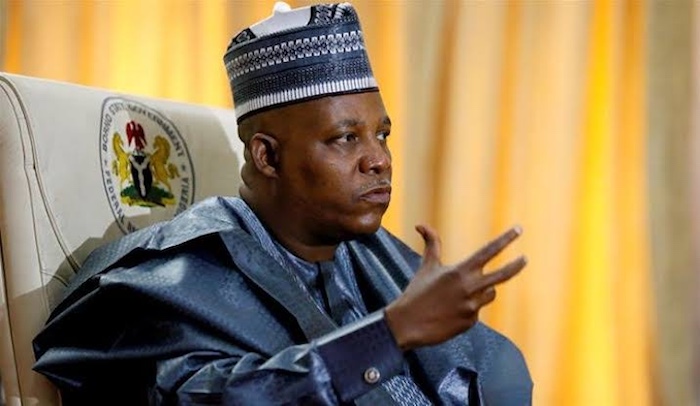
Vice President Kashim Shettima, on Tuesday said the country’s debt service-to-revenue ratio declined sharply from 120 per cent in December 2022 to 68 per cent in 2025 amid ongoing tax reforms introduced by President Bola Tinubu’s administration.
This came as Minister of Finance and Coordinating Minister of the Economy, Mr. Taiwo Oyedele, said the reforms were aimed at building a “stronger fiscal foundation for long-term national development” rather than increasing taxation.
Both spoke at the opening of the 2026 Tax Conference with the theme, “Tax Reforms and Global Relevance: Positioning Nigeria’s Tax System for a Sustainable Future” which is organized by the Chartered Institute of Taxation of Nigeria (CITN), in Abuja.
Shettima said the reforms had become a major tool for strengthening government revenues, improving fiscal sustainability and supporting the administration’s ambition of growing the economy to $1 trillion by 2030.
Represented by Special Adviser to the President on Economic Affairs, Dr. Tope Fasua, the vice president said, “Many pundits have complained about our high revenue to debt servicing ratio. But the only antidote to this anomaly is to drive revenue for the government, based on well-thought-through and properly-established fiscal laws.
“We are on a solid course, as our current tax reforms are the primary engine for this leap and we have been able to close that chasm by bringing down this ratio from a galling high of 120 per cent in December 2022, to 68 per cent as at the close of 2025.”
The vice president said the reforms, which took effect from January 1, 2026, represented Nigeria’s first comprehensive tax overhaul in more than 35 years and were designed to reposition the economy for long-term growth.
He said the federal government was already streamlining tax administration and broadening the tax base to improve the country’s balance sheet and reduce pressure from debt obligations.
Shettima said, “Every Naira recovered from inefficiency and every kobo brought into the net from previously untapped sectors is a brick in the bridge toward that $1 trillion milestone”, adding that reforms would also help government shift from a “nation that borrows to survive to one that invests to thrive”.
The vice president also stated that the current administration remained determined to “break the shackles of high-interest burdens that stifle our ability to fund education, healthcare, social services and infrastructure”.
He stressed that Tinubu had inaugurated the tax reform committee then headed by Oyedele, shortly after assuming office in May 2023 to address weak revenue generation and widespread informality in the economy.
He described the reforms as part of a broader effort to rebuild public infrastructure and improve Nigeria’s competitiveness globally.
Shettima also defended the reforms against criticism, adding that many Nigerians were unaware of their “pro-poor” provisions, stressing that many Nigerians remained unaware that anyone earning N1 million and below will go tax free in the country.
He said, “Some simply cannot believe that small businesses turning over N100 million and below every year are totally tax exempt.”
The vice president however added, “But it is not yet uhuru. We face daunting challenges in our quest for a new, greater Nigeria. The innards of the tax reform must be disseminated far and wide. Many Nigerians are yet unaware, even of the pro-poor nature of the reforms and how it favours the underprivileged amongst us.
“Many Nigerians don’t know that anyone earning N1 million and below will go tax free in Nigeria. Some simply cannot believe – because it has never happened before – that small businesses turning over N100 million and below every year are totally tax exempt. They must be constantly reminded that President Tinubu is not anti-people or anti-business, but pro-people and pro-business.
“He wants Nigerians to thrive and succeed, and we shall work to ensure this. Information dissemination on these reforms is key and we must never yield the entire space to the traducers of government who seek to impugn the good efforts of our leader, by substituting progressive information with concocted information and falsehood.”
Shettima stressed, “Tax reform is often seen as a technical burden, but I urge you to see it as an act of patriotism. We are not just reforming a system; we are reclaiming our destiny.”
Earlier, Oyedele, said the reforms were aimed at building a stronger fiscal foundation for long-term national development rather than increasing taxation.
He said the country’s previous tax system had been weakened by fragmented administration, multiple taxation, weak compliance and unstable revenues.
According to him, “Countries that fail to modernise their fiscal frameworks risk losing competitiveness, discouraging investment, widening inequality, and weakening economic resilience. These are risks Nigeria cannot afford to take, and opportunities we cannot afford to lose.”
The minister pointed out that the reforms were designed to simplify taxation, reduce compliance burden, encourage investment and strengthen public trust in government.
He disclosed that minimum wage earners had been exempted from personal income tax, while measures were also being implemented to reduce the burden on low-income earners and improve business competitiveness, among others.
He said, “Our tax reforms became necessary because, for many years, Nigeria’s tax system suffered from structural weaknesses — from non-harmonised taxes to fragmented administration, scarce and unstable revenues, weak compliance, and high levels of informality.
“Businesses faced numerous impediments from inefficient enforcement and rising compliance costs. Citizens often perceived the tax system as unfair because the burden was unevenly distributed. At the same time, revenues remained insufficient relative to our development targets.
“This model became untenable, and the system was simply unsustainable. The reforms we are implementing are therefore not about additional points of taxation. They are about building a stronger fiscal foundation for long-term national development.”
Oyedele stressed that the government’s approach was guided by a simple conviction that a good tax system should enrich the real economy, support economic growth, protect vulnerable demographics, and strengthen trust between government and citizens.
According to him, the reforms seek to simplify the tax system, improve coordination, reduce disruptions, encourage investment, promote voluntary compliance, and align taxation with productivity.
He said, “We are moving from a framework driven by discretion and fragmentation to one anchored on clarity, certainty, and fairness.
“We do not operate in isolation. We must remain competitive, and competitiveness today depends significantly on the quality of a country’s fiscal architecture.
This is why our reforms incorporate internationally recognised best practices while remaining sensitive to Nigeria’s realities.”
According to the minister, one of the strongest complaints from businesses had been multiple taxation across different levels of government, adding that the government is working to modernise tax administration, improve coordination, and reduce the burden on taxpayers, especially low-income earners.
He said, “If our tax system and laws are to facilitate a globally competitive economy, we must continue strengthening implementation across the federation.
“We are grateful to the states that have adopted tax modernisation laws in their various jurisdictions, and we encourage others to do the same sooner rather than later.”
Also, speaking at the conference, President/ Chairman of Council, Chartered Institute of Taxation of Nigeria (CITN), Mr. Innocent Ohagwa, described taxation as a central pillar of Nigeria’s transition away from oil dependence.
Ohagwa commended the Tinubu administration, the National Assembly and other stakeholders for delivering the new tax laws, saying the reforms reflected a firm and collective commitment to sustainable economic development.
He urged tax professionals to support implementation of the reforms by promoting transparency, accountability and compliance across the system.
He said, “As Nigeria shifts from a long-standing dependence on oil toward a more sustainable fiscal model, taxation has rightly emerged as a central pillar of our national revenue strategy.
“CITN has convened this 28th ATC under the theme to provide a critical platform for tax professionals, policy makers, administrators, members of the academia, business leaders and stakeholders-alike to rigorously interrogate the ongoing reforms, evaluate the challenges and identify how best they can strengthen our tax system for long-term sustainability, global competitiveness and enduring fiscal relevance.”
Ohagwa said, “As tax professionals, our contributions have never been more crucial than now, particularly with reference to Sections Section 33(1) and Section 147 of the Nigeria Tax Administration Act (NTAA) 2025.
“As President of CITN, I call on all members across the public and private sectors to rise to the demands of this moment and support the implementation of the reforms.
“Every CITN member must become a stakeholder of the reform agenda by deepening their technical knowledge, upholding the highest ethical standards and providing sound, objective guidance to taxpayers, institutions, employers and government.”
He said, “We must firmly reject practices that undermine compliance and instead uphold the principles of transparency, fairness, and accountability in all our engagements. As professionals, we must lead by example by ensuring full compliance with our own tax obligations before encouraging others to do the same.
“CITN stands ready to support the government, including the NRS, State Internal Revenue Services, the JRB, National Tax Policy Implementation Committee, office of the Tax Ombuds and all stakeholders, in achieving the objectives of these reforms.”
James Emejo