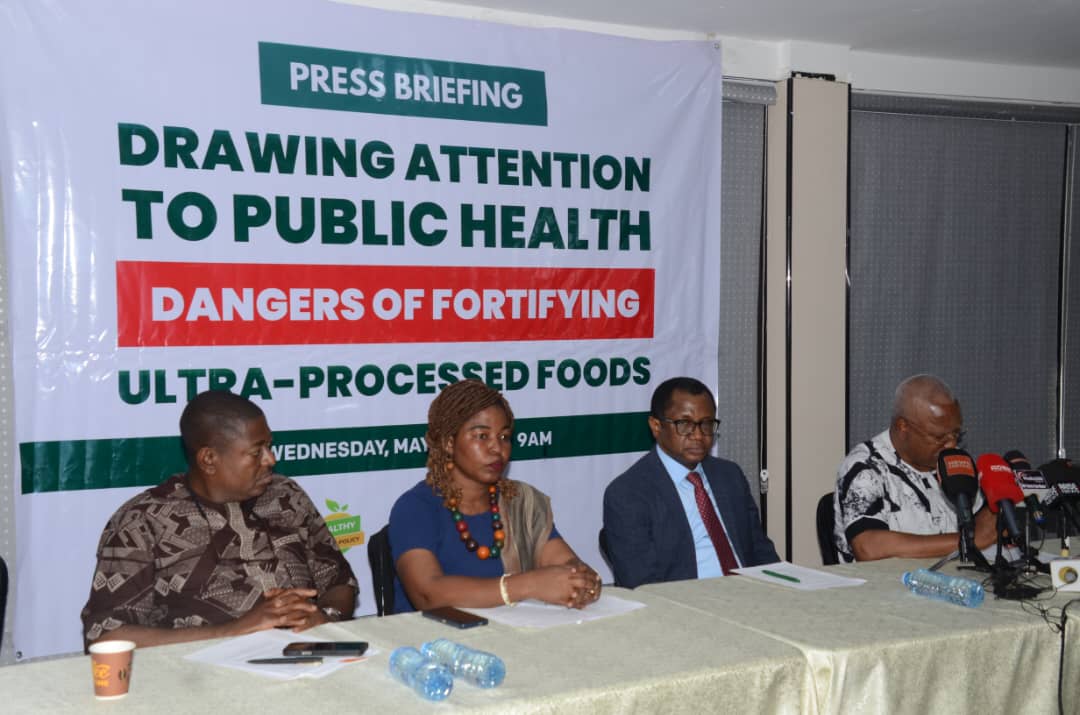
A coalition of prominent health advocates has issued a warning to the Federal Government, expressing concerns that the proposed fortification of ultra-processed foods could unintentionally exacerbate the country’s growing burden of non-communicable diseases (NCDs), rather than alleviate malnutrition.
During a press conference in Abuja on Wednesday, themed “Highlighting the Public Health Risks of Fortifying Ultra-Processed Foods,” the coalition raised significant issues related to Nigeria’s food fortification policy. They called for an immediate review to prevent the promotion of unhealthy diets under the guise of enhanced nutrition.
This warning comes as Nigeria faces a dual challenge: persistent micronutrient deficiencies on one side and a continuous increase in diet-related diseases on the other.
Dr. Jerome Mafeni, a Technical Advisor at the Network for Health Equity and Development (NHED), stressed the dangers of fortifying high-sodium products, such as bouillon cubes, noting that Nigeria already surpasses recommended salt intake levels.
“Currently, Nigeria should not proceed with bouillon fortification. Our priority must be to reduce sodium exposure in the population, enforce mandatory salt targets, ensure clear and effective labeling, and strengthen regulatory enforcement,” he stated.
Akinbode Oluwafemi, Executive Director of Corporate Accountability and Public Participation Africa (CAPPA), emphasized that while food fortification can be a valuable public health strategy, it should be applied only to genuinely healthy food options.
“The route to a healthier Nigeria involves creating a food system that prioritizes real, diverse, locally sourced, and nutritionally balanced foods. Fortifying unhealthy products does not transform them into healthy alternatives.
“It is crucial that Nigeria’s fortification initiative produces genuine health benefits rather than unintended negative effects,” he remarked.
Oluwafemi further cautioned that fortifying items like seasoning cubes, instant noodles, and sugary cereals could mislead consumers into thinking they are healthy choices.
Professor Dike Ojji, a lead researcher at the University of Abuja, highlighted the increasing incidence of cardiovascular diseases in Nigeria, which account for approximately 10% of deaths, with hypertension affecting up to 30% of the population.
“The rising burden of cardiovascular disease is closely tied to poor dietary habits and lifestyle choices, including sedentary behavior and tobacco use.
“For Nigeria to advance in the primary and primordial prevention of cardiovascular disease, structured policies must be established to protect the public from excessive salt, trans fats, and ultra-processed foods,” he emphasized.
Ojji also advocated for robust health insurance systems to ensure the availability of affordable generic medications for managing hypertension, diabetes, and dyslipidemia.