Pentagon signals restraint but insists military is fully prepared for escalation if shipping routes are threatened…..
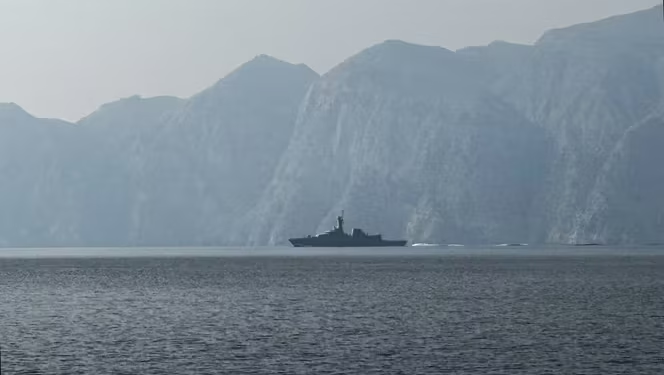
The United States has issued a stark warning to Iran, making clear that while it is not seeking a confrontation, it will respond forcefully to any threat against vital global shipping lanes in the Strait of Hormuz.
Speaking on Tuesday, U.S Defense Secretary Pete Hegseth said Washington is committed to keeping the strategic waterway open, stressing that any attack on commercial vessels or American forces would trigger an overwhelming military response.
“We’re not looking for a fight,” he said, “but Iran cannot be allowed to block innocent countries and their goods from an international waterway.” He added that any aggression would be met with “devastating” firepower.
The warning comes amid rising tensions linked to the ongoing Israel–Iran conflict escalation 2026, which has already unsettled global energy markets and heightened fears over supply disruptions through one of the world’s most critical oil transit routes.
Backing up the Pentagon’s stance, Dan Caine, a senior US military commander, said American forces remain on high alert and fully prepared for escalation if required. According to him, the current posture of restraint should not be misinterpreted as weakness.
“The US Central Command and the rest of the joint force remain ready to resume major combat operations against Iran if ordered,” he said, emphasizing that Washington retains both the capability and readiness to act swiftly.
The United States Central Command oversees American military operations in the Middle East, including the Gulf region where the Strait of Hormuz serves as a critical artery for global oil shipments.
Together, the statements reflect a calibrated message from Washington: a desire to avoid direct conflict, paired with a clear signal that any disruption to international shipping or attack on US interests would prompt a decisive and potentially far-reaching response.
As tensions continue to simmer, the Strait remains a focal point of global concern, with any instability there carrying significant implications for energy markets and international trade.