Rising tensions in the Gulf deepen as stalled negotiations, military warnings, and a global supply crunch push the U.S. and Iran closer to confrontation…….
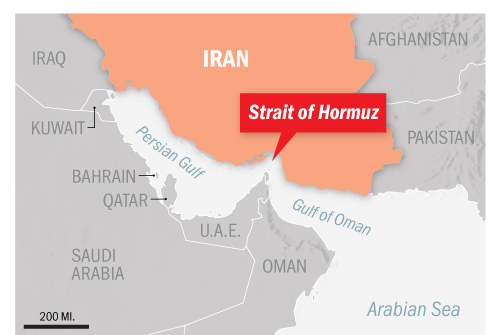
Tensions between the United States and Iran escalated sharply on Monday after Tehran issued a direct warning that American forces would be attacked if they attempted to enter the Strait of Hormuz under a new U.S. maritime mission.
The warning comes just hours after President Donald Trump announced the launch of a naval escort initiative dubbed “Project Freedom” aimed at guiding stranded commercial vessels safely through the strategic waterway.
According to Trump, the operation is intended as a humanitarian effort to assist hundreds of ships and crews caught in the ongoing blockade, many of whom are reportedly running low on essential supplies.
“We will use every available resource to ensure their safe passage,” Trump said in a post on Truth Social, adding that operations would begin immediately. He noted that several vessels have refused to leave the area until navigation conditions improve.
Iran, however, responded with a starkly different tone. Its military command insisted that any movement through the strait must be coordinated with Iranian forces and warned that unauthorized entry would be met with force.
In a statement broadcast by state media, Major General Ali Abdollahi declared that any foreign military presence particularly that of the United States approaching the strait would be considered a hostile act and dealt with accordingly.
The Strait of Hormuz remains at the center of the standoff. As one of the world’s most critical energy corridors, it handles a significant share of global oil, gas, and fertilizer shipments. Iran’s effective closure of the route has already sent shockwaves through international markets, while the United States has responded with a counter-blockade targeting Iranian ports.
Efforts to resolve the crisis diplomatically have so far stalled. Talks between Washington and Tehran have been deadlocked since an April 8 ceasefire that followed a broader conflict involving U.S. and Israeli forces.
Despite the impasse, Trump suggested that behind-the-scenes discussions are still ongoing and could yield progress. However, he made no reference to a multi-point proposal reportedly submitted by Iran last week aimed at ending hostilities and reopening the strait.
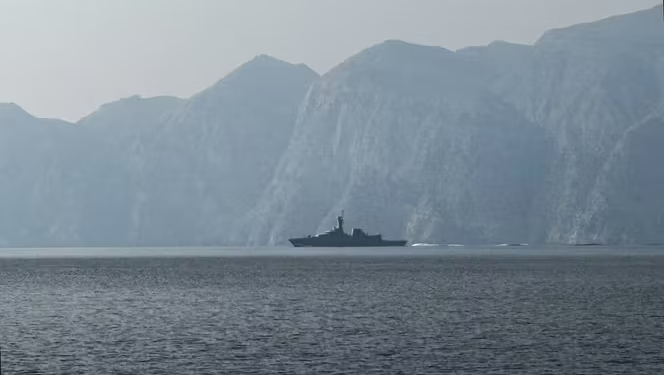
Military preparations on the U.S. side indicate the seriousness of the situation. Central Command has outlined plans involving guided-missile destroyers, more than 100 aircraft, unmanned systems, and approximately 15,000 personnel to support the escort mission.
Meanwhile, the scale of the disruption is growing. Maritime data indicates that hundreds of commercial vessels remain in the Gulf, unable to safely transit the strait as uncertainty persists.
Reports suggest Iran has proposed a one-month timeline for negotiations that would include reopening the waterway and lifting U.S. restrictions, but its leadership has also framed the situation as a choice for Washington either pursue a risky military operation or accept a compromise deal.
The standoff is also raising alarms among U.S. allies. European leaders have increasingly voiced concern over the prolonged closure of the strait and its economic consequences.
Germany has called for immediate reopening while emphasizing the need for Iran to abandon any nuclear weapons ambitions. France, alongside Britain and other partners, is pushing for a coordinated international approach that would see both Washington and Tehran agree to restore safe passage.
For now, oil markets remain on edge. Prices have surged roughly 50 percent since the conflict began, driven largely by supply disruptions tied to the strait.
Trump, speaking over the weekend, declined to outline specific conditions that might trigger further military action. Still, he made clear that any interference with the U.S. escort mission would draw a forceful response.
At the same time, Washington is intensifying economic pressure. Treasury Secretary Scott Bessent described the current strategy as a full-scale financial squeeze on Iran, saying the measures are limiting the country’s ability to fund its military operations.
As both sides dig in, the Strait of Hormuz has become more than just a shipping route, it is now the focal point of a high-stakes confrontation with global economic and security implications.