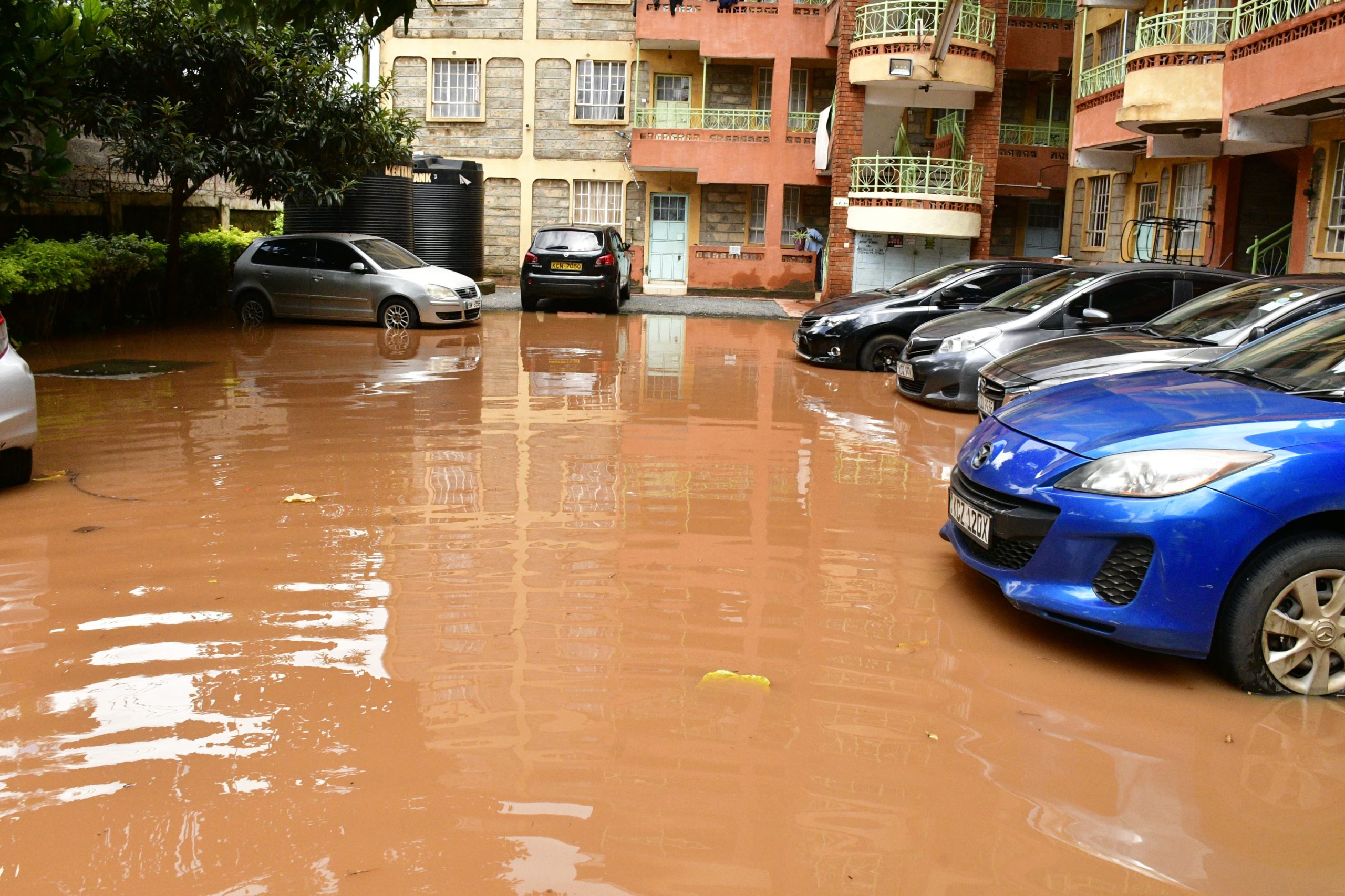
Heavy rains have caused severe flooding along Mombasa Road, leading to widespread traffic disruptions as vehicles are forced to navigate submerged sections of the highway.
The deluge, which began early this morning, has left commuters stranded in lengthy traffic jams as water levels continue to rise, submerging parts of the road. Authorities are working to manage the situation, but delays are expected throughout the day.
According to a security advisory issued on Friday, the chaos along Mombasa Road was worsened by a submerged lorry near City Cabanas, exacerbating the situation. Motorists were urged to avoid the congested route and use the Nairobi Expressway, which remains open for free access.
“A submerged lorry near City Cabanas (due to severe flooding) has caused a major traffic buildup, stretching from the CBD to Athi River. Videos circulating online show stalled vehicles, many partly submerged,” police said.
The advisory added: “Avoid Mombasa Road and use the Nairobi Expressway as an alternative.”
The Kenya Red Cross Society also confirmed widespread flooding across the city, citing rising water levels along Mombasa Road and the Eastern Bypass. It also reported multiple incidents of flooding, with some households marooned. In Mukuru kwa Njenga, unconfirmed reports suggest missing persons. The Red Cross has dispatched teams for urgent assessment.
“Following a heavy downpour, rising water levels along Mombasa Road have caused flooding. In Mukuru kwa Njenga, there are unconfirmed reports of missing persons and marooned households. Kenya Red Cross Nairobi teams are en route for assessment and possible response,” the agency said.
Meanwhile, flash floods near T-Mall on Lang’ata Road trapped a vehicle in a ditch, but all occupants were safely evacuated.
On Syokimau-Kiungani Road, a section of the road was cut off for the better part of Friday, with floods making it difficult for motorists to cross. Along Syokimau-Katani Road, all the way to the Three-Sixty Estate, the road was rendered impassable due to floods, with residents blaming the drainage system.
Feeder roads leading out of residential estates were impassable, with murky brown water stretching from one end to the other. In some areas, access roads to estates were completely cut off, effectively isolating residents.
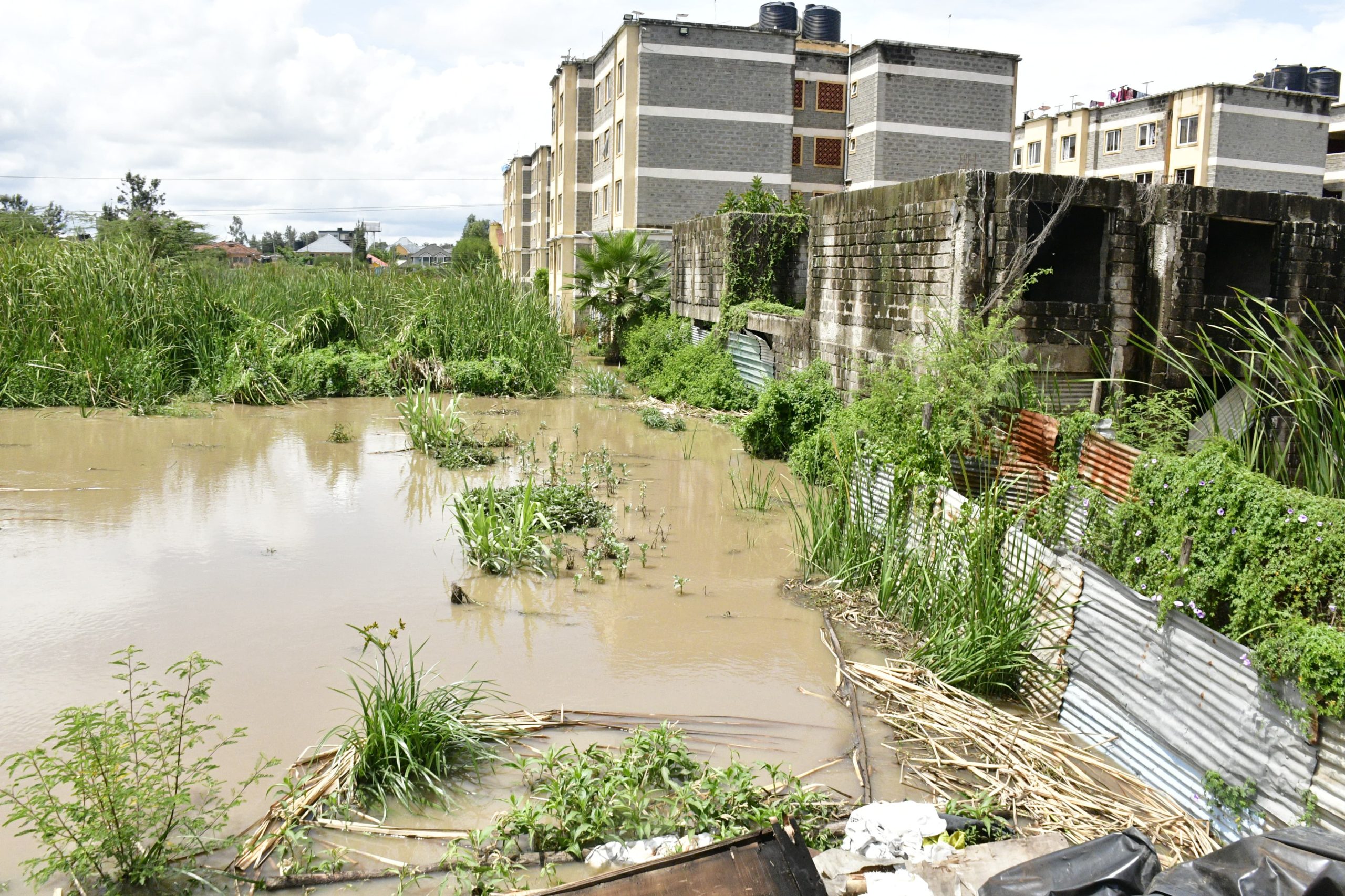
The scenes painted a vivid picture of the aftermath of the heavy downpour that pounded the area and other parts of Nairobi on Thursday night, exposing persistent drainage challenges and leaving residents counting losses.
One of the residents, George Muthiani, blamed the Kenya Airports Authority (KAA) for diverting drainage at Quarry Road, causing the flooding.
“Katani (Mavoko) Quarry Road is flooded after drainage diversion by KAA. A key metro artery to quarries is collapsing while KURA stays silent. Urgent drainage and repairs are needed,” he said.
“The state of Katani Road—the only road leading into and out of the larger Katani Estate—continues to deteriorate because of a storm diverted by KAA to the road. When will the residents of Katani get a permanent solution?” he posed.
Others said their children have not been able to report to school for the last two days due to flooding, as school buses cannot access the roads.
“Katani Road is literally a river with huge potholes that small cars just cannot pass through. Children have not gone to school for the last two days! Where are our leaders?” wondered Pamela Mbaabu, a resident.
Diana Imani added: “Syokimau and Katani have mostly uncovered drainage systems that are filled with reeds. The road is just pothole after pothole. Some schools had to tell their pupils to stay home since Wednesday.”
In Kinoo, it was the same situation, with residents also blaming poor drainage, especially near Leestar Supermarket.
“The situation in Kinoo near Leestar Supermarket is a heartbreaking reminder of the gaps in our urban drainage. Residents deserve better infrastructure and proactive disaster planning,” Joseph Ngumba said.
Another resident, who identified herself only as Jacqueline, called on the government to come to their rescue, saying they had nowhere else to go.
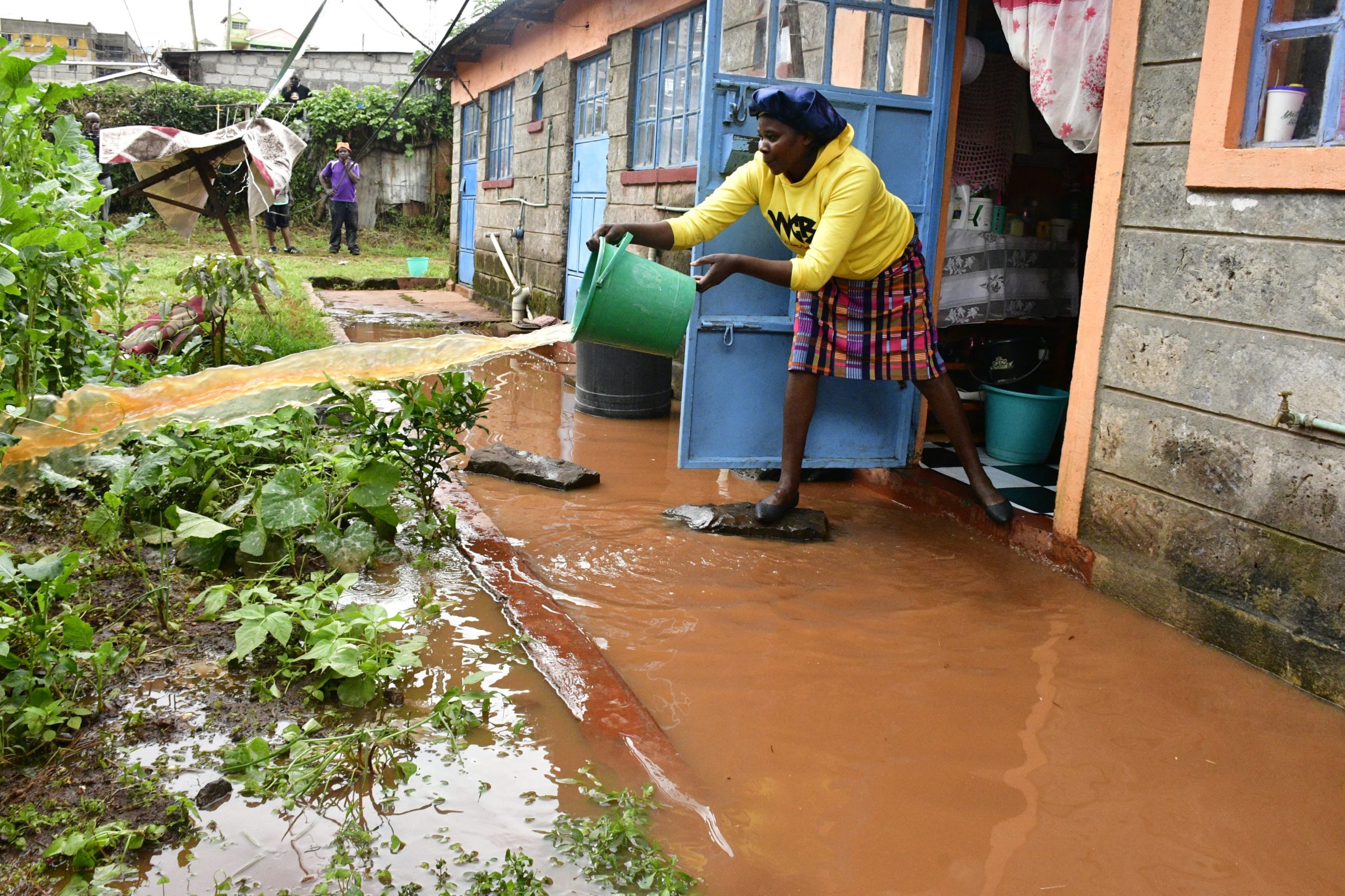
“I woke up today and found my house flooded. My request is for the government to come to our aid as most of my belongings have been destroyed. From food to furniture, I have nothing left,” she said.
Meanwhile, in Kajiado County, three individuals were rescued after their lorry became trapped in floodwaters from the swollen Kandisi River along Magadi Road. The swift response prevented what could have escalated into a more serious incident.
Further north, flash floods have also been reported in Moyale, Marsabit County, highlighting the widespread impact of the ongoing rains.
Kenya’s meteorological outlook for May signals a sharp decline in rainfall from mid-month, with the current heavy rains expected to ease, marking the gradual end of the March–April–May rainy season.
In its latest forecast released on Friday, the Kenya Meteorological Department (Kenya Met) said the rains battering many parts of the country are set to significantly reduce by mid-month, shifting towards drier conditions.
“The outlook for May indicates that the second half of the month is likely to be drier than average, implying the cessation of the March–April–May 2026 rainfall season,” Kenya Met stated.
Although the first week of May will remain wet, with heavy downpours continuing in several regions, conditions are expected to improve as the month progresses. By the final weeks, drier-than-normal weather will prevail across much of the country, signalling the close of one of Kenya’s key rainy seasons.
However, rainfall will not decline uniformly. Central Kenya, the Lake Victoria Basin, western Kenya, and the Coastal region are likely to experience below-average rainfall into June.
The end of the long rains will usher in a cooler, drier season, with temperatures set to dip in several areas, particularly the Highlands.
Despite the shift in weather, Kenya Met warned of ongoing risks. Heavy rains in early May could still lead to flooding, waterlogging, and transport disruptions in vulnerable areas.
The department also raised concerns about public health risks, including outbreaks of waterborne diseases and malaria, particularly in poorly drained areas.
Farmers are urged to stay alert. Continued rainfall in Central Kenya, western regions, and parts of the Rift Valley may result in waterlogged farms and crop damage.
The Southeastern lowlands, facing irregular rainfall patterns and intense storms, could see uneven soil moisture, adding stress to crops.
Water infrastructure is under threat, with rivers, dams, and drainage systems in high-rainfall areas at risk of overflow.
“Expected heavy rainfall in the first week of May increases the likelihood of river overflows, flash floods, and prolonged inundation in low-lying and downstream areas,” Kenya Met warned.
Flash floods have already caused chaos across parts of the country. Motorists have been stranded on flooded sections of Mombasa Road near the Eastern Bypass, raising safety concerns and fears of missing persons, according to the Kenya Red Cross.
The National Police Service has urged caution, with emergency teams closely monitoring the situation.