Screenshot

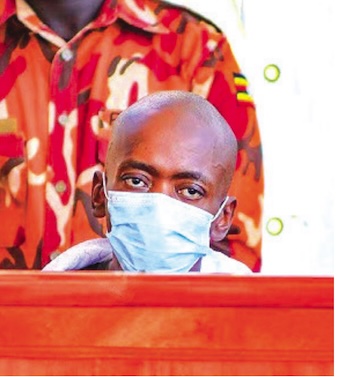
High court judge Alice Komuhangi Khaukha has found Christopher Okello Onyum guilty of the brutal murder of four toddlers at Ggaba Early Childhood Development Centre.
The verdict, delivered today during a high-stakes mobile court session held near the scene of the crime, dismissed Okello’s defence of insanity and claims of “spiritual possession,” marking a pivotal moment in one of the most harrowing criminal cases in Uganda’s recent history.
Justice Komuhangi ruled that there was no medical or credible evidence to support Okello’s assertion that he was mentally incapacitated on April 2, 2026, the day he used a sharp object to kill Ryan Odeke, Keisha Agenorwoth Otim, Gideon Eteku, and Ignatius Sseruyange, all toddlers below two years.
The judge noted that the accused’s defence relied solely on an unsworn statement, which carries limited evidentiary weight. She emphasised that Okello failed to present any expert psychiatric testimony to counter the prosecution’s case, which portrayed him as fully in control of his faculties.
“The accused’s actions were calculated and deliberate. To claim insanity without a shred of medical proof, while evidence shows a man capable of complex financial planning, is a legal impossibility,” the judge observed.
A key pillar of the prosecution’s case was Okello’s financial activity. Investigating officers presented evidence showing that at the time of the murders, he was actively managing three separate bank accounts.
The court heard that the accused transacted in both Ugandan shillings and US dollars, and was engaged in various deals and investment schemes, including leasing land in Nwoya for commercial farming.
Digital forensic evidence also revealed that he had conducted online searches related to beheadings and daycare facilities, suggesting a level of premeditation that contradicted his claims of a “mental blackout.”
The prosecution argued, and the court agreed, that a person capable of navigating complex financial transactions and managing investments possesses the cognitive capacity to understand the nature and consequences of their actions.
Throughout the trial, the prosecution, led by chief state attorney Jonathan Muwaganya, presented 18 witnesses. Evidence included a flash disk recovered from Okello containing The Art of War by Sun Tzu, alongside disturbing search histories.
Although Okello claimed he was “coerced” into his initial confession—where he allegedly admitted the killings were for ritual purposes to gain wealth—the court found the corroborating forensic evidence overwhelming.
Following the guilty verdict, the court took a brief recess. Proceedings are expected to resume shortly for sentencing, where the prosecution is likely to seek the maximum penalty, citing the vulnerability of the victims and the gruesome nature of the crime.
Parents and residents of Ggaba remained gathered outside the mobile court, many in tears, as they await the final sentence for the man accused of turning a place of learning into a scene of national tragedy.