Germany’s economy grew by 0.3% in Q1 2026, exceeding analysts’ expectations of 0.2%, driven by household consumption, government spending, and rising exports, according to official data.
Despite the stronger than expected growth, the country continues to face economic pressure from high energy costs linked to geopolitical tensions and ongoing structural challenges in its export driven model.
Inflation also rose, with EU harmonised figures hitting 2.9% in April due to increasing energy prices, adding to concerns about economic stability.
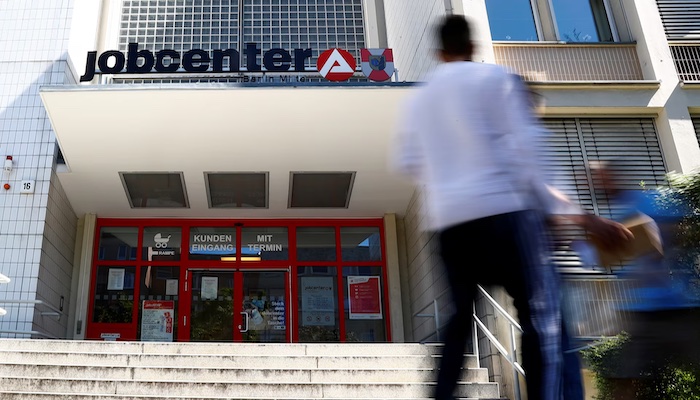
Meanwhile, unemployment rose more than forecast, increasing by 20,000 to reach 3.006 million in seasonally adjusted terms, crossing a key political threshold. The jobless rate remained unchanged at 6.4%.
Labour office head Andrea Nahles said there were still no clear signs of recovery in the labour market, noting that the usual spring improvement remains weak.
Although the overall number of unemployed people slightly declined in unadjusted terms, it marked the fourth consecutive month above the 3 million level, highlighting persistent labour market challenges.
The government has already revised down its 2026 growth forecast to 0.5%, while projecting inflation to rise further in the coming years.