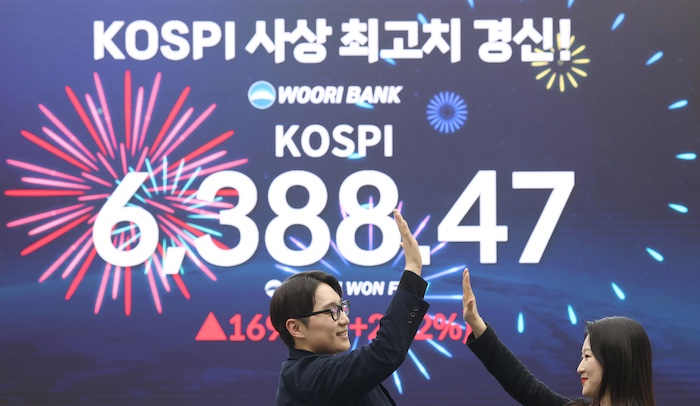
South Korea’s benchmark KOSPI Index has recorded its strongest monthly performance in over two decades, surging nearly 31% in June—its biggest gain since the aftermath of the 1998 Asian financial crisis—driven by a powerful rally in technology stocks and renewed investor optimism around artificial intelligence.
The sharp rise in the Kospi has been led by semiconductor heavyweights SK Hynix and Samsung Electronics, which climbed 60% and 35% respectively over the month, as global demand for AI-related chips continued to fuel bullish sentiment.
Analysts at HSBC last week upgraded South Korea’s market outlook to “neutral” from “underweight,” stating that “recent foreign outflows had helped unwind crowded positioning in the market and reduced downside risks from geopolitical volatility.”
The bank further noted that “broader growth themes in areas such as energy storage, shipbuilding, defence and nuclear power are also supporting the market’s rally,” highlighting a widening base of investor interest beyond semiconductor stocks.
However, despite the milestone rally, markets across the Asia-Pacific region retreated on Thursday, as escalating geopolitical tensions and surging oil prices rattled investor confidence. The Kospi fell 1.38% to close at 6,598.8, while the smaller KOSDAQ Index dropped 2.29% to 1,192.35.
In Australia, the S&P/ASX 200 slipped 0.24% to finish at 8,665.8, while Japan’s Nikkei 225 declined 1.06% to 59,284.92 and the TOPIX fell 1.19% to 3,727.21 as trading resumed after a public holiday.
Hong Kong’s Hang Seng Index was down 1.27% in late trade, while mainland China’s CSI 300 Index ended the session largely flat at 4,807.30.
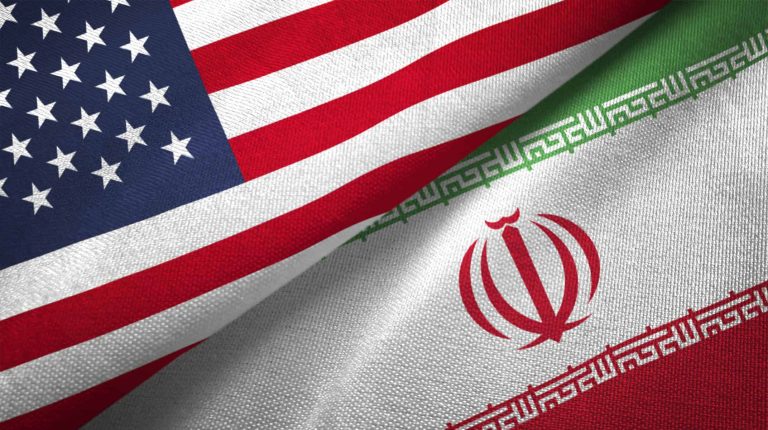
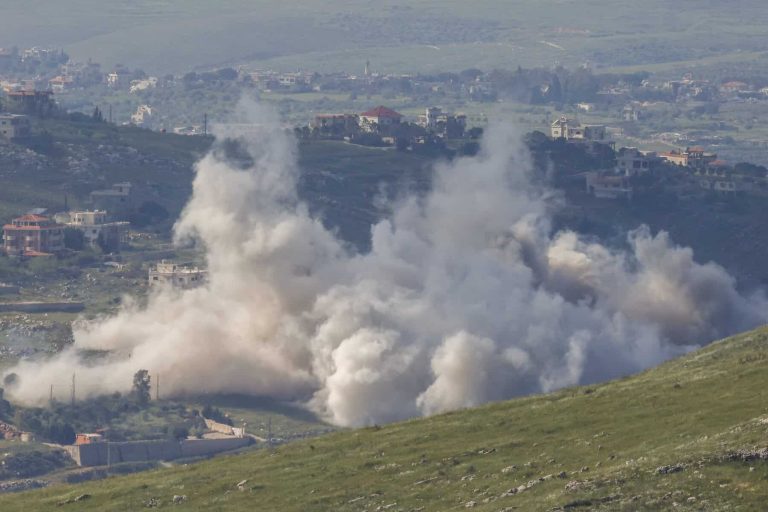
Oil prices surged sharply amid fears of a widening Middle East conflict after reports that the United States Central Command was preparing to present military options against Iran to U.S. President Donald Trump. The report also indicated that Trump had rejected Tehran’s proposal to reopen the Strait of Hormuz, signalling that a naval blockade would remain until a broader nuclear agreement is secured.
As a result, June futures for Brent Crude jumped 3.4% to $121.98 per barrel, while West Texas Intermediate rose 1.21% to $108.22. Brent crude has now climbed to its highest level since mid-2022, as the ongoing conflict continues to disrupt global supply chains.
In the United States, futures markets showed mixed signals. Contracts tied to the S&P 500 rose 0.3%, while Nasdaq-100 futures gained 0.5%. Meanwhile, Dow Jones Industrial Average futures fell 128 points, or 0.2%.
Overnight, Wall Street closed on a mixed note. The Dow Jones Industrial Average dropped 280.12 points, or 0.57%, to 48,861.81, marking its fifth consecutive day of losses. The S&P 500 edged down 0.04% to 7,135.95, while the Nasdaq Composite posted a marginal gain of 0.04% to close at 24,673.24.
Boluwatife Enome