US President Donald Trump has held talks with oil industry executives on the potential for a prolonged blockade of Iran’s maritime routes, as Washington steps up pressure on Tehran to return to negotiations.
A White House official said the discussions focused on managing the impact of a possible months-long disruption to Iranian oil exports and maintaining stability in global energy markets.
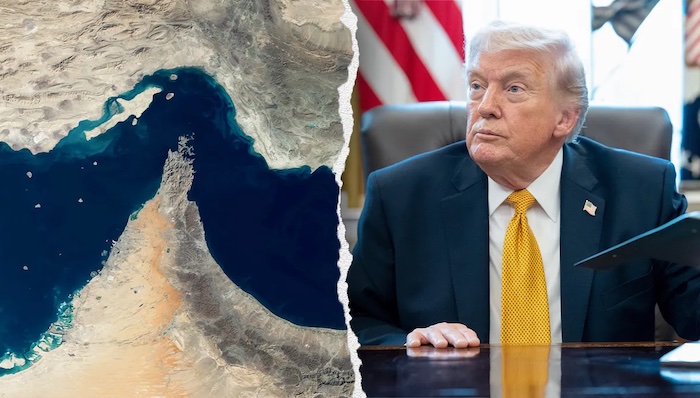
The talks came as the US renewed efforts to build international support for keeping key shipping lanes open, including the Strait of Hormuz, a vital route for global oil supplies.
According to the official, Trump and the executives also discussed measures to sustain the blockade if required, while limiting the effect on American consumers.
The move follows a stalemate in diplomatic efforts between Washington and Tehran, with both sides continuing to exchange warnings over escalation.
Iran has vowed to continue disrupting shipping in the region if its vessels are targeted, raising concerns over wider energy supply shocks and regional instability.
Oil prices rose more than 6% on Wednesday, reaching a one-month high amid fears of a prolonged disruption to supply.
Trump, in a post on Truth Social, said Iran “couldn’t get its act together” and suggested Tehran could reach out if it wanted talks.
He also repeated his position that Iran must not obtain a nuclear weapon, while offering no details on what a future agreement might include.
“They’d better get smart soon!” he wrote, alongside a posted image depicting him in a combative pose.
The White House official said the discussions with oil executives included efforts to support a proposed international maritime coalition aimed at ensuring shipping access through the Strait of Hormuz.
The initiative, described in internal documents as the “Maritime Freedom Construct,” would coordinate intelligence sharing and diplomatic efforts among participating countries.
Several allies, including France and Britain, have reportedly expressed cautious interest but said they would only support efforts to secure the waterway after hostilities ease.
The diplomatic mediation efforts continue behind the scenes, with Pakistan acting as an intermediary between Washington and Tehran.
A Pakistani source said messages were still being exchanged on a potential agreement, with Iran requesting more time to respond to recent US proposals.
Iran is seeking recognition of its right to enrich uranium for civilian purposes, while the US is demanding limits tied to broader security concerns.
Tensions have also been accompanied by economic strain inside Iran, including a sharp fall in its currency and rising inflation.
The war has also had a significant financial impact on the United States military, with officials estimating costs of around $25bn so far.
Erizia Rubyjeana