Uganda is edging closer to its long-awaited first oil, with industry leaders indicating that the country has entered the final phase after years of preparation.
The update comes ahead of the 11th Oil and Gas Convention scheduled for next week at Speke Resort Munyonyo under the theme “First Oil: Fulfilling the promise, forging the future,” where stakeholders are expected to assess progress in the sector.
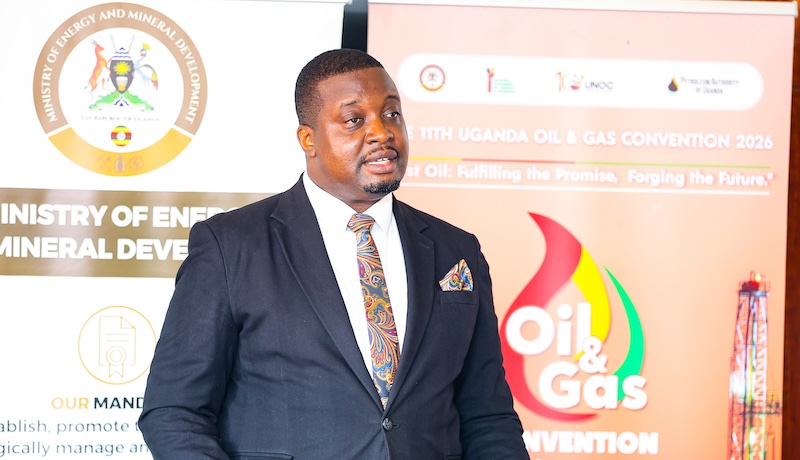
Speaking during a media briefing, Humphrey Asiimwe, CEO of the Uganda Chamber of Energy and Minerals (UCEM), said the milestone is now certain, even if the exact date remains unclear.
“Uganda’s oil era is no longer a distant dream; it is within reach,” he said. “One thing is for sure, that in this year, 2026, as Ugandans, we will definitely reach this milestone.”
The assurance comes as key oil projects near completion. The Tilenga project has drilled 198 wells, surpassing the 170 required for initial production, while Kingfisher has completed 21 wells, above the 19 needed for first oil.
“These milestones confirm that first oil is not just a target, but a reality,” Asiimwe said. “With first oil on the horizon, this is something we can be able to see in our lifetime.”
He added that the crude oil export pipeline, which will transport Uganda’s crude to the Tanzanian coast for shipment to international markets, is now 83 per cent complete, with compensation to affected communities nearing completion.
Gloria Sebikari, corporate affairs manager at the Petroleum Authority of Uganda (PAU), emphasised that the pipeline is central to the entire export system.
“Every milestone in this journey has required preparation, partnership and unwavering commitment,” she said. “Reaching first oil is not only about infrastructure readiness; it is also about ensuring that Uganda is institutionally ready.”
She noted that preparations have now moved beyond drilling to testing and readiness of key facilities, including storage tanks, pump stations and the marine terminal. If these processes are completed as planned, Uganda is projecting its first crude exports around October 2026.
Sebikari also highlighted the need to ensure that oil revenues translate into tangible benefits for citizens, noting that the real test will be how effectively the country manages the income generated. Uganda’s recoverable oil reserves are estimated at 1.6 billion barrels, with projected production of up to 190,000 barrels per day.
The sector has already generated significant economic activity, with over $2 billion in contracts awarded to local companies and about 80,000 jobs created during the construction phase.
On her part, Angella Ambaho Kariisa, public relations officer at the Uganda National Oil Company (UNOC), dismissed claims that Uganda had sold off its oil reserves, affirming that the country retains full ownership and control.
“First oil is underway. We really can’t tell you the specific date, but we know that it is very close,” she said. Speaking about the upcoming convention, Asiimwe said it will bring together government, private sector players, financiers and development partners to assess progress, address public concerns and unlock opportunities in the next phase.
“This is the 11th time as a country we are coming together to say, let’s talk about our oil and gas resources,” he said. “Two days of taking stock, two days of discussing what opportunities then lie in the operations phase.”