In Uganda’s long pursuit of industrial growth, few relationships have carried as much weight as its partnership with China.
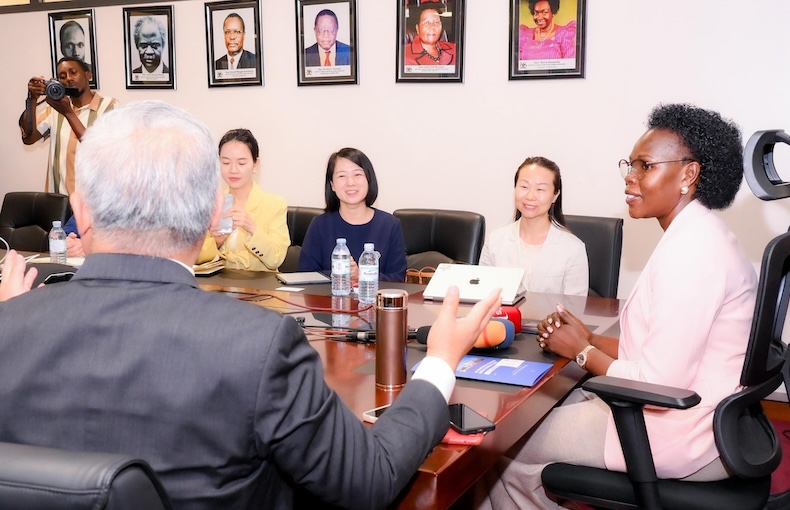
Now, the government is leaning in again, this time with a clear message: the door is open, and the incentives are ready. At a high-level meeting in Kampala under the Uganda–China Coffee Investment and Destination Tour 2026, officials laid out an ambitious pitch to Chinese investors. Land is available. Taxes can be reduced.
And across Uganda’s vast agricultural landscape, particularly in coffee, op- portunity is waiting. Presiding over the session, State Minister for Finance, Planning and Economic Development (Investment and Privatisation), Evelyn Anite, framed the moment as part of a broader economic shift, one that moves Uganda beyond raw exports and into value addition.
“The President has directed my office to mobilise and allocate land to serious investors. In return, we expect investments that create jobs for Ugandans,” she said.
For many Ugandans, the stakes behind such engagements are straightforward. Investment is not just about capital, it is about employment, industry, and the possibility of a more stable economy.
And in recent years, China has become central to that equation. Chinese investors have already injected around one billion US dollars into Uganda’s economy, spanning sectors from manufacturing and infrastructure to energy, agriculture, and oil and gas.
The results are visible across the country: the Kampala–Entebbe Expressway, hydropower projects like Karuma and Isimba, the expansion of Entebbe International Airport, and a growing network of industrial parks.
Factories linked to Chinese investment now number in the tens of thousands, employing more than 1.4 million people. It marks a shift from earlier infrastructure-heavy partnerships to a deeper involvement in production and industry. But the government wants more.
At the centre of the latest push is coffee, a crop that has long been one of Uganda’s strongest export earners but remains largely unprocessed. Officials are now urging investors to move beyond buying raw beans and instead invest in processing, packaging, and technology that adds value before export.
Anite described Uganda as an ideal destination for such ventures, pointing to fertile soils, a favourable climate, and a large agricultural base. Beyond agriculture, the pitch is backed by a range of incentives designed to make investment easier.
Business registration, she said, can be completed in as little as 45 minutes. Investors are also offered a 10-year tax holiday, exemptions on imported machinery, and access to land for strategic projects.
Taken together, these measures are intended to reduce the barriers that often slow investment— and to position Uganda as a competitive destination within the region.
Uganda’s Ambassador to China, Oliver Wonekha, placed the conversation in a broader diplomatic context, describing economic engagement as central to the relationship between the two countries. Coffee, she noted, remains a key link—not just for trade, but for employment and livelihoods back home.