Screenshot
In Rwenzori region, indigenous minority communities, long overshadowed by larger ethnic groups, are striving to preserve their identity while navigating the pressures of modern conservation policies and limited state recognition.
For these communities, the challenge is not only about survival, but also about belonging, writes GEOFREY SERUGO. Despite their historical presence in the region, several indigenous groups remain unrecognised in Uganda’s Constitution as distinct tribes.
This lack of formal recognition continues to shape their access to land, cultural expression and political visibility. The Rwenzori region is home to at least nine such minority groups, including the Bagabo, Basongora, Banyabindi, Bachingwe, Bavanuma, Batuku, Babwisi, Bamba and Batwa.
Collectively, they are estimated to make up about 1.1 million people, though exact figures remain uncertain pending official census data. On the shores of Lake George, within Queen Elizabeth National Park, lies Kasenyi fishing village, a community that tells a story of displacement and resilience.
It is here that the Bagabo, one of the region’s indigenous groups, have built a life after decades of upheaval. The Bagabo trace their origins to the Bunyoro Kitara Kingdom and once lived on Akiika and Kankulanga islands.
However, population growth and the gazettement of the national park in 1955 forced them off their ancestral lands and into settlements such as Kasenyi. For many, this marked the beginning of a life defined by adaptation.
Traditionally hunters, the Bagabo turned to fishing and salt mining to survive. Today, they coexist with wildlife in a fragile environment where buffaloes, antelopes and warthogs roam freely through their communities.
While this coexistence reflects a deep-rooted understanding of nature, it also exposes them to daily risks. Human wildlife conflict remains a constant threat, occasionally resulting in injury or death.
At the same time, the community faces broader social challenges, including high HIV/Aids prevalence rates, particularly at fishing landing sites where access to health information and services remains limited.
TESTIMONIES
Hasfa Nyangoma, a resident of Kasenyi, said they used to live on the islands where they buried their loved ones before relocating.
“Crocodiles, hippopotamuses and leopards are killing us, especially at night. In 2024, a leopard killed a baby who was sleeping in the house. We appeal to the government to relocate us to safer areas,” she said.
“HIV/Aids and malaria are other threats affecting our people, in addition to wild animals. We need more HIV drugs and condoms at Kasenyi,” she added.
Although eight people have been killed by hippopotamuses and crocodiles, Nyangoma also recounted an incident on October 5, 2025, at around 2pm, when a crocodile mauled a man identified only as Batulumawo as he went to fetch water. The incident left many residents traumatised.
The water cages that had been created to help residents safely draw water have since been destroyed by hippopotamuses, leaving the community at risk. Yet, amid these challenges, the Bagabo remain determined to preserve what remains of their heritage.
In Kasenyi, community members are constructing what they call a “house of memories,” a cultural and economic centre intended to safeguard their traditions and pass them on to future generations.
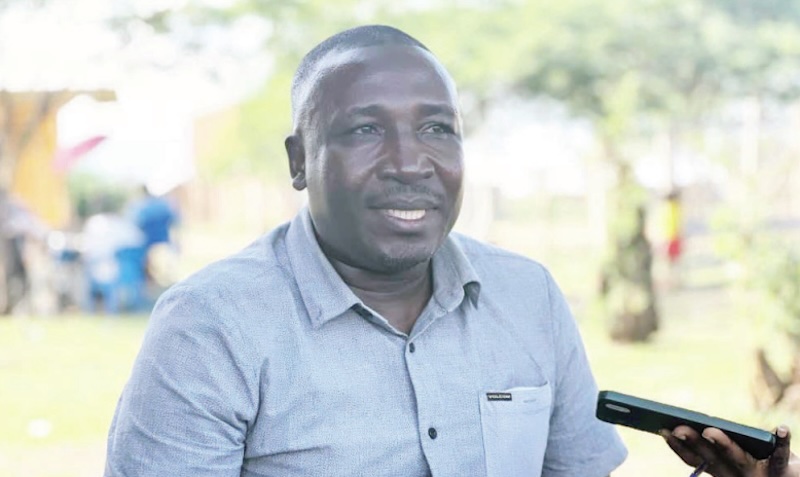
The initiative reflects a growing awareness among indigenous groups that cultural preservation must be intentional and organised. Emmanuel Kyalimpa, an elder and chairperson of the Rwenzori Indigenous Minority Groups, describes the project as both symbolic and practical.
“It will be a place where we come together to celebrate our culture, perform traditional dances and tell our stories. We also want to create economic opportunities, including a restaurant that serves our traditional foods,” he said.
Food remains an important marker of identity. Among the Bagabo, dishes such as ekibero, a mixture of different fish boiled together, and enuni, made from fish innards, continue to be prepared using traditional methods.
Lightly smoked fish, often eaten with millet or cassava, also forms part of their daily diet. Beyond food and rituals, language is another critical aspect of identity. Efforts are underway to document indigenous languages such as Rugabo, Kuswa, Ruvanuma and Ruwis, many of which are at risk of disappearing.
For Kyalimpa and others, preserving these elements is not just about nostalgia. It is about survival.
“We have knowledge that has been passed down for generations. Our way of life has always been in harmony with nature. We believe this knowledge can contribute to conservation in ways that modern systems sometimes fail to achieve,” he explained.
This perspective challenges conventional approaches to conservation, which have often excluded indigenous communities from protected areas in the name of environmental protection.
DISPLACED
The Rwenzori region hosts several protected areas, including Queen Elizabeth national park, Rwenzori Mountains national park and Semuliki game reserve. While these areas are vital for biodiversity, they also sit on land that indigenous communities once occupied. As a result, many groups found themselves displaced and, in some cases, landless.
“We were removed from our land, yet we are the ones who protected it for generations. That is why we have come together to advocate for our rights,” Kyalimpa said.
The formation of a unified platform for indigenous minority groups marks a shift in strategy. By speaking with one voice, these communities hope to strengthen their engagement with government and development partners.
There have been some signs of progress. In December last year, President Yoweri Museveni directed that the Banyabindi, Bagabo and Bachingwe be allocated 10,000 acres of government land as compensation for historical displacement.
Some communities, such as the Basongora, have already received land allocations in previous years. Additionally, government programmes have begun to extend support in areas such as education. Scholarships have been introduced, with at least 10 students from minority groups benefiting annually.
A few members have also been appointed to district service commissions, providing a measure of representation in local governance. However, these gains remain limited compared to the scale of the challenges.
Land disputes continue to define relations between minority groups and larger communities, particularly in districts like Kasese, where competition over land is intense. Historical conflicts, including those linked to the Rwenzururu rebellion, have further complicated these dynamics, leaving some groups marginalised within their own region.
For the indigenous minority groups of the Rwenzori region, the answer lies in a more inclusive approach, one that recognises their history, respects their knowledge and affirms their place in the nation.
Their struggle may not always make headlines, but it speaks to a broader challenge facing many societies, how to balance modernisation with cultural preservation, and how to ensure that development does not come at the cost of identity.
For now, the voices from Kasenyi and beyond continue to grow louder, carrying a simple but powerful message. Recognition is not privilege. It is a right.