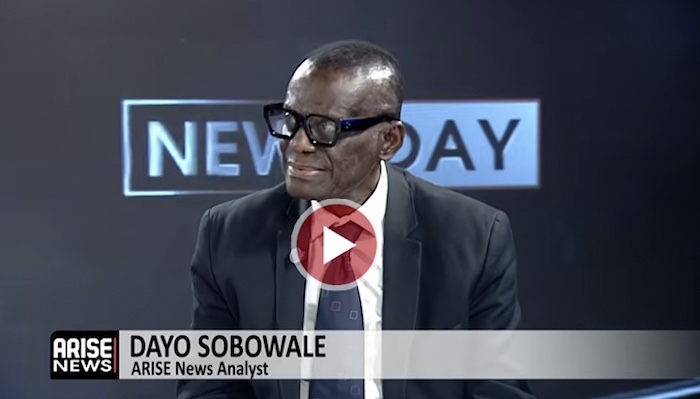

ARISE News analyst Dayo Sobowale has said that while drug abuse remains a serious threat to Nigerian youth, the situation should not be overstated as a national emergency.
Speaking during an interview on ARISE News on Wednesday, Sobowale acknowledged the concerns raised by the National Drug Law Enforcement Agency (NDLEA) but maintained that the issue, though dangerous, is not new.
“It’s a dangerous thing… it destroys the physical and psychological and mental stature of victims, especially young ones.”
He noted that authorities have consistently raised awareness about drug abuse over time, stressing that current alarms should be seen as part of ongoing efforts rather than a sudden crisis.
“It has always been done… they always raise the red alert.”
Sobowale warned against overusing terms like “state of emergency,” arguing that such language can dilute the seriousness of real crises.
“There’s no cause for alarm… we should calm down and face the problems one by one.”
Instead, he emphasized a more structured approach centered on enforcement, compliance, and the use of modern technology to combat drug trafficking and abuse.
“Use the latest technology and ensure that we enforce compliance.”
On the role of pharmaceutical companies, Sobowale described them as powerful actors within the system, noting that weak regulation and limited oversight capacity can allow controlled substances to be misused.
“Pharmaceuticals are the big boys… if you don’t have the apparatus to monitor them, you’ll be blindfolded.”
He called for stronger investment in research and laboratory infrastructure to help regulators like the National Agency for Food and Drug Administration and Control (NAFDAC) properly vet substances entering the market.
“A matter of expertise… training, research, and making funds available.”
Addressing root causes such as peer pressure, poverty, and exposure through digital platforms, Sobowale argued that technological advancement has outpaced Nigeria’s regulatory framework.
“Technological development has outpaced our laws.”
He stressed the need for updated legislation and cultural reorientation, particularly among young people, to prevent misuse of both technology and substances.
“We must make laws that match the face of technology.”
While acknowledging gaps in rehabilitation infrastructure, Sobowale maintained that Nigeria has not yet reached crisis levels seen in some Western countries, urging a measured and context-specific response.
“I don’t think we have reached that stage.”
He concluded by calling for stronger collaboration with schools, families, and religious institutions to reinforce moral guidance and preventive education.
“We should enlist the help of schools and religious bodies… to hammer home the dangers.”
By Ojo Triumph