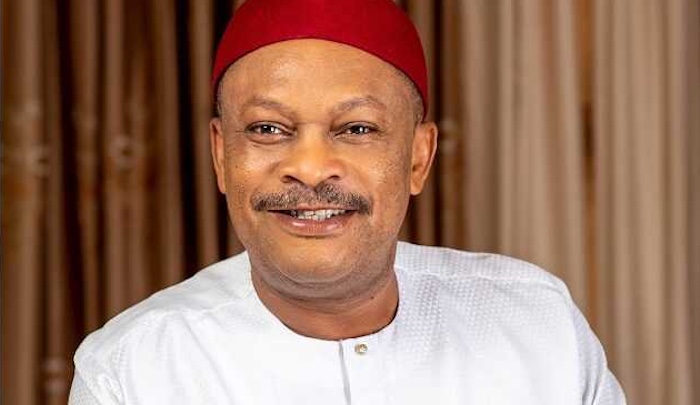
Outgoing finance minister highlights reform gains as Tinubu reshapes economic team…..
Former Minister of Finance and Coordinating Minister of the Economy, Wale Edun, has pointed to what he describes as major economic improvements during his time in office, including stronger growth and a sharp decline in inflation.
In a farewell statement following his exit from the Federal Executive Council, Edun reflected on his role in steering Nigeria’s economy through a period of significant reform, while also thanking Bola Tinubu for the opportunity to serve.
His departure comes amid a broader cabinet reshuffle that has reshaped the country’s economic leadership, with Taiwo Oyedele stepping into the role of finance minister.
Edun traced his journey in the administration back to May 2023, when he first led the Presidential Transition Committee before moving on to serve as Special Adviser on Monetary Policy and later as finance minister.
He described his time in office as a critical phase marked by coordinated policy action aimed at stabilising the economy and rebuilding investor confidence.
According to him, Nigeria’s economic growth improved from around 2 percent to over 4 percent during the period, while inflation dropped significantly from about 35 percent to 15 percent.
He credited these outcomes to a mix of fiscal reforms, tighter coordination across government institutions, and collaboration with private sector stakeholders.
Beyond the headline figures, Edun emphasized that the administration’s economic strategy was rooted in alignment, ensuring that fiscal and monetary policies worked in tandem.
He noted that reforms were designed not just to stabilise the macroeconomic environment, but also to restore public trust and create conditions for more inclusive growth.
While acknowledging that challenges remain, he expressed confidence that the groundwork for long-term stability has been laid.
The reshuffle that led to Edun’s exit also saw confirmation from George Akume that other cabinet changes had taken place, signaling a renewed focus on economic management.
The elevation of Taiwo Oyedele is expected to bring increased attention to tax reform, revenue generation, and fiscal coordination, areas seen as critical to sustaining recent gains.
Oyedele has previously played a key role in shaping Nigeria’s tax reform agenda, including proposals to streamline revenue collection by limiting the number of agencies involved and improving efficiency across the system.
Edun’s tenure coincided with some of the administration’s most far-reaching economic decisions, including subsidy removal, exchange rate adjustments, and broader revenue mobilisation efforts.
These policies have drawn mixed reactions praised by some for restoring macroeconomic balance, while criticised by others for their short-term impact on living costs.
As a new finance team takes over, the focus is expected to shift from stabilisation to delivery ensuring that macroeconomic improvements translate into tangible benefits for everyday Nigerians.
For Edun, the message in his final remarks was one of cautious optimism: the reforms may still be unfolding, but the direction, he believes, has been firmly set.