In a push to close Nigeria’s immunisation gap, the United Nations Children’s Fund (UNICEF) says it will reach an estimated 2.2 million unvaccinated children through a new programme backed by the Republic of Korea.
The initiative is aimed at addressing gaps in routine immunisation and improving child health outcomes across the country.
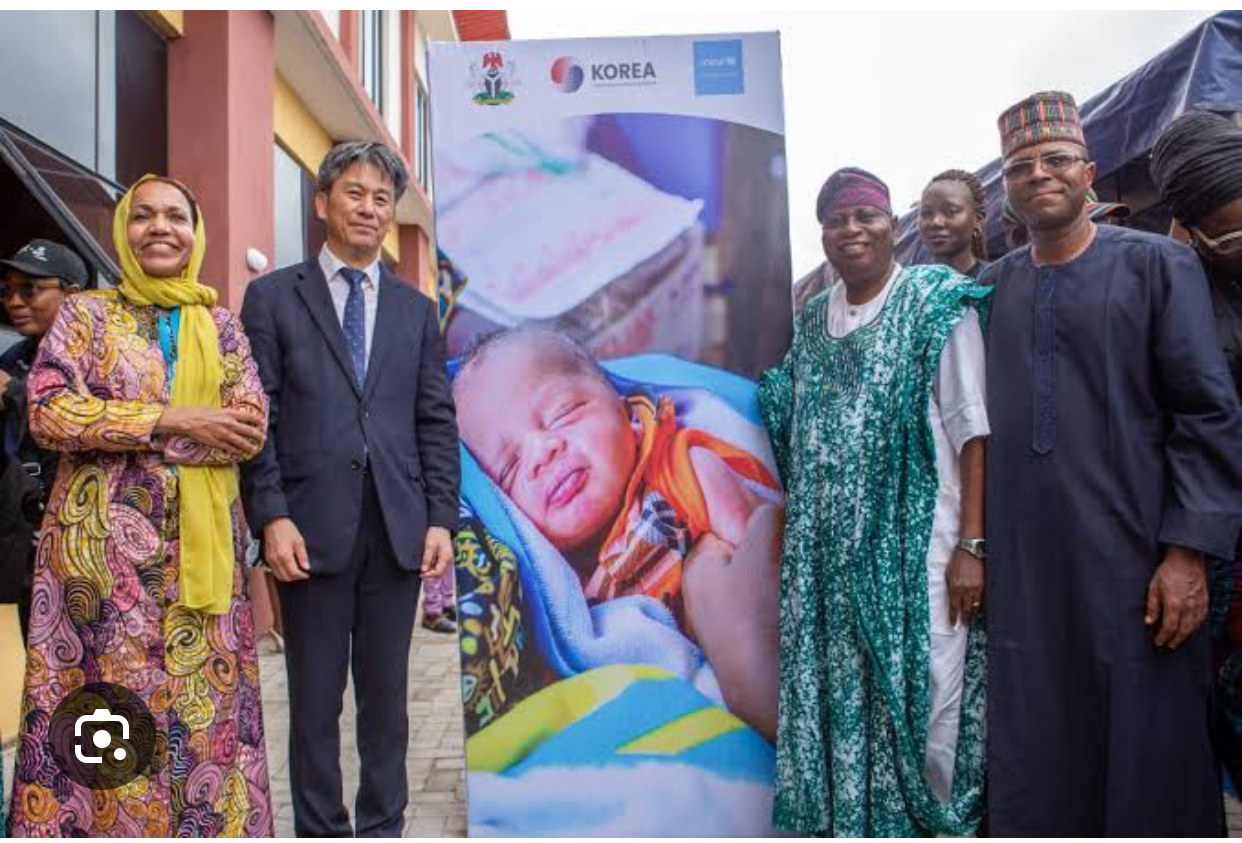
The flag-off ceremony, held in Badagry Local Government Area of Lagos State on Thursday, brought together government officials, development partners, traditional leaders, and community members committed to strengthening healthcare delivery for children.
Speaking at the event, UNICEF Nigeria Country Representative Wafaa Saeed described the initiative as more than a programme launch, saying it reflects a shared political and moral commitment to ensuring every Nigerian child has access to life-saving vaccines.
She noted that Nigeria has one of the highest numbers of “zero-dose” children globally — children who have never received a single routine vaccine — many of whom live in underserved and hard-to-reach communities.
She said the challenge is driven not by vaccine failure, but by issues of access, equity, and gaps in service delivery that require stronger partnerships and sustained commitment.
Saeed commended the federal government, the National Primary Health Care Development Agency, and state health authorities for prioritising zero-dose children through targeted interventions.
Also speaking, the Consul General of the Republic of Korea in Lagos, Lee Sang Ho, said his country’s support is part of the UNICEF–Korea partnership under the Access to COVID-19 Tools Accelerator (ACT-A).
He disclosed that out of a $20 million budget for the third phase of the project, $5.6 million has been allocated to Nigeria for implementation between December 2025 and December 2026.
According to him, the programme will focus on 40 LGAs across Lagos, Ogun, Niger, Bauchi, Adamawa, and the Federal Capital Territory.
The Lagos State Commissioner for Health, Akin Abayomi, represented by Temitope Alor, said the initiative comes at a critical time as urbanisation continues to strain access to healthcare services.
He added that zero-dose and under-immunised children remain a major concern in densely populated communities with limited access to routine immunisation.
Stakeholders stressed that the success of the initiative will depend on sustained collaboration, community trust, and stronger health systems capable of reaching every child beyond the current funding cycle.