South Africa’s water crisis runs deeper than burst pipes and drought alone.
A parliamentary exchange reveals how criminal networks, municipal dysfunction and decades of neglect have combined to push the country’s water system to breaking point, and what the government says it will do about it.
Why municipalities, not the national government, are responsible for your water supply
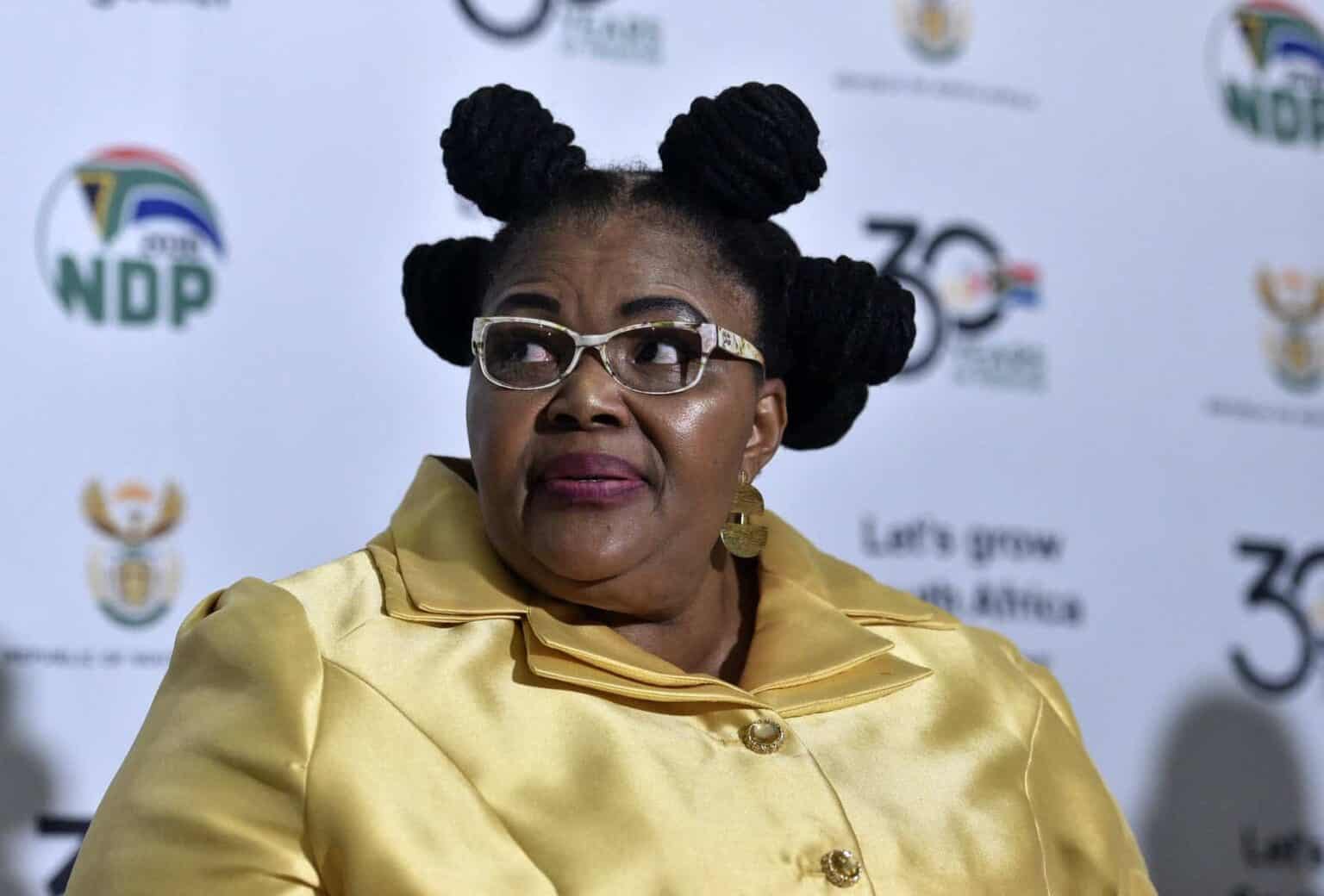
When MK party MP Mandlenkosi James Matutu asked Minister of Water and Sanitation Pemmy Majodina why her department had failed to stop illegal supply disruptions, her answer cut straight to a constitutional reality many South Africans may not be aware of.
“It is not the responsibility of the Department of Water and Sanitation (DWS) to reduce illegal supply disruptions or provide uninterrupted water supply in municipalities.
“This is the responsibility of municipalities as Water Services Authorities, in terms of both the Constitution and the Water Services Act,” Majodina explained.
She was equally direct in rejecting the idea that the crisis stems from any single point of failure.
She instead said the crisis was the “outcome of systemic and institutional weaknesses at the municipal level where water services are delivered,” she said.
Ageing infrastructure and criminal networks worsen crisis
Despite clarifying where the legal responsibility lies, Majodina did not shy away from describing the scale of the problem.
The minister outlined several interlocking factors that have allowed the situation to deteriorate to its current state, with inadequate maintenance sitting at the heart of the collapse.
A fundamental absence of lifecycle asset management — including maintenance budgets that are both insufficient and not ring-fenced for water services — has resulted in frequent system failures and prolonged outages across the country.
This financial neglect feeds directly into another critical problem: non-revenue water, which refers to water produced and pumped through systems but never paid for, lost to leaks, siphoned off through illegal connections, or lost due to weak system management.
The knock-on effect is devastating, as it strips municipalities of the revenue they need to reinvest in infrastructure and deepens the cycle of system instability.
“Illegal connections are often linked to communities that remain unserved or underserved, resulting in unauthorised access to water,” Majodina said.
She noted that this places additional strain on already constrained systems and contributes to both infrastructure damage and service disruptions.
It is within this environment of chronic failure and inadequate enforcement that criminal networks have taken root.
“In some instances, the prolonged reliance on emergency water tanker provision has created conditions where system failures are not resolved with the required urgency, and where opportunities for abuse and criminal infiltration may arise,” Majodina said.
Weak infrastructure protection, poor enforcement capacity and low conviction rates have done little to deter vandalism, theft or the organised criminal activity that now characterises what are commonly referred to as “water tanker mafias“.
The structural rot in municipal water management
Beyond the physical infrastructure, Majodina pointed to governance failures that have eroded accountability at the municipal level.
The current institutional arrangements — particularly the blurring of lines between the Water Services Authority function and the Water Services Provider function within the same municipality — have weakened the ability to hold anyone accountable for poor performance.
Compounding this is the widespread practice of diverting water revenues to fund other municipal priorities instead of reinvesting them in water systems.
“The current institutional arrangements, including the lack of clear separation between Water Services Authority and Water Services Provider functions, as well as the allocation of water revenues to other municipal priorities, have weakened accountability and financial sustainability in some municipalities,” the minister said.
These governance failures do not exist in isolation.
As Majodina put it, they form part of “a cycle of declining performance, where infrastructure deterioration, financial instability and service interruptions reinforce one another”, a cycle that has proven extraordinarily difficult to break without structural intervention.
What government plans to do this financial year
Despite the grim diagnosis, Majodina outlined a set of reforms already under way or being accelerated during the current financial year.
Chief among these is the Water Services Amendment Bill, which is currently before Parliament.
The legislation aims to force a clearer separation between who is responsible for regulating water services and who is responsible for providing them within municipalities — a distinction that has historically been blurred to the detriment of accountability.
On the funding side, a significant new instrument has been introduced.
“National Treasury has introduced a R54 billion performance-based Trading Services Grant for metropolitan municipalities, effective from the 2025/26 financial year,” Majodina confirmed.
Access to this grant is not automatic. Metros must implement approved turnaround plans and demonstrate measurable progress against key performance indicators, including the ring-fencing of water revenues, the establishment of accountable water services provider business units, reductions in non-revenue water, and measurable improvements in service reliability.
“All metropolitan municipalities are required to implement water and sanitation turnaround strategies with defined targets and timelines,” the minister said.
Furthermore, she said performance is monitored jointly by the National Treasury, the Department of Water and Sanitation, and the Department of Cooperative Governance and Traditional Affairs (Cogta), with funding access directly linked to that progress.
Tackling criminal networks and illegal connections head-on
On the question of the water tanker mafias specifically, Majodina pointed to a combination of enforcement and structural reform as the government’s response.
Joint law enforcement initiatives, undertaken in collaboration with the South African Police Service and municipal law enforcement, are being directed at illegal connections, infrastructure vandalism and criminal activities affecting water supply systems.
The minister also highlighted a push for municipalities, including metros, to bring water tanker services in-house where feasible.
The promotion of insourcing tanker services aims to reduce dependence on external providers, improve oversight and critically limit the opportunities for abuse that external contracting has historically created.
On the technical side, DWS and MISA engineers are being deployed to priority municipalities to stabilise water systems, improve asset management and strengthen maintenance planning.
Majodina also pointed to enhancements being made to the Integrated Regulatory Information System, known as IRIS, which is intended to improve tracking of water supply performance, outages and compliance across municipalities in real time.
The 98% target and the limits of what national government can deliver
Matutu’s question had specifically challenged Majodina to commit to bringing at least one major metropolitan area back to 98% uninterrupted water supply this financial year.
The minister’s response was measured.
While the department is working with metropolitan municipalities to progressively improve reliability, she was candid about the limits of what can be guaranteed from the national level.
“While achieving uninterrupted supply levels of 98% will depend on municipal capacity, the reforms and performance-based funding mechanisms introduced this financial year are designed to drive measurable improvements in metropolitan water service performance,” she said.
Majodina also underscored that the department is prioritising the expansion of bulk and reticulation infrastructure to connect communities that have never been formally served.
“Importantly, while DWS does not directly provide conditional grant funding to metropolitan municipalities, the department works closely with National Treasury and metros to ensure that available funding instruments are aligned with sector reforms and performance improvements,” said Majodina.