A new government proposal is quietly setting the stage for one of the most consequential legal debates Uganda has seen in recent years—one that could reshape how citizens, organisations, and even politicians interact with the outside world.
At the centre of that debate is the Protection of Sovereignty Bill, a draft law that seeks to regulate foreign influence in Uganda’s political and civic life. On paper, its purpose is clear: to safeguard national sovereignty and ensure trans- parency in how foreign funding and interests operate within the country.
But in practice, its reach could extend into the daily lives of millions of Ugandans. The bill, which follows resolutions made during the March 2026 National Resistance Movement (NRM) Caucus, is expected to be tabled in Parliament in the coming legislative cycle.
It proposes the creation of a system that would require individuals and organisations linked to foreign entities to register with the government before engaging in certain activities.
At first glance, that might seem like a technical adjustment—another layer of regulation in an already complex system. But a closer reading reveals something more far-reaching. Under the proposed law, the definition of a “foreigner” is strikingly broad. It does not only include non-citizens or foreign governments.
It extends to Ugandans living abroad, international organisations, foreign companies, and even individuals or entities that the minister may designate by statutory instrument. In effect, a Ugandan working for an international organisation, a diaspora professional sending money home, or a local NGO receiving foreign funding could all fall within its scope.
The implications of that definition ripple outward. Anyone classified as an “agent of a foreigner” and involved in political or civic activity would be required to seek approval before acting.
That includes activities such as influencing public policy, supporting political candidates, mobilising citizens around government decisions, or even managing funds linked to foreign sources. Approval, however, is not a routine administrative step.
The bill stipulates that it cannot be granted without Cabinet consent—centralising decision-making at the highest level of government. For ordinary Ugandans, the effects of such a system may not be immediately obvious.
But they become clearer when translated into everyday scenarios. A civil society organisation advocating for better healthcare, if supported by an international partner, may need prior approval to operate.
A political figure engaging with foreign diplomats could face new restrictions. Even diaspora contributions—long a lifeline for many households—may fall under closer scrutiny if linked to broader activities. The stakes are not only procedural.
They are also punitive. The bill introduces steep penalties for violations. Corporate entities could face fines of up to Shs 4 billion, while individuals risk fines of up to Shs 2 billion, imprisonment for up to 20 years, or both.
These are not symbolic sanctions—they are designed to deter, and to enforce compliance decisively. For the government, the rationale is rooted in sovereignty. Officials argue that Uganda must protect its internal political processes from external interference.
In an era of globalised funding and cross-border advocacy, the concern is that foreign influence—whether through NGOs, political financing, or international partnerships—could shape domestic decisions in ways that are not always transparent.
The proposed law, in this view, is a safeguard. But critics see it differently. Legal experts and civil society actors warn that the bill’s broad definitions and sweeping powers could blur the line between legitimate regulation and overreach.
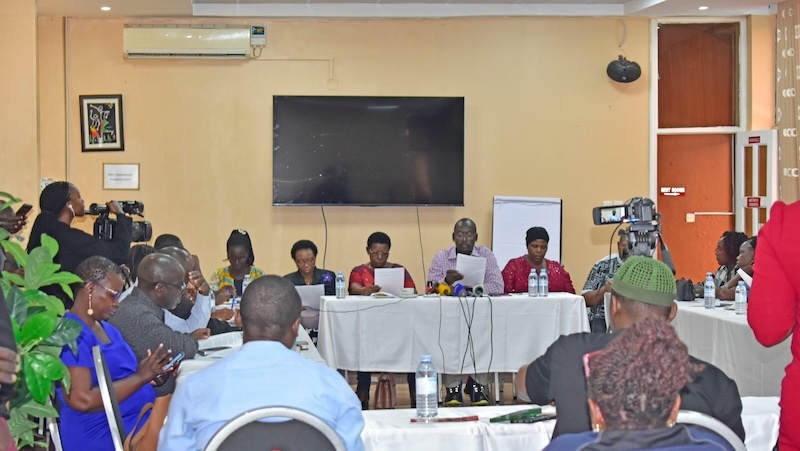
At the heart of their concern is the question of constitutional rights—particularly the freedoms of association, expression, and political participation. Human rights lawyer Sarah Bireete argues that the bill risks creating unintended consequences, especially for Ugandans whose work or lives are connected to international systems.
She warns that individuals could be classified as foreign agents “solely based on their employment or residence status,” potentially limiting their constitutional protections.
That concern is echoed by city lawyer Andrew Karamagi, who sees the bill as casting too wide a net.
“Anybody working for an international firm, a telecom company, a hotel chain or construction firm that is international is designated by this law as a foreigner, regardless of the fact that you are Ugandan,” he said.
For him, the issue is not just legal—it is philosophical.
“This is yet another law that seeks to cement a repressive, draconian legal regime that suppresses basic civil and political rights and fundamental human rights,” he added. The debate becomes even more complex when viewed through the lens of Uganda’s diaspora.
Each year, Ugandans living abroad send home an estimated $2.5 billion— roughly Shs 9.3 trillion—supporting families, businesses, and local economies. These remittances account for about five per cent of the country’s GDP, making them one of Uganda’s most significant financial inflows.
Opposition Leader Joel Ssenyonyi warns that any law perceived to restrict or complicate diaspora engagement could have unintended economic consequences. If individuals fear legal uncertainty or additional scrutiny, the flow of remittances—and the stability they provide—could be affected.

Former Ethics Minister Miria Matembe raises a more fundamental question: what does accountability look like in this context? She questions why Ugandans working abroad should require government clearance to engage with their own country, particularly when their contributions often sustain families in the absence of sufficient local opportunities.
For civil society organisations, the concerns are equally urgent. Bob Kirenga, Executive Director of the National Coalition of Human Rights Defenders, argues that the bill could reshape the entire sector.
“You are coming up with a bill that will not only affect NGOs but also other entities that receive money from abroad,” he said.
He points to the broader context, noting that several major NGOs have already been suspended without hearings—a development that, in his view, raises questions about due process.
“The biggest NGOs have been closed and suspended without being given a hearing. We are now in the fourth month,” he said. For Kirenga, the bill represents more than regulation. It is, he argues, a turning point.
“This bill is the last nail in the coffin of the NGO sector,” he said.
He also highlights a structural concern: the placement of the law under internal security frameworks. “Where will this bill be housed? It is in the Department of Internal Affairs, and the Department of Security will be in charge of it,” he said, questioning whether matters of sovereignty should instead fall under foreign affairs.
Beyond the legal and institutional debates lies a more subtle tension—one that touches on everyday life. If passed in its current form, the law could reshape how Ugandans engage with the world.
It could influence how organisations operate, how politicians interact internationally, and how citizens participate in public life. For some, that may mean greater transparency and accountability. For others, it may introduce new layers of uncertainty and control.
Even supporters of the bill acknowledge its potential reach. Kirenga offers a striking warning: “The same people pushing for this law could be affected by it… One day, they will try to bring that money back, and if there is a change in government, the same law could be used against them”.
It is a reminder that laws, once enacted, do not operate in isolation. They evolve with political contexts, and their impact can extend far beyond their original intent. As the bill moves toward Parliament, the questions it raises are unlikely to fade. How should a country balance sovereignty with openness?
Where should the line be drawn between regulation and restriction? And who ultimately bears the cost when that balance shifts? For now, the answers remain uncertain. What is clear, however, is that the Protection of Sovereignty Bill is not just another piece of legislation.
It is a proposal that could redefine the relationship between Uganda and the world—and, in doing so, reshape the space in which its citizens live, work, and participate. The debate is only just beginning.