Screenshot
As part of the Uganda Media Centre team, we visited Lira District to track the flow of money.
When the government allocates funds to districts for programmes such as the Parish Development Model (PDM), Emyooga, and infrastructure projects, many people in Kampala see only numbers on spreadsheets. Our task was to understand what those numbers mean in real life.
“Our job was to assess how different government programs are impacting the lives of ordinary Ugandans and whether the ‘Value Addition’ discussed in boardrooms is happening in the villages of Lango,” said Carolyne Muyama, the team leader.
If you haven’t been to Lira in fifteen years, you might struggle to recognise it. The last time I visited was in 2010, during a period of quiet recovery. Dust hung over low-roofed buildings, and the town—yet to attain city status—felt like a trading hub catching its breath after years of instability.
NGO vehicles dominated the streets, reflecting the scale of humanitarian presence at the time. The memory of conflict was still raw. One of the most devastating incidents, the Barlonyo massacre in Ogur Sub-county, saw nearly 190 people killed when LRA rebels forced internally displaced persons into their huts and set them on fire.
The insurgency lasted two decades, leaving behind deep scars, lost lives, destroyed property, and disrupted communities. By 2010, life was slowly returning. People were leaving camps and rebuilding their homes.
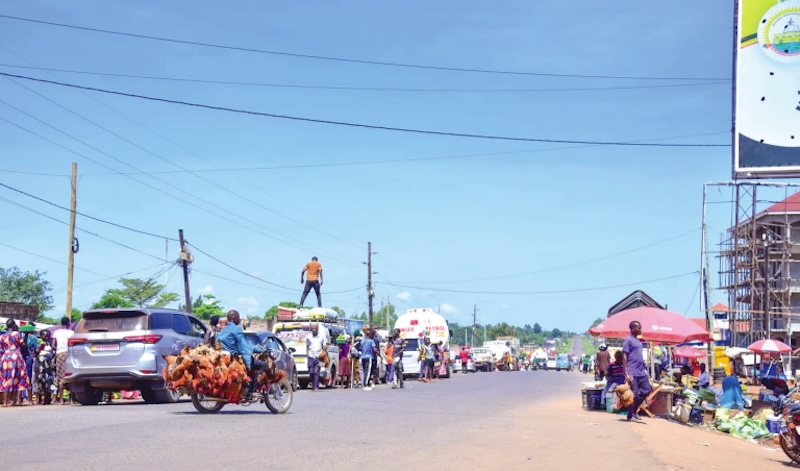
Business activity was picking up, albeit cautiously. Today, Lira tells a very different story. The city has transformed. The skyline now features the modern Lira Main Market, multi-storey buildings, and well-paved roads. At night, the town remains alive, trucks rumble through, bars stay open, and revellers move in and out.
By morning, traders hurry to their stalls, children head to school, and boda bodas weave through traffic, transporting both people and goods. The energy is constant and unmistakable. Our first stop was the Lira District offices, where we met local leaders and technical staff.
The welcome was warm, but more striking was the level of coordination. Leaders across political, technical, and security structures appeared aligned, working with a shared sense of purpose. Lilly Eyal, the Resident District Commissioner, had convened a cohesive team that included Chief Administrative Officer, Ismail Ocheng.
They did not limit us to polished presentations; instead, they walked with us into muddy farms and busy markets. That openness revealed something important: unity among leaders is a driving force behind Lira’s transformation.
When leaders work together, funds sent from the centre are more likely to reach communities and be used effectively. Ocheng provided an overview of the district’s progress. “The government has invested Shs 22 billion into the local economy of Lira District, and over 90 percent of this money has been sent to the communities.
Extension services in the district are better due to significant government funding. Although these services are not yet sufficient, the situation is better than it was eight years ago; now all sub-counties have at least two extension workers,” he said .
Beyond governance, economic activity is shifting. As you enter the city, what stands out is no longer dust, but cranes and rising buildings. Hotels comparable to those in Kampala are emerging, and the Lira Main Market stands as a clean, organised hub at the centre of it all.

Lira is no longer just a stopover, it is becoming a destination. The district has grown into a key centre for agro-processing. Factories now process sunflower, soybeans, maize, and rice, supported by oilseed crushers and grain mills.
Manufacturing is expanding into areas such as soap production, food processing, packaging, and cotton ginning. Smaller industries, metal fabrication, woodworking, and brickmaking, are also thriving.
A Zonal Industrial Hub supports skills development in carpentry, tailoring, and value addition. This shift aligns with the National Development Plan IV, which emphasises value addition.
Instead of exporting raw materials, Lira is increasingly processing them locally, turning sunflowers into cooking oil and refining shea butter for export. This approach keeps more value within the community while creating jobs and linking farmers to larger markets.
The impact becomes even clearer at the household level. In Ayac Village, we met Patrick Olobo, a former teacher who has transformed his home into a productive farm. At Mwalimu Smart Farm, he grows bananas and coffee, rears pigs, and uses irrigation to sustain production year-round.
More than that, he has mobilised others, sharing knowledge and planting materials with neighbours.
“As long as the government has not brought superglue to close Ugandans’ mouths, I will continue to smile because I can even travel abroad on my own because of farming. I am better off than I was as a teacher because I can comfortably pay my children’s school fees,” Olobo said.
He received an irrigation set through the Micro-scale Irrigation Programme and benefits from regular visits by extension workers. He has also diversified into coffee farming, using husks for mulching his banana plantation, an example of how small innovations can improve productivity.

In town, Milly Grace Ajoro’s story reflects a similar transformation. Once a struggling single mother burdened by high-interest loans, she found a lifeline through Emyooga. After joining the Erute North Women Entrepreneurs SACCO, she accessed affordable credit and expanded her business.
“I am no longer a beggar,” she said. “My daughters are in school, their fees are paid on time, and I have expanded my stock. The government gave me the hook; I did the fishing” .
She now chairs a SACCO with 102 members, whose savings have grown significantly. Members have invested in ventures ranging from winemaking to poultry farming and cosmetics production.
One of them, Immaculate Abeja, began with just Shs 25,000, producing a small batch of wine. Recognising the opportunity, she joined the SACCO to access funding.
“I borrowed Shs 200,000, which I invested in my wine to improve branding and production. I also started a new product line, composite flour, which I sell locally,” she said.
In rural areas, the Parish Development Model is also making a visible difference. Otim Patrick used Shs 1,000,000 to grow maize, doubling his investment in one season. He has since expanded his farming, purchased livestock, and invested in his children’s education.
These individual stories are supported by broader improvements in infrastructure and services. According to District Health Officer Dr. Patrick Ocan Buchan, increased incomes mean more people can now access healthcare, with some purchasing bicycles and boda bodas to reduce travel time to health facilities.
Road infrastructure is also improving access to markets. The government allocates UGX 1 billion annually to each municipality for road maintenance, while major routes such as the Rwenkunye–Apac–Lira– Puranga Road connect the region to key economic corridors.
Additional investments under the National Oil Seeds Project are further improving connectivity. What emerges from Lira is not a perfect picture, but a clear one. Government programmes, often discussed in abstract terms, are taking shape in tangible ways, in farms, businesses, and households.
The numbers, it turns out, tell only part of the story. It is on the ground that their true meaning becomes visible.