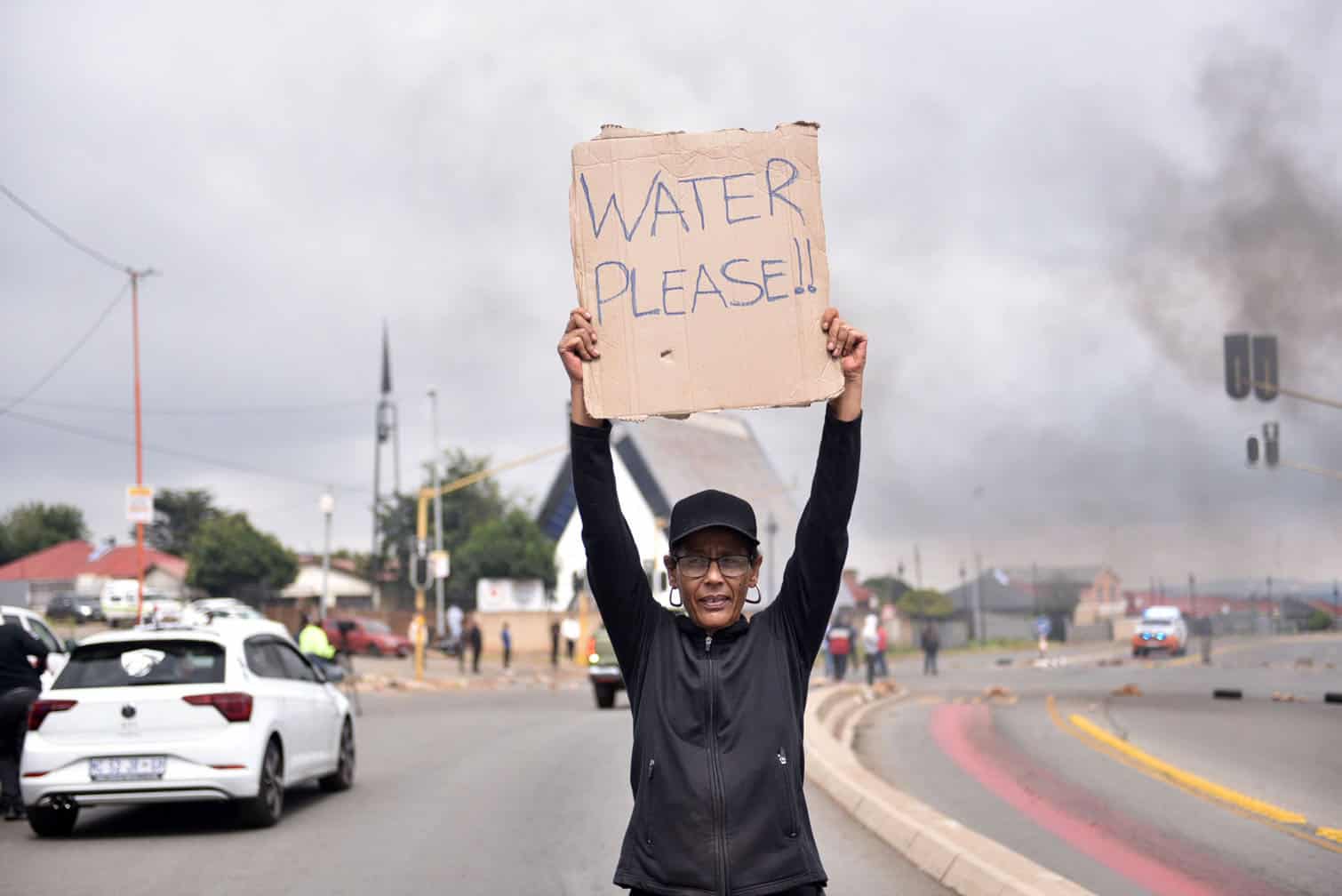
Coronationville resident, Candace Gani and community members pickets for water as Westbury and Newclare dont have water coming from their taps, west of Johannesburg, 24 February 2026.Residents have been living with water crisis for the past3 years.Video:Nigel Sibanda/The Citizen
When we convened the 2025 Water and Sanitation Indaba, we did so because the country demanded urgency, honesty and action.
South Africans were no longer willing to accept a cycle of plans without progress or diagnoses without delivery.
The indaba brought together all spheres of government, water entities, business, labour, civil society and sector partners, not for another conversation, but for a decisive shift in how we approach water and sanitation.
It was meant to be a turning point. And it must remain one.
Water systems failing
The reality we confront is stark. The latest Drop Reports confirm what communities already experience daily.
Nearly half of South Africa’s water supply systems are failing to meet required standards. Around 64% of wastewater treatment works are in critical condition. Almost half of our treated water is lost before it reaches users. In a water-scarce country, this is not just inefficiency. It is systemic failure.
This is not only about ageing infrastructure or technical gaps. At its core, it is a governance crisis. Infrastructure does not maintain itself. Systems do not operate without skilled people. Revenue does not collect itself. Where there is weak management, poor planning and limited accountability, even well-funded systems will fail.
That is why water must be understood not as a routine service delivery function, but as a strategic national priority.
Water security is inseparable from economic growth, public health, environmental sustainability and social stability. Without reliable water, we cannot sustain agriculture, expand industry, build human settlements or attract investment. In this sense, water security is national security.
Municipalities not fulfilling mandate
Municipalities are on the front line of delivery. Yet too many municipalities are not fulfilling this mandate. Poor financial management, inadequate maintenance, weak billing systems and, in some cases, misuse of funds have led to declining performance.
The consequences are visible: dry taps, polluted rivers and communities living without dignity. We must rethink delivery models. Assigning responsibility is not the same as ensuring delivery.
Where municipalities lack capacity, we must adopt fit-for-purpose models that align responsibility with capability. This includes strengthening the role of water boards and capable entities.
Maintenance and investment
Also, a system that does not collect revenue cannot maintain infrastructure. Without maintenance, reliability declines. Without reliability, service delivery collapses. We must enforce payment for services, improve billing, ringfence water revenues and ensure proper use of grants.
At the same time, we must unlock investment through blended finance models that combine public funding, development finance and private capital. Water infrastructure must become financially sustainable.
Infrastructure often fails because it is poorly operated. Too many facilities lack skilled personnel, maintenance plans and operational discipline. Professionalism is essential. We must deploy qualified engineers and technicians, invest in training and ensure that competence becomes the standard.
Collective effort needed
Government cannot act alone. Water security requires partnerships. The private sector can bring investment and innovation. Communities can help protect infrastructure and promote responsible use. Civil society can strengthen oversight and accountability.
We must also confront criminality and corruption. Illegal connections, vandalism, procurement abuse and infrastructure theft are actively undermining the sector. Strengthened law enforcement, consequence management and coordinated anticorruption efforts are essential. There must be consequences for those who sabotage services.
Encouragingly, there are signs of progress. Some municipalities are reducing water losses through improved maintenance. Others are stabilising systems through partnerships with water boards. New financing approaches are beginning to attract interest.
But isolated success is not enough. We must scale what works and address what does not.
Responsibility must be shared. Provinces must strengthen oversight. Municipalities must improve governance and operations. Water boards must provide technical support. The private sector must invest. Communities must safeguard infrastructure and use water responsibly. This is a collective effort.
At its core, the water crisis is not only about infrastructure. It is about dignity, equality and the credibility of our democracy. Access to safe and reliable water is a basic human right. When that is not realised, it reflects a deeper failure of accountability.
But there is cause for optimism. South Africa has the institutional framework, technical expertise and financial potential to resolve this crisis.
What has been missing is consistent execution. That must change.
- Majodina is minister of water and sanitation