Ambitious $2bn D-VIBE project targets nationwide broadband access, 2.8 million jobs, and a stronger digital economy…..
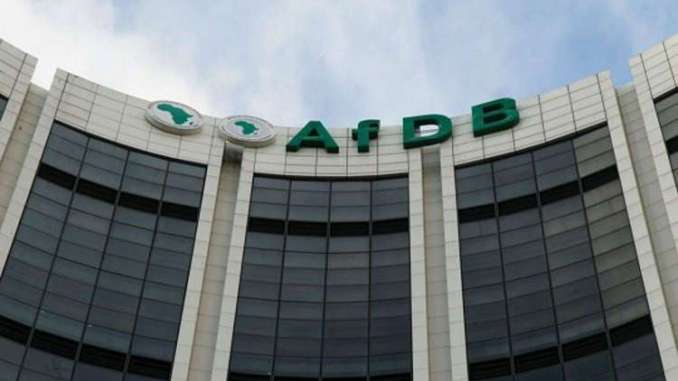
Nigeria’s push to strengthen its digital economy has received a major boost following the approval of a $200 million loan by the African Development Bank (AfDB) Group to support a nationwide fibre-optic expansion and skills development initiative.
The project, known as Digital Value Chain Infrastructure for Boosting Employment (D-VIBE), is designed to dramatically scale up the country’s broadband capacity. At its core is a plan to deploy 90,000 kilometres of open-access fibre infrastructure, expanding Nigeria’s existing network from 30,000 kilometres to an impressive 120,000 kilometres.
Once completed, the project is expected to deliver high-speed internet connectivity to all 774 local government areas, covering schools, healthcare facilities, rural communities, and major commercial centres. It will also strengthen regional integration by linking Nigeria’s network with neighbouring countries through cross-border connections.
According to the AfDB, the $200 million loan forms part of a broader $800 million sovereign financing package. Additional funding includes $500 million from the World Bank and $100 million from the European Bank for Reconstruction and Development (EBRD), bringing total project financing to an estimated $2 billion.
The funding mix also features a €22 million grant from the European Union, a $2.6 million project preparation grant from the Multilateral Cooperation Center for Development Finance (MCDF), and at least $1.2 billion in expected private sector investment.
To drive execution, the initiative will be structured as a public-private partnership, with a special purpose vehicle managing implementation and private investors holding a majority stake. This model is aimed at addressing long-standing challenges such as high construction costs and right-of-way constraints that have slowed fibre deployment in the past.
Speaking on the significance of the project, the AfDB’s Director-General for Nigeria noted that while the country has strong human capital and market potential, inadequate digital infrastructure has remained a key bottleneck.
Beyond infrastructure, the D-VIBE project also focuses on expanding digital inclusion. Plans include rolling out skills development programmes, improving access to affordable devices, and supporting digital platforms across priority sectors.
The initiative is expected to have a far-reaching economic impact, with projections indicating the creation of up to 2.8 million jobs over its lifecycle. In addition, broadband penetration is forecast to rise from the current 45 percent to around 70 percent by 2030.
With its scale and scope, the project represents one of the most ambitious digital infrastructure investments in Nigeria’s history, one that could redefine connectivity, unlock innovation, and accelerate economic growth in the years ahead.