United States and Iranian negotiators arrived in Pakistan ahead of high-stakes peace talks, with deep mistrust, sanctions concerns and regional disputes casting uncertainty over the fragile diplomatic effort.
Developments around the talks were closely followed as officials confirmed that both delegations had landed in Islamabad for negotiations seen as a critical test of ongoing ceasefire efforts.
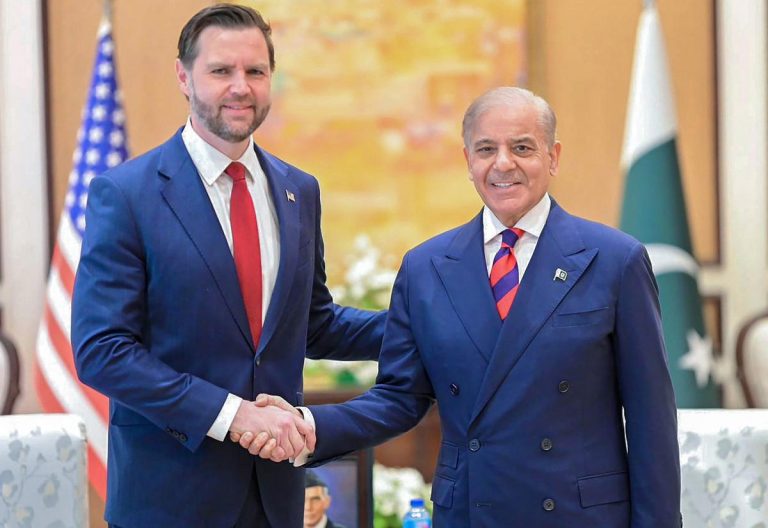
US Vice President JD Vance was received by Pakistan’s foreign minister upon arrival in Islamabad, just hours after his Iranian counterparts touched down, signalling the urgency and sensitivity surrounding the talks.
The meeting marked what observers described as one of the most difficult diplomatic assignments of Vance’s vice-presidency, with limited room for success and significant political risk if negotiations collapsed.
Leading Iran’s delegation, Mohammad Bagher Ghalibaf said his team approached the talks with caution, declaring that while they had “good intentions,” they “do not trust” the United States.
Vance had earlier warned that Washington would not engage constructively if Iran attempted to manipulate the process, stating the Americans would not be receptive if Tehran tried to “play us.”
The Islamabad talks stemmed from a two-week ceasefire between the US and Iran, brokered through Pakistan’s quiet diplomatic intervention. Pakistani officials acted as intermediaries, relaying messages between both sides in what sources described as a tightly controlled process handled by “a very small circle.”
According to insiders, the atmosphere surrounding the negotiations had been “sombre and serious but still hopeful that a cessation of hostilities will be the outcome.”
Despite the cautious optimism, major sticking points remained unresolved. Diplomats highlighted uncertainty over whether Lebanon would be formally included in the scope of the ceasefire, alongside persistent disagreements over sanctions and broader regional security concerns.
Parallel diplomatic efforts were also underway, as Lebanese officials confirmed that their negotiators were scheduled to meet with an Israeli delegation in Washington, further complicating the geopolitical landscape tied to the US-Iran discussions.
Pakistan’s role as mediator drew on its longstanding ties with Iran, with both countries sharing a border and maintaining what Islamabad often described as a “brotherly” relationship. At the same time, its engagement with Washington remained strategically significant.
Former US President Donald Trump had previously described Pakistan’s army chief, Field Marshal Asim Munir, as his “favourite” Field Marshal, noting that the military leader understood Iran “better than most.”
Erizia Rubyjeana